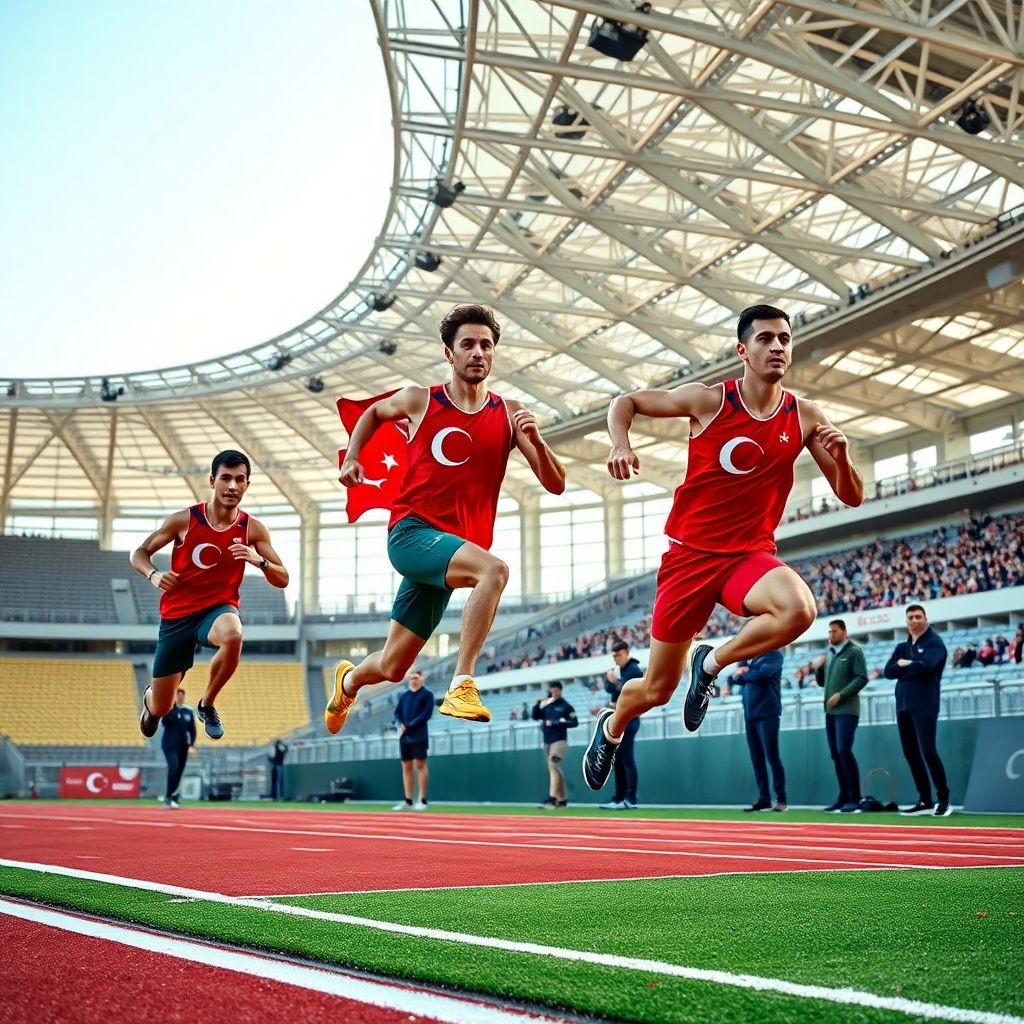
Turkish athletes are shaping the future of global athletics by combining disciplined federation structures, modern sports science and increasingly competitive performances across sprint, middle‑distance, field and road events. Their impact shows up in international finals, in the growth of Turkish track and field training camps, and in how federations worldwide scout, train and benchmark emerging talent.
Central insights on Turkey’s influence in global athletics
- Turkey’s rise in athletics is gradual and system‑driven, not a sudden or accidental breakthrough.
- Modern coaching systems, targeted federation planning and facility upgrades underpin most visible results.
- Breakthrough athletes change how global scouts and sponsors evaluate Turkish prospects and training environments.
- Sports science integration at elite centers in Turkey attracts foreign teams and raises domestic standards.
- Strategic participation in international competitions and governance helps Turkey shape regulations and event calendars.
- Grassroots participation and school programs broaden the global athletics pipeline, not only Turkey’s national team.
- Clear processes for verifying and benchmarking results make it easier to invest in Turkish sports and athletics with confidence.
Dispelling myths about Turkey’s athletic rise
“How Turkish Athletes Are Shaping the Future of Global Athletics” describes a structural transformation, not an isolated era of lucky medals. It covers how federations, coaches, facilities and athletes interact to produce sustainable performance across track, road and field events, and how these changes affect global competition and talent flows.
A common myth is that the best Turkish athletes in world athletics only appear through late nationalization or one‑off transfers. In reality, junior and youth systems, university clubs and regional high‑performance centers have been steadily expanding, giving locally developed athletes clearer pathways toward European and world‑level competitions.
Another misconception is that Turkish track and field training camps are only about climate and tourism. Modern camps in Antalya, Erzurum or similar hubs integrate altitude, strength and conditioning, recovery, nutrition and biomechanical analysis. Foreign squads now treat these locations as serious performance environments rather than off‑season retreats.
Finally, some observers assume there are limited Turkish athletes sponsorship opportunities compared with bigger markets. While the commercial base is smaller than in major athletics economies, a growing mix of local brands, regional sponsors and performance‑linked incentives is turning sponsorship into a practical lever for career stability and high‑level preparation.
Historical foundations: coaching systems, federations and investment
-
Federation structure and long‑term planning
The Turkish Athletic Federation coordinates national calendars, selects national teams and negotiates access to facilities. Over time, more structured multi‑year plans have replaced ad‑hoc selection, aligning youth, U23 and senior squads around common performance benchmarks. -
Coaching education and licensing
Coaching systems have moved toward formal pathways: introductory courses, advanced certifications and specialist modules (sprints, endurance, jumps, throws). This creates a shared technical language between club coaches, national‑team staff and sports‑science personnel, improving continuity in athlete development. -
Regional training centers and club networks
Club‑based training in major cities is now supported by regional centers with synthetic tracks, throwing sectors and indoor facilities. This network reduces the performance gap between big cities and developing regions, and it feeds into Turkey athletics talent scouting programs at school meets and regional championships. -
Sports schools and university programs
Physical education faculties and sports high schools serve as dual‑career hubs. Athletes can combine academic study with structured training, easing the risk of early dropout and establishing data‑oriented approaches to periodization, testing and injury prevention. -
Investment in infrastructure and service teams
Investment is not only about stadiums and tracks. Gradually, more programs include access to physios, nutritionists, psychologists and performance analysts. When stakeholders decide to invest in Turkish sports and athletics, they increasingly look for projects that bundle facilities with qualified support staff and monitoring systems. -
International partnerships and knowledge transfer
Collaboration with foreign federations, universities and camps brings in updated methods on strength training, speed development and recovery. Guest coaching, joint training blocks and seminars help Turkish systems stay aligned with global benchmarks without copying them blindly.
Breakthrough athletes whose results shifted global narratives

Breakthrough Turkish athletes matter not only for medals but for how they reshape assumptions about the country’s potential. Their performances change scouting behavior, sponsorship decisions and the strategic choices of rival federations.
-
Sprinters and hurdlers redefining speed expectations
When Turkish sprinters or hurdlers start appearing in major championship semifinals and finals, it signals that local speed programs and relay systems can compete with traditional sprint nations. This encourages more youth coaches to specialize and more clubs to prioritize sprint lanes and power training. -
Middle‑ and long‑distance runners influencing altitude and camp use
Turkish middle‑distance athletes using high‑altitude regions and structured pacing strategies demonstrate that domestic environments can support globally relevant endurance work. Foreign teams increasingly consider joint camps in Turkish mountains, combining high‑quality tracks with manageable travel and costs. -
Jumpers and throwers elevating technical standards
Success in jumps and throws requires advanced technique and stable coaching relationships. When Turkish jumpers and throwers achieve consistent results at continental and world level, it validates the depth of local technical coaching and makes international meets in Turkey more attractive to global specialists. -
Road runners and race walkers attracting urban events
Strong road‑running and race‑walking performances help city marathons and road races in Turkey gain international recognition. This creates more race opportunities, appearance‑fee structures and prize models that benefit both domestic athletes and visiting elites. -
Multi‑event and relay squads changing team‑event dynamics
Competitive Turkish relay teams and multi‑eventers demonstrate that the country can field depth, not just isolated stars. This alters how broadcasters and sponsors view team events involving Turkey, and it encourages federations to budget for relay‑specific camps and technical support. -
Role‑model effect for the next generation
Visible role models from diverse regions and event groups inspire younger athletes to stay in the sport. Their journeys, including access to Turkish athletes sponsorship opportunities and structured camps, give clear templates for how a junior can turn potential into a sustainable international career.
Training methods and sports science innovations emerging from Turkey
Training in Turkey increasingly integrates classic periodization with applied sports science. While approaches differ by coach and event, several themes now characterize elite preparation environments, from sprint groups in major cities to endurance teams using altitude routes and specialized treadmills.
Performance advantages of modern Turkish training environments
- Integrated periodization and competition planning: Coaches align macrocycles with domestic and international calendars, using regional meets as controlled tests before European or world‑level competitions.
- Year‑round access to varied climates: Warm‑weather coastal areas and cooler, higher‑altitude interiors let coaches design targeted blocks for base work, speed development or heat adaptation, sometimes within one country rotation.
- Growing sports‑science support: Biomechanical analysis, lactate testing and GPS/accelerometer data help refine technique, pacing and workload, especially in high‑performance centers and major clubs.
- Specialized Turkish track and field training camps: Camps combine track sessions, strength work, recovery protocols and educational seminars on nutrition, mental skills and anti‑doping, attracting both domestic and visiting foreign athletes.
- Technical focus in power and speed work: Short‑sprint mechanics, plyometrics, Olympic lifting derivatives and event‑specific drills are adopted in a structured manner, raising the ceiling for explosive events.
- Context‑aware adaptation of global best practices: Instead of copying foreign programs, coaches adjust volumes, intensities and technical drills to the realities of local competition schedules, travel patterns and academic calendars.
Constraints and ongoing challenges in the Turkish system
- Uneven access to elite facilities: Not all regions have equal access to indoor tracks, specialized throwing cages or sports‑science labs, which can limit early development in some areas.
- Coach workload and specialization gaps: In certain clubs, one coach may cover multiple events or large groups, restricting individualization and detailed technical analysis.
- Transition from junior to senior level: Bridging education, employment and elite training remains complex, and some promising juniors struggle to maintain performance while adjusting to senior‑level demands.
- Sponsorship and financial stability: Turkish athletes sponsorship opportunities are expanding but still inconsistent across events and regions, which can affect training quality and long‑term planning.
- Data integration and sharing: Testing and monitoring data are not always centralized or comparable between clubs and federations, slowing learning cycles and evidence‑based decision‑making.
- Retention of support staff: Ensuring long‑term careers for physios, biomechanists and analysts within athletics structures is essential but still developing.
Turkey’s strategic presence in international competitions and governance
Turkey’s influence is reinforced by how it participates in international events, committees and decision‑making processes. Misunderstanding these mechanisms leads to myths about “home advantage” or “occasional host status” that ignore underlying strategy.
-
Confusing hosting rights with guaranteed success
Hosting an international event does not automatically produce medals. Results still depend on long‑term preparation, selection and health of athletes. The strategic value is more about exposure, experience for organizers and long‑term branding of Turkish venues for future camps and meets. -
Underestimating committee and working‑group roles
Some assume that only presidency or high‑profile roles in global bodies matter. In practice, participation in technical, youth, calendar and development commissions helps Turkey influence rules, time‑tables and qualification systems that shape the careers of its athletes and coaches. -
Ignoring the link between domestic calendars and global peaks
If national championships are poorly aligned with major international meets, athletes must choose between selection events and optimal performance peaks. Strategic calendar design aims to support both fair selection and world‑class performance windows, a nuance often missed in public debates. -
Overestimating the impact of single policy changes
A new scholarship, regulation or event alone rarely transforms performance. Outcomes usually stem from cumulative, multi‑year adjustments across selection, funding, coaching and competition exposure, not one headline announcement. -
Assuming talent scouting is entirely centralized
While national bodies coordinate Turkey athletics talent scouting programs, much real discovery still happens through school meets, regional clubs and university competitions. Believing only central scouts matter undervalues the role of local coaches and teachers in the pipeline. -
Equating investment only with top‑tier elites
When organizations choose to invest in Turkish sports and athletics, they sometimes focus solely on medal contenders. However, sustainable influence on global athletics also requires investment in officials, meet directors, coaches and development competitions that frame the entire system.
Economic, social and grassroots effects on the worldwide athletics pipeline
Turkey’s athletics ecosystem affects more than domestic medal counts. It shapes how young people choose sports, how regional events develop and how international athletes and federations plan their seasons. A clear, simple algorithm for checking athletic results helps all these actors evaluate progress objectively.
Below is a short, practical algorithm to assess a Turkish athlete’s performance in a global context, using only information that an intermediate‑level practitioner (coach, manager, scout or investor) can realistically access.
Algorithm: Check and benchmark a Turkish athlete's result

Input:
  - Event type (e.g., 100m, long jump, marathon)
  - Performance value (time, distance or points)
  - Competition name and level
  - Date and location of performance
  - Athlete's age category

Steps:
  1. Verify validity
     a. Confirm competition is recognized by the national federation or a major international body.
     b. Ensure timing/measurement system is certified (e.g., electronic timing, proper implements).
     c. Check for legal wind and standard conditions if relevant to the event.

  2. Confirm athlete identity and status
     a. Match name, birth year and club with federation databases or official start lists.
     b. Verify age category (youth, junior, U23, senior) for correct comparison.

  3. Place result in national context
     a. Compare with current national rankings or championship qualifying standards.
     b. Check progression versus athlete's previous season and personal bests.

  4. Place result in global context
     a. Compare to recent continental and world championship entry standards.
     b. Look at typical finalist and medal‑contender performances for the event and category.
     c. Classify result qualitatively (e.g., national level, regional elite, global qualifier).

  5. Assess reliability and repeatability
     a. Determine if the result has been replicated within the same season.
     b. Evaluate conditions (altitude, temperature, pacing, competition depth) for unusual advantages.
     c. Mark the result as:
        - "Benchmark" if repeated in normal conditions,
        - "Promising but needs confirmation" if single standout,
        - "Context‑dependent" if heavily aided by unusual conditions.

  6. Decide next practical step
     a. For coaches: adjust training plan or competition calendar based on classification.
     b. For scouts: update priority level for follow‑up (monitor, invite to camp, or shortlist).
     c. For sponsors/investors: decide whether to open, maintain or scale Turkish athletes sponsorship opportunities.

Output:
  - Clear classification of performance level and reliability,
  - Recommended action (training, scouting or investment) based on evidence.
Applied consistently, this simple procedure improves confidence when stakeholders invest in Turkish sports and athletics, select athletes for Turkish track and field training camps, or compare the best Turkish athletes in world athletics with peers from other regions. It connects grassroots performances in local meets to the global athletics pipeline in a transparent, reproducible way.
Practical clarifications and common misunderstandings addressed
How are Turkish athletes influencing global athletics beyond medal counts?
They influence training destinations, competition calendars, sponsorship patterns and talent‑scouting routes. As Turkish venues and programs improve, more foreign teams choose to train or race there, integrating Turkey into the broader high‑performance ecosystem.
Are Turkish track and field training camps useful for non‑Turkish athletes?
Yes. Many camps offer quality tracks, gyms, medical support and favorable climates at competitive costs. For foreign squads, these camps can be practical alternatives or complements to traditional training bases in other regions.
What should sponsors look for before supporting a Turkish athlete?
Sponsors should verify result reliability using a clear algorithm, check coaching stability, review progression over several seasons and assess how the athlete’s profile fits brand values. Structured Turkish athletes sponsorship opportunities increasingly include performance bonuses and activation plans, not only basic stipends.
How do Turkey athletics talent scouting programs find new athletes?
They typically combine school competitions, regional club meets, university leagues and national championships. Local coaches and physical education teachers often provide the first referrals, while federation staff track promising performances across seasons.
Is it risky to invest in Turkish sports and athletics at the development level?
Any development investment carries uncertainty, but risk can be reduced by focusing on transparent governance, measurable milestones and co‑funded projects with federations, clubs or municipalities. Using clear performance‑checking procedures makes progress easier to track.
Do the best Turkish athletes in world athletics always train inside Turkey?
Not always. Some combine domestic bases with seasonal blocks abroad, while others stay primarily in Turkey. The key factor is the quality of coaching, competition exposure and support services, not the passport of the training location.
Can grassroots projects in Turkey really affect the worldwide athletics pipeline?
Yes. When more young people in Turkey enter and stay in athletics, international meets gain deeper fields, new rivalries and additional host and camp options. Over time, this broadens the global base of competitive athletes and events.