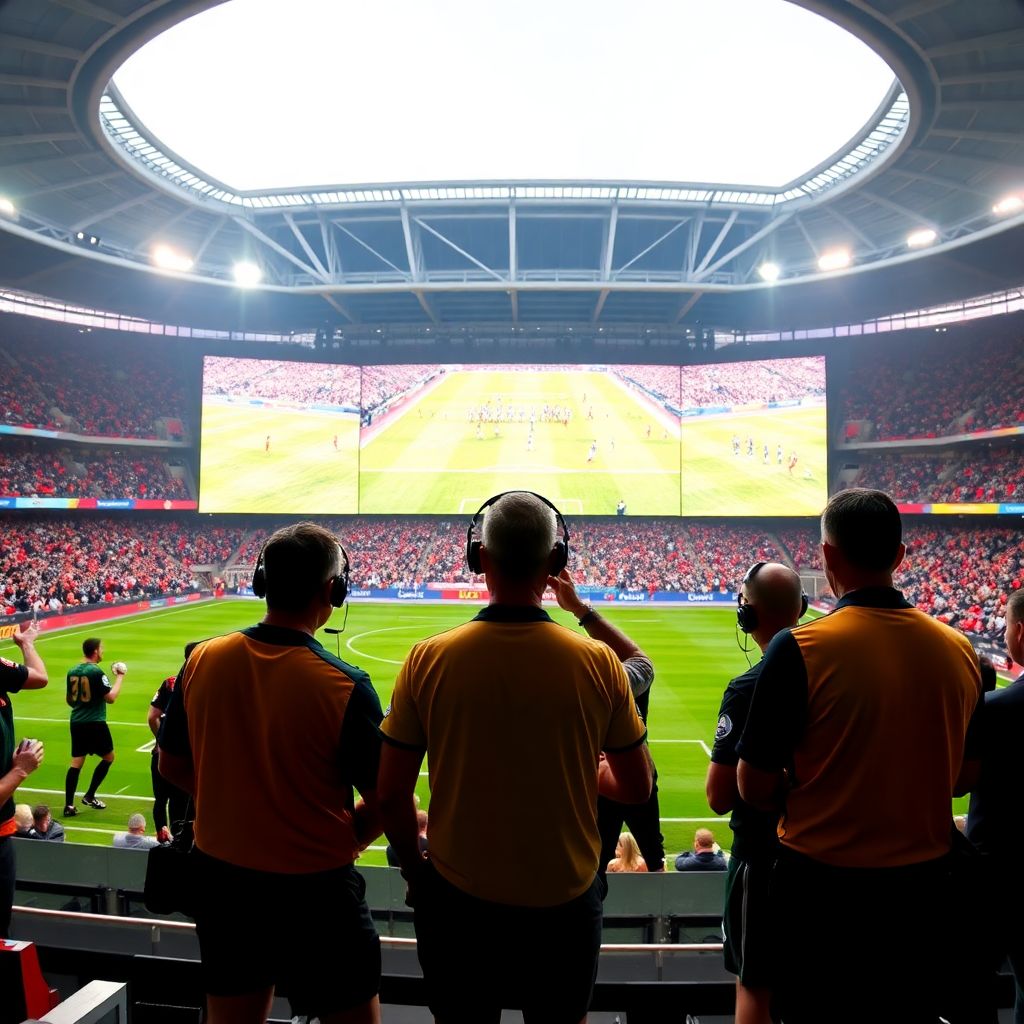
Video Assistant Referee (VAR) is a set of cameras, replay tools and officials that helps the on‑field referee correct clear and obvious errors in key match incidents. It has changed Turkish and world football by reducing blatant mistakes, standardising decisions and adding transparent replays, while still leaving final authority to the referee on the pitch.
Core impacts of VAR on match outcomes and competition integrity
- Reduces clear and obvious refereeing mistakes in goals, penalties, direct red cards and mistaken identity.
- Makes offsides and penalty decisions more consistent across matches and competitions.
- Improves perceived fairness of title races, relegation battles and European qualification spots.
- Changes player behaviour, with fewer off‑the‑ball incidents and simulation when cameras cover every angle.
- Alters coaching and tactical risk, as marginal offside lines or penalty shouts are now systematically checked.
- Introduces new operational costs and technical demands for stadiums and federations adopting VAR.
Debunking common myths about VAR in Turkish and world football
Myth 1: VAR makes all decisions perfectly objective. In reality, VAR technology in football analysis software and replay systems only provides better evidence; human referees still interpret contact, handball intent and serious foul play. Subjectivity decreases, but it does not disappear.
Myth 2: VAR re‑referees the entire match. The protocol is narrow: it only intervenes for goals, penalties, direct red cards and wrong identity. Routine fouls, yellow cards or tactical free‑kicks are not its business, even when fans expect intervention.
Myth 3: VAR works the same in every league. Turkish competitions, major European leagues and international tournaments all follow the core IFAB protocol, but they differ in camera layouts, training, local guidelines and even which football VAR technology providers they use. That is why “borderline” decisions can still vary by competition.
Myth 4: VAR kills emotion. It certainly changes how supporters celebrate, but world and Turkish stadiums now experience a second explosion of noise when the screen confirms a goal after review. The emotional rhythm evolves instead of disappearing.
How VAR works: technology stack, review workflow and decision protocols
Myth: VAR is just a video replay on a big TV. In fact, it is a coordinated technology stack plus strict communication and decision rules:
- Capture layer (cameras and feeds) – Multiple broadcast and dedicated cameras, some ultra‑slow motion and offside line cameras, send synchronised feeds to the VAR room. The best VAR systems for football leagues plan camera positions specifically around the penalty areas and offside lines.
- Processing and replay tools – VAR replay technology solutions for sports use specialised servers and software to buffer feeds, scrub frame‑by‑frame, zoom and overlay graphic lines. This is where VAR technology in football analysis software often overlaps with broadcast and performance tools.
- VAR room roles – Typically one Video Assistant Referee (VAR), one or more Assistant VARs (AVARs) and replay operators. They monitor incidents in real time and tag possible checks without stopping play.
- Check phase – For any goal, penalty, direct red card or mistaken identity, the VAR silently checks footage. If the original decision looks clearly correct, the check finishes with no interruption.
- Review recommendation – If there is a clear and obvious error or a serious missed incident, VAR recommends a review to the on‑field referee via headset: “possible penalty”, “possible offside in the APP” (attacking phase of play), and so on.
- On‑field review (OFR) – The referee watches selected angles on a pitch‑side monitor. VAR can suggest angles, but the referee independently re‑assesses the incident and makes the final decision.
- Communication and restart – Once decided, the referee signals the VAR square and explains the outcome with proper restart (kick‑off, penalty, dropped ball etc.). In some competitions, a brief explanation appears on screens for supporters.
Turning points: match incidents VAR has redefined in Turkish leagues
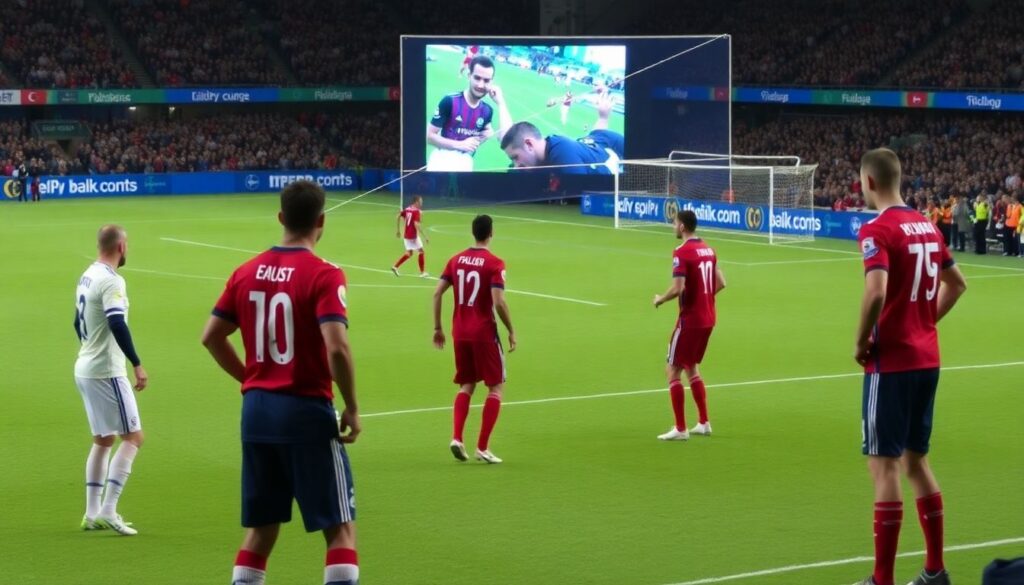
Myth: VAR only affects glamorous European nights. In Turkey, it has quietly reshaped routine Süper Lig weekends and domestic cups in specific incident types.
- Marginal offside goals – Goals once decided by a linesman’s instinct are now judged using calibrated lines. Strikers and full‑backs in the Turkish top flight have adapted their runs, knowing offside is checked automatically on each goal.
- Penalty box grappling – Holding and pushing at corners used to be “penalty sometimes, play on most of the time”. With VAR, replay angles expose clear grabs or pushes, leading to more consistent awards or cancellations of penalties.
- Handball decisions – Attacking handballs before goals and unnatural arm positions are now heavily scrutinised. Turkish clubs have changed defensive coaching, teaching players to keep arms tighter in the box because VAR sees what the referee may miss in real time.
- Mistaken identity in chaotic scenes – In mass confrontations, yellow or red cards were often shown to the wrong player. VAR allows officials to correct identity using close‑ups, preventing unfair suspensions that used to distort key matches.
- Serious fouls missed behind play – Off‑the‑ball elbows or stamps that camera operators catch but referees miss are now reviewable. The deterrent effect in Turkish leagues has been noticeable, as players understand that unseen does not mean unpunished.
Global case studies: VAR’s measurable effects in top tournaments and domestic competitions
Myth: VAR advantages only the biggest clubs. In practice, the protocol applies the same checks to every team, whether a title favourite or a newly promoted side. What changes is how consistently major errors are removed from the game.
To understand the pattern, compare competitions before and after implementation qualitatively rather than through invented numbers:
- Domestic leagues with early VAR adoption reduced obvious offside goals and corrected penalties after replays.
- International tournaments saw fewer unpunished violent conduct incidents, because neutral VAR teams monitor every feed.
- In Turkey, controversial title‑deciding matches are now dissected via official VAR audio and video, not only fan‑made clips.
| Aspect | Before widespread VAR | With VAR in major competitions |
|---|---|---|
| Goal decisions | Linesman judgment, limited replays, persistent debate. | Automatic check on every goal, calibrated lines, fewer clearly wrong goals allowed. |
| Penalty awards | Live angle only, soft vs. clear fouls often confused. | Multiple angles, slow motion; soft contact still debated but clear errors corrected. |
| Serious foul play | Incidents behind play often missed and unpunished. | Retrospective detection within the same match; red cards can be issued after review. |
| Public transparency | Fans rely on TV commentary and limited camera angles. | Federations release VAR footage in some cases; decisions explained more visibly. |
| Operational demands | Standard broadcast only, no central review room. | Dedicated VAR rooms, specialised VAR replay technology solutions for sports and trained officials. |
On the business side, federations and clubs must evaluate the cost of implementing VAR technology in stadiums: camera upgrades, fibre connections to VAR rooms, licensing fees and annual contracts with football VAR technology providers. These costs are balanced against the value of competitive integrity and reduced controversy.
Quantifying change: key metrics and statistical comparisons before and after VAR
Myth: all numbers about VAR are fake or biased. While detailed statistics depend on each league’s official reports, you can still think in terms of stable categories instead of speculative values. Typical comparisons used by analysts include:
- Clear error correction rate – How many of the decisions changed by VAR are later accepted as correct under the Laws of the Game and competition guidance.
- Incidents reviewed per match – The balance between using VAR enough to catch serious errors, but not so much that the game loses flow.
- Average delay per intervention – Time between the incident and the final decision; competitions refine protocols to keep this predictable.
- Distribution of outcomes – How often original referee decisions are upheld versus overturned after VAR review.
- Club impact spread – Whether net VAR decisions (for and against) appear randomly distributed or cluster suspiciously around certain teams.
Myth: statistics will “prove” VAR bias for or against particular clubs. In reality, data can highlight patterns and outliers, but interpretation always requires context about tactical styles, defensive risk and how aggressively teams attack the box, which influences how often VAR can even be involved.
Operational hurdles: rollout, referee adaptation and spectator trust
Myth: once purchased, VAR magically works. In practice, technology, referees and fans all need time to adapt, especially in a passionate football country like Turkey.
- Technical deployment – Stadiums must meet minimum standards for camera positions, connectivity and secure VAR rooms. The cost of implementing VAR technology in stadiums can be a barrier for lower‑division clubs, forcing phased adoption.
- Referee training and calibration – Officials learn new communication patterns, cue words and thresholds for “clear and obvious” errors. Misuse early in a rollout can damage credibility.
- Fan education and communication – Supporters need simple explanations of what is and is not reviewable. Clear stadium announcements and post‑match VAR breakdowns help rebuild trust.
- Supplier coordination – Leagues choose between in‑house solutions and external football VAR technology providers. This affects support, upgrades and integration with broadcast partners.
A short, practical algorithm for checking a goal decision with VAR can be written in everyday pseudo‑code:
IF ball enters goal THEN
  VAR starts silent check
  CHECK attacking phase for:
    - offside
    - foul by attacker
    - handball
    - ball out of play
  IF clear and obvious error found THEN
    recommend on-field review
    referee watches monitor, confirms or changes decision
  ELSE
    confirm goal with no on-field review
END IF
This simple logic underlies many VAR replay technology solutions for sports: rapid, structured checks that protect match integrity without turning every goal into a long forensic investigation.
Operational clarifications and concise answers about VAR use
Which incidents can VAR actually review during a match?
VAR is limited to four categories: goals and offences in the attacking phase, penalty decisions, direct red card incidents and cases of mistaken identity. It does not review normal yellow cards or most free‑kicks in midfield.
Who has the final say, the VAR or the on‑field referee?
The on‑field referee always makes the final decision. VAR can suggest a review or provide recommended footage and interpretations, but the referee on the pitch accepts or rejects that advice after watching the monitor.
Why do some seemingly obvious fouls in Turkey never go to VAR?
If a foul is not related to a goal, penalty or direct red card, it falls outside VAR’s protocol, even when supporters are angry. Referees are encouraged to manage general physical play themselves without relying on video support.
Does every goal automatically get checked by VAR?
Yes, every goal is at least “checked” silently for offside, fouls, handball and ball out of play. A visible on‑field review only happens when the VAR believes a clear and obvious error or serious missed incident has occurred.
How do leagues choose between different VAR technology suppliers?
Leagues compare reliability, integration with broadcasters, support services and cost structures from various football VAR technology providers. They also evaluate whether a system is scalable to all stadiums and compatible with their refereeing and competition regulations.
Is VAR equipment the same as performance analysis tools used by clubs?
The core video infrastructure is similar, but VAR systems are certified for officiating and follow strict latency and security standards. Clubs may use separate VAR technology in football analysis software for coaching and scouting, which is not used to make official match decisions.
Why do VAR checks sometimes take so long in high‑pressure matches?
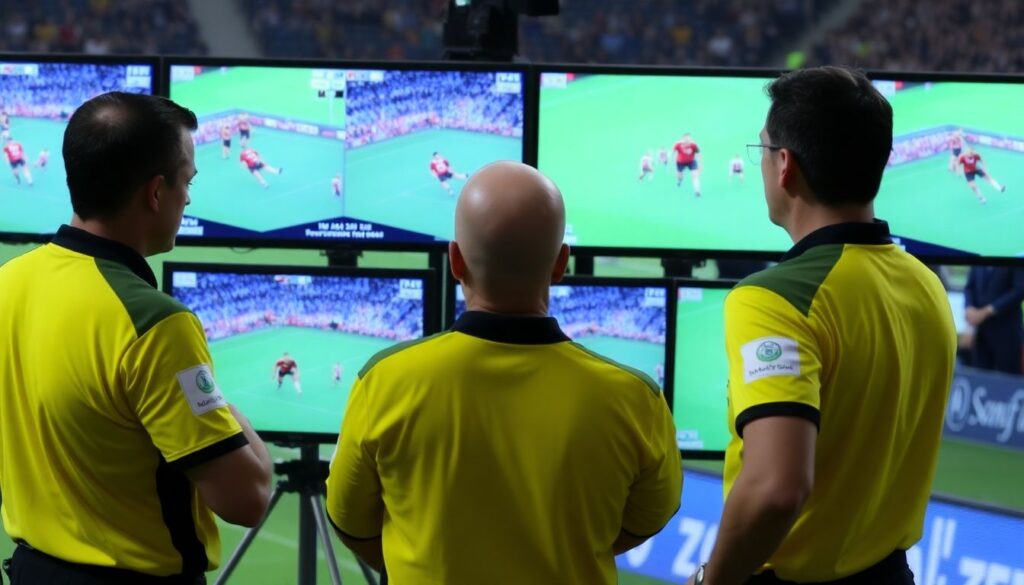
Complex incidents with multiple possible fouls or offside lines require more angles and confirmations. Officials prefer a slightly longer delay to avoid an incorrect overturn, especially in key Turkish league matches or international knockout ties.