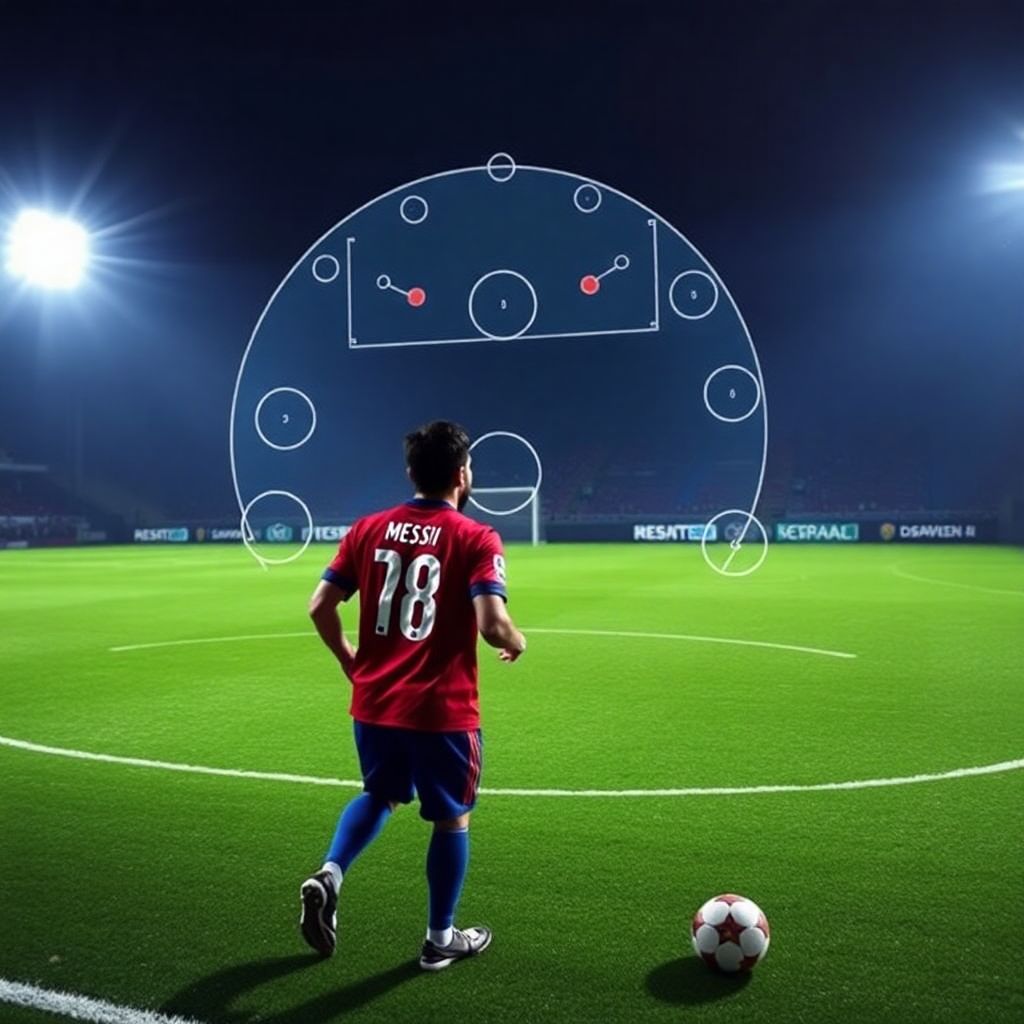
“Messi Is Tactical Chaos”: Ilkay Gündoğan Lifts the Lid on Messi, Guardiola and Liverpool Hype
In a frank, reflective conversation with German newspaper Frankfurter Allgemeine, Galatasaray midfielder Ilkay Gündoğan opened up about the defining people and moments of his career, his move to Türkiye, and the mental cost of living as an elite footballer. The former Manchester City captain, who arrived in Istanbul last summer, spoke with the calm authority of a player who has seen almost everything the game can offer.
Messi: The Player Who Breaks Every Tactical Rule
When asked to name the greatest opponent he has ever faced, Gündoğan didn’t even pause to consider alternatives: Lionel Messi still stands alone.
According to Gündoğan, Messi exists “outside of all tactical logic.” You can devise the perfect game plan, execute it with total discipline, and for most of the match feel like you have him under control. Then, in just a handful of minutes, he destroys the entire structure you’ve spent the week building.
Gündoğan stressed that this isn’t just about goals or assists, but about the way Messi bends the rhythm of a game to his will. Defensive lines that looked perfectly synchronized suddenly lose their bearings. Pressing triggers become meaningless because Messi occupies spaces nobody has rehearsed for. For Gündoğan, it is this ability to generate chaos inside carefully designed tactical systems that makes Messi truly unique.
He is not convinced football will produce another player with that blend of talent, vision and ruthless decision-making any time soon. “I’m not sure we will see another like him for decades,” he admitted, underlining the sense that Messi represents a once-in-a-generation anomaly.
A New Defensive Prodigy: Pau Cubarsí
While Messi belongs to a different era, Gündoğan is also deeply impressed by a new face in European football: Barcelona’s teenage defender Pau Cubarsí.
He recalls his first impressions of the youngster in training and matches: the calm on the ball, the positional sense, the fearlessness in high-pressure situations. For Gündoğan, seeing that level of maturity and clarity in a 16 or 17-year-old defender was genuinely startling.
“I hadn’t seen a defender like that at that age,” he noted. In a position where experience and reading of the game usually develop slowly, Cubarsí’s rapid rise has convinced Gündoğan that the teenager has the tools to grow into one of the very best centre-backs in world football, provided he is managed correctly and protected from the suffocating pressure that often accompanies early hype.
Pep vs Klopp: A Question He Hears More Than “How Are You?”
Gündoğan is uniquely placed in one of football’s favourite debates. Few players have worked as closely with both Pep Guardiola and Jürgen Klopp as he has, and he admits the comparison follows him everywhere.
He joked that the “Pep or Klopp” question is put to him more often than simple small talk. His answer, though nuanced, leans clearly in one direction. Having spent his peak years at Manchester City under Guardiola, he feels a strong personal and footballing connection to Pep’s ideas. Gündoğan describes how intensely he worked with Guardiola, how deeply he identified with the positional play, the choreography of movement, and the constant search for tiny advantages through structure and detail.
For that reason, if forced to choose, he picks Guardiola. Yet he is equally adamant that this doesn’t diminish Klopp’s achievements. He describes Klopp’s body of work in Germany and England as “11 out of 10,” an acknowledgment of how the Liverpool manager built teams that were not just successful, but emotionally powerful, aggressive, and mentally unbreakable.
Behind the simple comparison, Gündoğan outlines two very different coaching universes: Guardiola’s obsession with control and micro-tactics, and Klopp’s high-emotion, heavy-metal football built on intensity, trust and collective belief. Living in both environments, he suggests, shaped him into a more complete midfielder and person.
A Future on the Touchline Next to Pep?
Gündoğan did not hide his ambitions beyond his playing days. He admitted that coaching fascinates him and that he is already viewing the game through a manager’s lens. Analyzing systems, understanding game flows, and guiding younger teammates have become increasingly important to him in the later stages of his career.
He revealed a specific dream: to start his coaching career alongside Guardiola, if the Catalan is still working when Gündoğan retires. That desire is less about basking in Pep’s aura and more about continuing his education. Having absorbed Guardiola’s philosophy as a player, he believes working next to him on the bench would be the ultimate classroom, allowing him to understand how decisions are made in real time and how a manager manages the human side of a squad as well as the tactical side.
At the same time, Gündoğan seems realistic. Coaching, he knows, is not just about ideas; it’s about communication, man-management, and dealing with criticism in an even more brutal way than players do. His interest in transitioning to that world reflects both confidence and a willingness to keep learning.
Istanbul Reality Check: Focus on Beşiktaş, Not Liverpool
The interview arrives at a tense and exciting moment for Galatasaray. With a much-hyped Champions League tie against Liverpool approaching, “Liverpool fever” has swept through Istanbul. Yet inside the dressing room, Gündoğan is trying to keep eyes fixed on a more immediate task: the Beşiktaş derby in the league.
He echoed head coach Okan Buruk’s stance that domestic priorities cannot be overshadowed by the glamour of European nights. In a title race where dropped points can prove fatal, the clash with Beşiktaş carries enormous weight. For Gündoğan, the true mark of an elite team is the ability to treat the “less glamorous” games with the same seriousness as the big European showcases.
He pointed out that in England, he learned how decisive small lapses in concentration can be over a long season. A draw in February against a mid-table side can cost you the title in May. Carrying that mentality to Türkiye, he wants Galatasaray’s younger players to understand that big nights at Anfield or against global giants are only part of the story; championships are often decided in the grinding, emotionally draining fixtures that don’t make global headlines.
A New Standard in the Galatasaray Dressing Room
Gündoğan also spoke about how his habits have evolved as he matured. Early in his career, talent and enthusiasm were enough to carry him through many matches. As the years passed and injuries, fatigue, and constant travel accumulated, he realized that marginal gains off the pitch were just as decisive as tactical instructions.
Sleep, nutrition, recovery routines, mental preparation: all of these, he says, became non-negotiable. At Galatasaray, he is trying to model that professionalism for the club’s younger generation. He emphasizes punctuality, encourages better eating habits on away trips, and talks openly about the importance of switching off from social media and noise in the days before big games.
For him, leadership is no longer about shouting in the dressing room or delivering emotional speeches; it’s about setting a daily standard. Younger teammates, he notes, will copy routines they witness every day far more than they’ll remember any single talk. If they see a senior player sacrificing short-term pleasure for long-term performance, that can slowly change a team’s culture.
The Hidden Loneliness of the “Football Machine”
Perhaps the most revealing part of Gündoğan’s interview concerned the psychological weight of life at the top. The public image of elite athletes, he argued, often bears little resemblance to the private reality.
He spoke of the widespread belief that, once you “make it,” doubts and insecurities vanish. In truth, he insists, they often intensify. The higher you climb, the harsher the scrutiny becomes. A single misplaced pass can generate headlines and endless debate. People begin to see you as a kind of football “machine,” a perfectly engineered product whose only job is to function on match day and deliver entertainment.
That perception, he says, can be deeply isolating. You are constantly surrounded by teammates, staff, and media, yet the expectations can create a sense of emotional distance from everyone around you. Many players feel they cannot fully share their fears or vulnerability, because any sign of weakness might be used against them in contract talks, selection decisions, or public discourse.
Gündoğan stressed the importance of protecting one’s inner self in such an environment. If you allow your identity to be entirely defined by performance – by goals, assists, trophies, or ratings – you become dangerously exposed. A bad season or a serious injury can then feel like a collapse of your whole self-worth, not just a professional setback.
Building Emotional Resilience in a Ruthless Industry
To cope with that pressure, Gündoğan has learned to invest deliberately in his mental resilience. He has become more selective with his inner circle, surrounding himself with people who see him as a human being first and a footballer second. Family, trusted friends, and a few confidants within the game act as anchors when results or public opinion swing wildly.
He also spoke implicitly to younger players about the need to set boundaries. That can mean limiting time spent scrolling through reactions after games, refusing to read certain forms of criticism, or learning to distinguish between constructive feedback and toxic noise.
In his view, football is rapidly improving in its physical and tactical dimensions, but the mental health side still lags behind. Clubs, he believes, must take more responsibility in providing psychological support, not just to revive form when things go wrong, but to build healthy, sustainable careers from the start.
Life in Türkiye: Between Childhood Roots and New Expectations
Gündoğan’s move to Galatasaray was not just a professional decision; it had a strong emotional element. With Turkish roots and a lifetime of connection to the country’s culture, the transfer felt like a kind of homecoming, even after years spent in Germany, England, and Spain.
He acknowledges that playing in Türkiye brings a different type of pressure. The passion is raw, the media landscape intense, and every statement or gesture can become material for days of debate. Yet that same passion is also what attracted him: full stadiums, feverish atmospheres, and a fan base that lives the sport as a central part of daily life.
Arriving as a former Manchester City captain and Champions League winner, he knows expectations are sky-high. Supporters want leadership, decisive performances, and big moments in Europe. Gündoğan accepts that responsibility but also insists on the importance of patience and process. Transforming a team’s mentality, he says, does not happen overnight, no matter how decorated the new arrivals are.
What His Story Reveals About Modern Football
Gündoğan’s reflections offer more than just anecdotes about Messi, Guardiola, or Klopp; they sketch a broader portrait of modern elite football. The game is more tactical, more global, and more demanding than ever. Players are asked to operate as strategic pieces in complex systems while simultaneously functioning as global brands, public figures, and role models.
He stands at the intersection of these realities: a technically refined midfielder shaped by two of the era’s greatest coaches, a senior leader trying to guide a passionate club through domestic and European battles, and a human being trying to preserve a sense of self in an industry that often values output over personhood.
From “tactical chaos” Messi to the emerging calm of Pau Cubarsí, from the ferocious energy of Klopp’s teams to the surgical control of Guardiola’s, Gündoğan has played through one of the most fascinating chapters in football’s tactical history. Now, in Türkiye, he is writing a new chapter – one where experience, perspective, and emotional intelligence may be just as important as his passing range or late runs into the box.