Fenerbahce Sanctioned by UEFA After Chaotic Nottingham Forest Europa League Tie
UEFA has imposed a series of disciplinary sanctions on Fenerbahce following serious crowd disturbances during their Europa League clash against Nottingham Forest at the City Ground on February 26. The governing body’s decision leaves the Istanbul club counting the cost both financially and sportingly after an already disappointing exit from the competition.
Heavy Fines for Misconduct and Damage
In its ruling, UEFA ordered Fenerbahce to pay a combined total of €50,500 (£43,753) in fines. The punishment is divided into two distinct parts:
– €30,000 (£25,992) for overall spectator misconduct, including the use of pyrotechnics.
– €20,500 (£17,761) for damage caused to the stadium infrastructure.
These amounts reflect UEFA’s increasingly strict stance on crowd behaviour, particularly regarding flares, fireworks and any form of vandalism affecting host venues. For Fenerbahce, the fines add to an already expensive European campaign, especially as they come with additional sporting consequences.
Away Fan Ticket Ban for Next European Match
Beyond the financial penalties, UEFA has imposed a one-match ban on the sale of away tickets for Fenerbahce supporters. This means the club will be unable to take official travelling support to their next UEFA competition fixture away from home.
For a club that prides itself on a passionate and vocal fan base, losing its travelling “12th man” is a significant blow. The atmosphere generated by Fenerbahce supporters is often seen as an advantage, particularly in tight European ties. Playing without that backing on the road could influence performances and results in future campaigns.
Chaos in the Away End at the City Ground
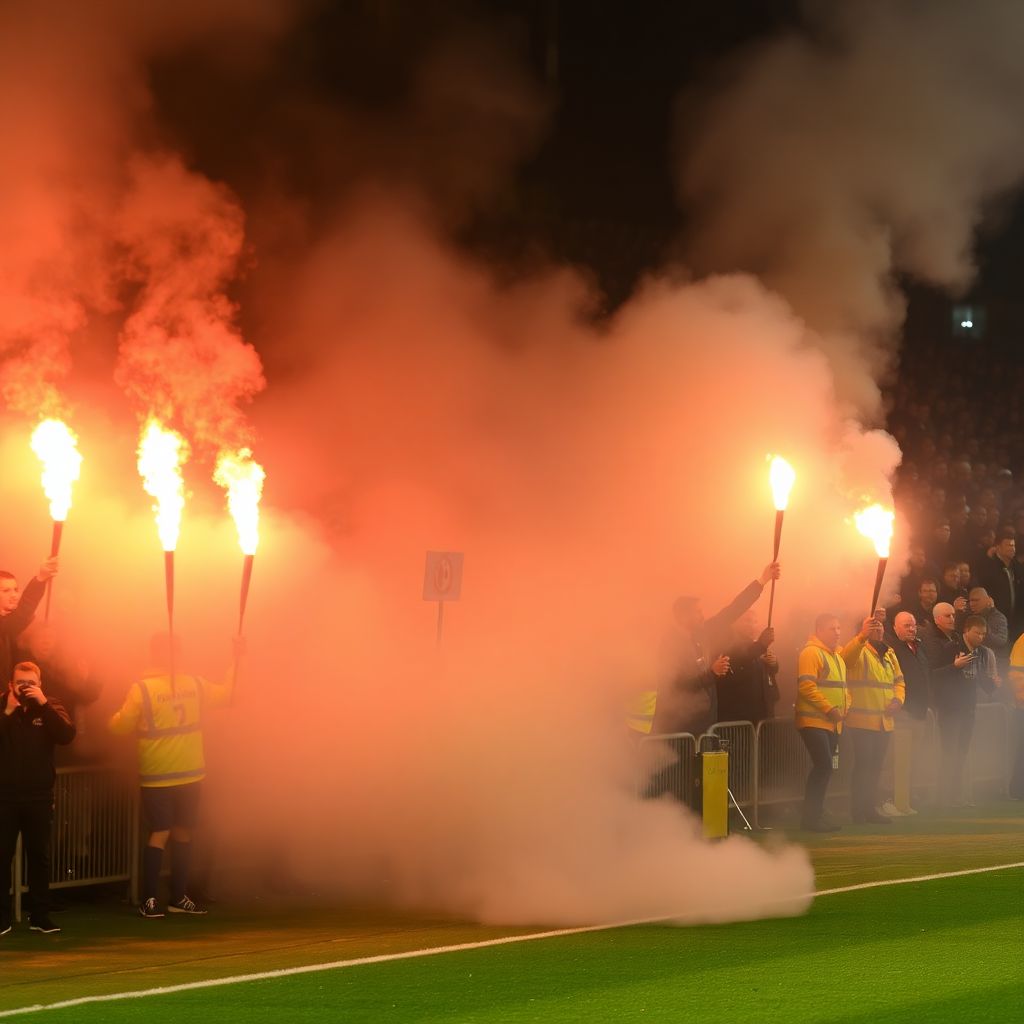
The sanctions stem from incidents in the away section during the first-leg encounter in Nottingham. Flares were lit and thrown in the Fenerbahce end, forcing the referee to stop play temporarily in the first half to allow the smoke to clear and for safety checks to be carried out.
Local authorities later confirmed that three individuals were arrested during the match in connection with disorder. After the final whistle, a detailed inspection of the away sector uncovered notable damage to seats and other parts of the stand allocated to the visiting Turkish supporters.
Under UEFA’s decision, Fenerbahce now has 30 days to work with Nottingham Forest to assess and cover the costs of the physical damage inside the stadium. That obligation is separate from the official fines and will likely add further to the final bill.
Nottingham Forest Advance Despite Defeat on the Night
On the pitch, the tension in the stands ultimately did not derail Nottingham Forest’s campaign. Although the English side lost the second leg 2-1, their dominant display in the first meeting proved decisive.
Forest progressed to the Europa League Round of 16 with a 4-2 aggregate victory, having built a comfortable cushion in the earlier fixture. The result underlined their efficiency over two legs and left Fenerbahce reflecting on missed opportunities as well as the disciplinary fallout.
For the Turkish side, the elimination itself was already a disappointment. The subsequent UEFA ruling has now turned that defeat into a much broader setback, combining sporting frustration with reputational and financial damage.
A Costly Night for Fenerbahce
Fenerbahce’s exit from the Europa League is now overshadowed by the scale of the sanctions. The club not only loses out on potential prize money and exposure from going deeper into the competition, but must now deal with:
– Substantial fines
– Repair costs for stadium damage
– A one-game ban on away supporters in UEFA competitions
For a club with ambitions to re-establish itself firmly on the European stage, these penalties send a damaging message. Incidents in the stands have now had a direct impact on the team’s prospects off the pitch.
UEFA’s Firm Line on Crowd Trouble
The punishment fits into a broader pattern of UEFA intensifying discipline around supporter behaviour. Use of pyrotechnics, pitch invasions, discriminatory chanting and vandalism are all areas that draw heavy sanctions.
In particular, pyrotechnics have become a regular target. While many fans see flares and smoke bombs as part of the visual culture of football, UEFA classifies them as serious safety risks. Any match interruption or threat to spectators, players or officials usually results in immediate disciplinary proceedings.
Stadium damage is another red line. Host clubs and UEFA consider visiting supporters the responsibility of their own club, and any destruction of property is treated as a failure to control fans. Financial penalties and orders to repair damage are standard, but repeated offences can lead to stadium closures or more severe restrictions.
Impact on Fenerbahce’s Reputation and Future Campaigns
Beyond the immediate penalties, the incident risks affecting how Fenerbahce is perceived across Europe. Persistent disciplinary issues can:
– Increase scrutiny from UEFA in future matches
– Lead to stricter conditions on away allocations
– Influence security planning and costs for clubs hosting Fenerbahce
If similar incidents occur again, the club could face escalated sanctions, including partial or full stadium closures, higher fines or longer-term bans on away fans. For that reason, this case serves as a warning signal inside the club structure.
Pressure on the Club to Act Internally
In situations like this, European clubs are often expected not just to pay fines, but to demonstrate concrete measures to prevent a repeat. That can involve:
– Tighter controls on away ticket distribution
– Enhanced cooperation with local authorities and stadium stewards
– Searches aimed at stopping pyrotechnics entering grounds
– Internal sanctions or bans for identified offenders
For Fenerbahce, responding decisively will be crucial to rebuilding trust with UEFA and other European clubs. Showing they can manage large travelling support responsibly may help avoid more severe punishments in the future.
Financial and Sporting Context for Fenerbahce
From a financial standpoint, the combination of fines, damages and early elimination reduces the net gain from this European campaign. Clubs heavily rely on income from advancing through knockout stages, particularly in terms of prize money and broadcast revenue. Falling at this hurdle, then receiving sanctions, could influence short-term budgeting and planning.
Sportingly, the away fan ban creates a tangible disadvantage for the next European away fixture. Playing in often hostile environments without their own noisy backing may test the squad’s mental resilience. Coaching staff and players will need to prepare for a different kind of atmosphere, knowing they cannot rely on the usual wall of sound behind the goal.
Wider Lessons for Supporters and Clubs
This episode once again illustrates how tightly connected supporter behaviour is with club fortunes. Flares lit in the stands and seats ripped out after a game do not remain isolated actions; they translate into disciplinary cases, fines, bans and, potentially, sporting sanctions.
For Fenerbahce, the night in Nottingham has become a reference point in discussions about fan conduct and responsibility. The club now faces the dual challenge of repairing its image on the European stage and ensuring that future matches, especially away from home, are remembered for football rather than for chaos in the stands.
As the Europa League moves forward without them, Fenerbahce will be left to reflect on a tie that ended not only in elimination, but in a damaging disciplinary legacy that will linger into their next continental campaign.