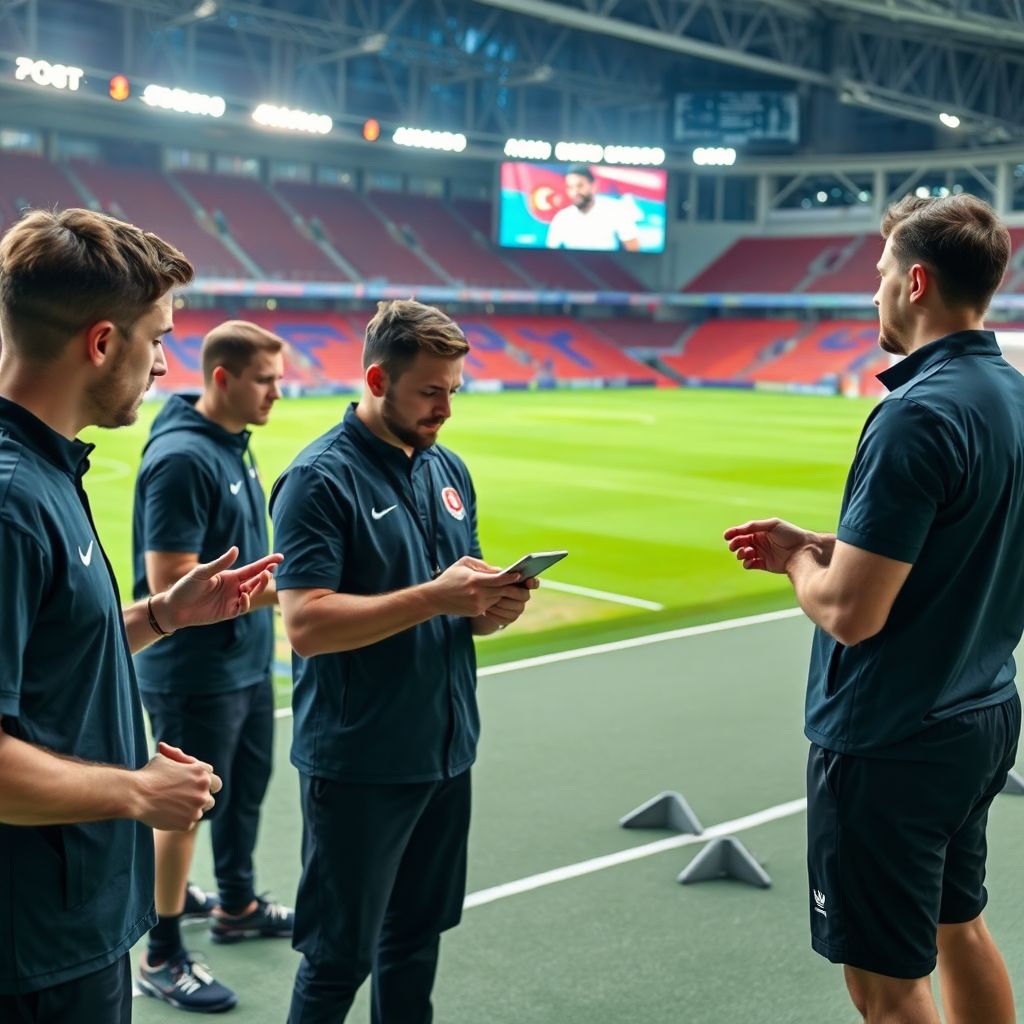
Turkish professional teams reduce injuries by combining data-driven screening, strict load management, daily sports science input, and tightly controlled rehab-to-performance (RTP) processes. They invest in integrated staff, simple monitoring tools, and clear decision rules, then adapt world standards to local realities, budgets, and travel-heavy calendars common in Turkish competitions.
Core injury-reduction strategies used by Turkish professional teams
- Systematic pre-season and in-season screening linked to individualized load and gym programs.
- Embedding sports scientists and physiotherapists into each training session, not only match days.
- Short, high-yield neuromuscular and mobility routines tailored to playing position and injury history.
- Consistent use of GPS and wellness monitoring with simple red-flag thresholds and follow-up actions.
- Structured, criteria-based RTP pathways developed with Turkish sports medicine clinics for professional athletes.
- Clear communication routines between coaches, medical staff, and management about risk tolerance and player availability.
- Regular collaboration with advanced sports physiotherapy and rehab centers in Istanbul for complex cases.
Data-driven screening and individualized load management
Data-driven screening and load management are best for professional and semi-professional environments that can follow players closely across the whole season. They are less suitable when staff cannot review data daily, when players have very inconsistent attendance, or when basic medical clearance is not available.
In Turkish clubs that use structured sports injury prevention programs in Turkey, screening is not a one-off event. It is a repeating cycle that links three pillars:
- Baseline risk profiling – medical history, previous injuries, playing position, training age, and basic movement quality tests.
- Ongoing load monitoring – session duration and intensity (e.g., RPE-based internal load) and, where possible, GPS external load.
- Adaptive interventions – changes to pitch load, gym content, and recovery strategies based on the profile and weekly response.
Typical workflow in a Turkish professional football club:
- Pre-season: 20-30 minutes per player for movement screening, basic strength benchmarks, and simple field tests (e.g., repeated sprints).
- In-season: weekly wellness questionnaires, RPE collection after sessions, quick jump or strength tests 1-2 times per week.
- Adjustments: micro-changes in volume or intensity for red-flagged players instead of removing them completely from training.
When you explore the best injury prevention training for football teams in Turkey, prioritize systems that translate screening data into clear training decisions rather than complex lab-only assessments that do not fit your schedule.
Embedding sports science into daily training cycles
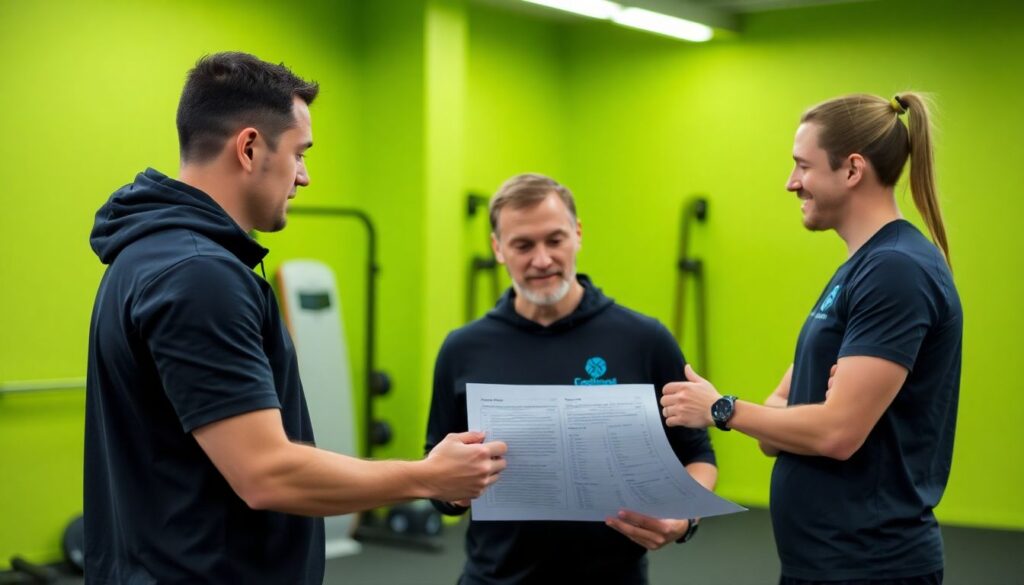
To embed sports science into day-to-day work, you need basic tools, clear roles, and simple routines that coaches can follow even on tight match schedules. Many clubs adopt a lean model before considering whether to hire Turkish sports performance and injury prevention coach staff full-time.
Essential requirements and tools
- People
- At least one sports scientist or S&C coach responsible for data and gym programming.
- Close collaboration between this role, head coach, assistant coaches, and physiotherapists.
- Monitoring tools
- Simple RPE collection (paper, spreadsheet, or app).
- Basic wellness questionnaire focusing on sleep, muscle soreness, mood, and stress.
- If budget allows: GPS units or local positioning systems for main squad.
- Testing equipment
- Jump mat or smartphone-based jump apps.
- Portable dynamometers or gym devices that show relative strength.
- Stopwatches, cones, and timing gates where available.
- Data workflows
- One central spreadsheet or basic athlete management system updated daily.
- Automatic color-coding for red flags (e.g., strong wellness drop, unusual jump loss, or big load spike).
- Short daily report shared in a coaching group (text or email) before training.
- External partnerships
- Links with Turkish sports medicine clinics for professional athletes for imaging, expert opinions, and complex injuries.
- Occasional lab testing (e.g., VO2, detailed biomechanical analysis) if it can influence long-term decisions.
Comparative overview of common interventions
| Intervention | Typical resources needed | Key impact metrics to track | Best suited environments |
|---|---|---|---|
| Wellness & RPE monitoring | Spreadsheet or low-cost app; 5-10 minutes daily staff time | Training availability, self-reported fatigue, number of weekly load spikes | All pro and semi-pro teams, including lower-budget Turkish clubs |
| GPS-based external load tracking | GPS units, software license, data analyst or sports scientist | High-speed running volume, sprint count, chronic vs. acute load | Top-league football, basketball, and rugby teams in Turkey |
| Individualized gym strength plans | Basic gym, S&C coach, testing tools for strength and power | Relative strength changes, asymmetry trends, non-contact injury rates | Any club with stable access to a weight room |
| External specialist collaboration | Contract with advanced sports physiotherapy and rehab centers in Istanbul or other major cities | Time to RTP after major injuries, re-injury frequency, player satisfaction | Clubs without in-house full-time medical or performance team |
Targeted preventive strength, mobility and neuromuscular protocols
High-yield prevention protocols give strong benefit with minimal extra time. The most effective versions are short, repeatable, and tailored by position and injury history. This approach underpins many sports injury prevention programs in Turkey, especially in football, basketball, and volleyball.
Risks and limitations you must respect
- Do not copy elite-level volumes or loads without adjusting to your squad’s training age and schedule.
- Avoid painful exercises after recent injury or surgery without clearance from a qualified clinician.
- Introduce new plyometrics and change-of-direction drills gradually to prevent overload.
- Stop any exercise that triggers sharp pain, dizziness, or unusual symptoms and seek medical advice.
- Children and adolescents need supervised, age-appropriate loads rather than adult elite protocols.
Step-by-step implementation guide
- Define your target injuries and risk groups – Start with your last 1-2 seasons. Identify the most frequent and most severe injuries (for many Turkish football teams: hamstrings, adductors, ankle sprains). Choose 1-2 priority areas and focus your first protocol there.
- Choose evidence-informed exercise families – For each target injury, pick 3-6 key exercises:
- Hamstrings: hip-dominant and knee-dominant eccentrics, such as Romanian deadlifts and partner-assisted Nordic variations.
- Adductors: side-lying adduction, Copenhagen progressions, lateral lunges.
- Ankles and knees: balance drills, landing mechanics, controlled single-leg hops.
- Build short warm-up and gym “blocks” – Integrate 5-10 minutes into the pitch warm-up and 10-15 minutes into gym sessions:
- Warm-up block: lighter variations and coordination drills.
- Gym block: heavier strength work, controlled eccentrics, and more advanced plyometrics.
- Set conservative starting loads and progressions – Begin with low volume and simple patterns:
- Week 1-2: technique focus, low sets, and no maximal efforts.
- Only increase volume or complexity when players report tolerable muscle soreness and no joint pain.
- Integrate position-specific variations – For example:
- Wide players and full-backs: extra high-speed hamstring work and deceleration drills.
- Central defenders: more landing mechanics, aerial duels, and contact preparation.
- Goalkeepers: shoulder stability, diving mechanics, and hip mobility.
- Assign ownership and track adherence – Designate a coach or S&C staff member to run the blocks:
- Mark attendance and completion quickly after each session.
- Link adherence data to injury tracking so you can see which units are really protective.
- Review and refine every 6-8 weeks – Discuss with players and physios:
- Drop exercises that cause repeated discomfort or poor buy-in.
- Add or replace exercises only if they fit within the same time window and risk level.
Player monitoring ecosystem: wearables, GPS and real-time analytics
Player monitoring should connect subjective reports, training load, and objective performance markers into a simple decision system. Turkish clubs that succeed treat GPS and apps as tools to support coaching instincts, not as replacements for them.
Checklist to verify your monitoring system is working
- You record training and match exposure for every player consistently across the season.
- Players complete short wellness or readiness check-ins before most training days.
- You can see weekly and monthly trends for high-speed running, total distance, and internal load (RPE) for key players.
- You have clear “red flag” rules (e.g., big change in load or readiness) that trigger conversation or load adjustment.
- Coaches receive a one-page or one-screen summary before sessions rather than raw spreadsheets.
- Data from GPS, gym tests, and medical notes are stored in one shared system or folder structure.
- You review injury cases monthly to see whether red flags were visible in the data beforehand.
- Your staff know how to operate the wearables and software without relying on a single person.
- You have a plan for away matches and travel so data collection does not collapse during dense schedules.
- Confidentiality and data-protection practices are explained to players and respected by staff.
Structured rehab-to-performance pathways and objective RTP gates
Structured RTP pathways reduce re-injury risk and give coaches clarity about when an athlete is truly ready. Successful Turkish teams combine in-house protocols with external expertise from advanced sports physiotherapy and rehab centers in Istanbul and other hubs.
Common mistakes that undermine safe return-to-play
- Rushing players back based mainly on match importance instead of clear physical readiness criteria.
- Using time-based rules only (“three weeks for a mild strain”) without functional benchmarks.
- Poor communication between club medical staff and external clinics, leading to mixed messages for the athlete.
- Skipping late-stage on-field conditioning and going straight from indoor rehab to full team sessions.
- Not addressing underlying risk factors (e.g., strength deficits, asymmetries, poor sleep and recovery habits).
- Recording injuries but not re-injuries separately, making it hard to evaluate the true impact of protocols.
- Neglecting psychological readiness and fear of re-injury, especially after major surgery.
- Failing to integrate position-specific demands (e.g., repeated sprints, aerial contact) into final RTP testing.
- Lack of clear documentation of RTP criteria, leading to inconsistent decisions between seasons and staff members.
Organizational culture, communication and risk-governance practices
Organizational choices often decide whether injury prevention tools actually get used. Some Turkish clubs invest heavily in technology but achieve little impact because culture and communication remain unchanged. In other cases, lean, low-tech setups perform well thanks to clear roles and respect for medical input.
Alternative models when full-time performance departments are not possible
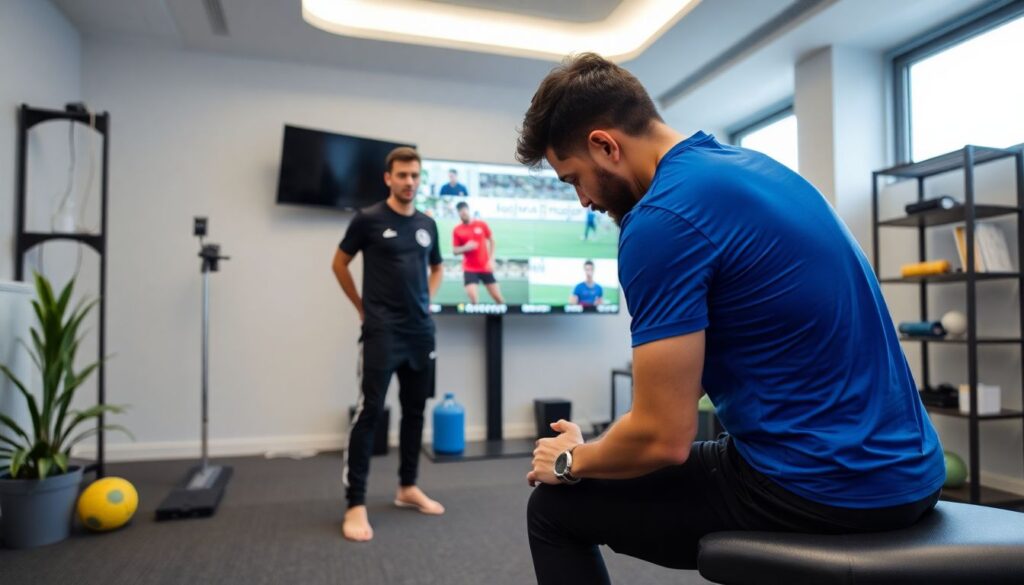
- External hub-and-spoke model – Partner with one trusted clinic (for example, among advanced sports physiotherapy and rehab centers in Istanbul) that provides periodic screening, program updates, and remote case reviews while club staff handle daily delivery.
- Coach-led, consultant-supported model – Train one assistant coach to run core prevention routines and simple monitoring, supported by a part-time consultant you can hire as a Turkish sports performance and injury prevention coach to review data monthly.
- League or federation shared services – Several teams share one sports scientist or medical performance group that rotates between clubs for education, screening blocks, and complex case management.
- Academy-first focus – When first-team resources are tight, prioritize structured prevention and monitoring in the academy to reduce future injury burden as players move into senior squads.
Practical answers on common implementation hurdles
How can a smaller Turkish club start injury prevention without big technology budgets?
Begin with wellness and RPE tracking using spreadsheets, short standardized warm-ups, and simple strength benchmarks. Add GPS and advanced testing only after your basic routines are stable and consistently used by staff.
What is a realistic first step toward data-driven load management?
Track session duration and RPE for all players, then calculate total weekly load per athlete. Use basic color coding to flag sudden spikes and discuss them in daily staff meetings before adjusting training.
How often should we update our screening and prevention programs?
Review them every 6-8 weeks and after any cluster of similar injuries. Small, frequent adjustments are easier to implement and evaluate than complete program overhauls once per season.
When should we involve external sports medicine or rehab centers?
Call in advanced centers for complex injuries, slow or recurrent problems, and when surgery or high-level imaging is required. They can also be valuable for pre-season screening and RTP benchmarking.
How do we convince players to buy into new prevention routines?
Keep sessions short, explain how exercises relate to their specific injury history or position, and show simple progress markers. Involve senior players early and ask for feedback so they feel ownership.
Can we copy another club’s program directly?
You can use other programs as templates, but always adjust exercise selection, volumes, and schedules to your squad, competition calendar, and available staff. Blind copying increases overload and non-compliance risk.
What if coach and medical staff disagree about return-to-play timing?
Agree in advance on objective RTP criteria and document them. During disagreements, compare the player’s current status to these benchmarks and seek external opinion if needed.