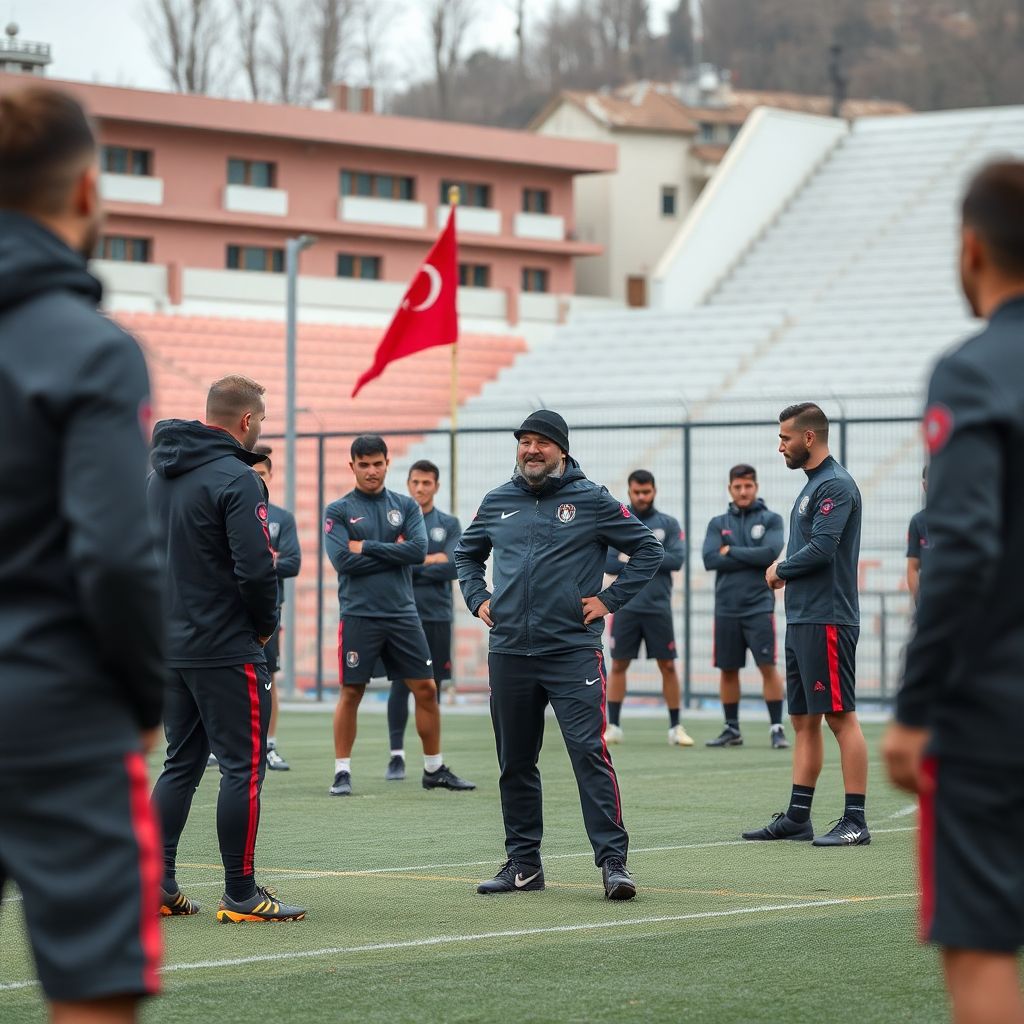
Galatasaray Under Siege: Okan Buruk Imposes Extreme Tactical and Disciplinary “Championship Regime”
Galatasaray have entered what can only be described as crisis mode. After a costly slip in the Süper Lig title race and five points dropped over the last three weeks, head coach Okan Buruk has effectively declared a “state of emergency” inside the club. With the title race on a knife edge and virtually no room left for mistakes, Buruk has launched a hardline “championship plan” built on strict discipline, tactical isolation, and an intense camp-style environment at the Kemerburgaz Metin Oktay Facilities.
At this decisive point of the season, the focus is simple: nothing matters except winning the club’s 26th league title. Everything else – comfort, routine, media noise, and even players’ personal time – has been pushed aside in favor of a single objective: total concentration ahead of the high-pressure showdown with arch-rivals Fenerbahçe.
—
No More Days Off: Full-Time Camp Mode Activated
One of Buruk’s most drastic decisions concerns the players’ day-to-day lives. All scheduled rest days have been revoked. A previously planned holiday following the draw against Kocaeli was abruptly canceled by the technical staff, and players were ordered to report back for what has been described internally as “full-day shifts.”
The squad is now required to spend the majority of each day at the Kemerburgaz training complex. This goes far beyond standard training sessions. Players will eat together, recover together, and sit through extended tactical meetings together. The idea is to recreate a rigorous training camp environment within the season itself, eliminating distractions and forcing total immersion in the title battle.
Buruk’s staff believes that constant proximity will strengthen team unity at a moment when small fractures can become fatal. By living and working in close quarters, players are expected to build stronger “family bonds” and a deeper sense of shared responsibility. Every meal, every video session, and every tactical briefing is designed to remind them that they are collectively chasing one goal.
—
Tactical Silence: Media Blackout and “Talk Only on the Pitch”
Alongside the physical and logistical shift, Buruk is completely overhauling the psychological and communicative strategy around the squad. In an atmosphere where Istanbul’s sports press and club politics can overwhelm even the most experienced footballers, the coach has ordered a strict “silence policy.”
Under this new code, Galatasaray will avoid engaging in public disputes, verbal battles with rivals, or emotional reactions to refereeing controversies and administrative problems. Players and staff have been instructed to stay away from polemics and focus exclusively on football. In essence, the message is clear: no more words, only performances.
This is not only a media strategy but a mental one. The final stretch of a Turkish title race is notoriously exhausting, with pressure coming from fans, pundits, and rival clubs on a daily basis. Buruk wants to shield his dressing room from that turbulence. By reducing external noise, he hopes to protect his players from psychological fatigue and prevent them from burning out under constant scrutiny.
—
Kemerburgaz on Lockdown: Fortress Mentality
The Kemerburgaz Metin Oktay Facilities have been transformed into a closed fortress. Access is heavily restricted, with the intention of creating a secluded environment where players can prepare in peace for the upcoming derby and the remaining fixtures.
Any internal tensions, performance concerns, or tactical shortcomings are being dealt with strictly behind closed doors. Buruk has scheduled a series of intense, often extended, internal meetings – some focused on collective shape and strategy, others on individual roles and responsibilities. By keeping problems “within the family,” the staff aims to maintain control over the narrative and eliminate external speculation about the team’s mental or tactical state.
This lockdown is also a clear message to the players: every detail matters now. From recovery routines and diet to positional discipline and set-piece execution, nothing will be left to chance. The training base is no longer just a workplace; it is the epicenter of a high-pressure mission.
—
A Controlled Release: One Open Training to Ignite the Fans
Despite the clampdown, Galatasaray’s hierarchy understands that the emotional engine of the club – its supporters – cannot be completely shut out. To maintain a strong connection with the fan base, the club has scheduled a special open training session on Thursday.
This is a calculated move. For one day, the gates of Kemerburgaz will briefly open so that fans can watch the team, chant, and visibly show their support. The session is designed to charge the players emotionally before the environment returns to full privacy for the derby preparations.
In practical terms, this event acts as both a morale booster and a statement of unity. The message is that, even in lockdown, the team and fans are moving as one. After that open session, the doors will close again, and the focus will revert to fine-tuning tactics and mentality away from the cameras.
—
Single-Minded Focus: Eat, Sleep, Train, Win
Galatasaray are not only facing sporting pressure but also navigating financial restructuring and the demands of a recent deep Champions League run. Fatigue – physical, mental, and emotional – is a real concern. Buruk’s “championship plan” aims to simplify players’ worlds to the bare essentials: rest properly, fuel correctly, train obsessively, and perform when it counts.
This back-to-basics philosophy borrows heavily from traditional pre-season boot camps and tournament-style preparations. By stripping away almost every non-essential activity, the coaching staff hopes to give players the headspace and clarity required to handle the tension of a tight title race.
The gap at the top of the table has narrowed, and small margins will decide the outcome. Galatasaray’s bet is that a return to a “high-intensity camp” environment can provide a psychological and tactical edge. In Buruk’s view, the team that stays calmer, more disciplined, and more united under pressure will be the one lifting the trophy.
—
Tactical Implications: What This Plan Means on the Pitch
Behind the disciplinary headlines, there is a clear tactical agenda. Extra hours at the training ground allow Buruk and his staff to repeatedly drill patterns of play, correct recurring mistakes, and rehearse multiple game scenarios, particularly for the Fenerbahçe derby.
Expect a sharper emphasis on:
– Defensive compactness and transition defense, to cut out the lapses that led to dropped points.
– Coordinated pressing triggers, ensuring the forward line and midfield press as a unit rather than in isolation.
– Structured build-up from the back and through midfield, reducing the kind of rushed long balls that often appear when teams are nervous.
– Set-piece routines, both attacking and defensive, recognizing that one dead-ball situation can decide a tight title match.
The “speak only on the pitch” mantra is not just symbolic. It reflects a shift toward expressing aggression, confidence, and dominance through tactical discipline, not emotional outbursts or media statements.
—
Psychological Warfare: Controlling Stress and Expectations
Buruk’s regime also recognizes that titles are not won on tactics alone. In late-season run-ins, mental resilience often separates champions from contenders. The lockdown approach is, in many ways, a form of controlled psychological warfare – not only against rivals, but against the team’s own fears and doubts.
By placing the group into a tightly controlled environment, the staff can:
– Monitor players’ emotional states more closely.
– Quickly intervene if anxiety, frustration, or complacency starts to surface.
– Reinforce key messages every day, reducing mixed signals.
– Build a siege mentality: “us against the world,” which has historically fueled many title-winning squads.
Team meetings during this period are likely focusing heavily on mentality – how to handle conceding first, how to react to hostile atmospheres, how to stay calm in the last minutes of close games, and how to convert pressure into performance rather than panic.
—
Discipline as a Signal to the Dressing Room
Canceling holidays, implementing full-day shifts, and limiting media contact sends a powerful message to the players: this is not business as usual. For some, such drastic measures might feel harsh, but they also remove any ambiguity about the seriousness of the situation.
Senior figures in the squad are expected to play a crucial role in enforcing standards within this framework – arriving early, setting the tone in training, demanding intensity from teammates, and backing the coach’s message in the dressing room. When leaders buy into such a regime, it becomes far more likely that the entire group will follow.
At the same time, this strict approach holds everyone accountable. With more contact hours and more tactical detail, excuses for poor performances shrink. Each player knows that the club is doing everything possible to create optimal conditions. The rest is up to them.
—
Balancing Risk and Reward: Can Lockdown Backfire?
There is, of course, an inherent risk in any extreme approach. Overloading players – physically with constant training, and mentally with pressure and isolation – can lead to burnout or tension if not managed carefully. The art lies in finding the balance between intensity and suffocation.
To mitigate that, the staff must carefully calibrate training loads, build in recovery time even within a “no days off” structure, and maintain an open channel of communication behind closed doors. The open training session for fans, the shared meals, and the “family” narrative are all designed to ensure that the environment remains united rather than oppressive.
If managed correctly, this kind of short-term, high-pressure camp can galvanize a squad. If mishandled, it can create fatigue or friction. Buruk is clearly betting that the group’s experience and character can handle – and even thrive on – this heightened regime.
—
Legacy on the Line: Beyond the 26th Title
For Galatasaray, this phase is about more than one trophy. Securing a 26th league title would not only deepen the club’s dominance in domestic history; it would also reinforce the perception that they remain the standard-setters in Turkish football, even amid financial and competitive challenges.
For Okan Buruk personally, this “championship plan” will define his tenure. If the lockdown approach leads to a successful title charge, it will be remembered as a bold, decisive move from a coach who refused to let the season slip away. If it fails, critics will question whether the pressure was turned up too high, too late.
What is clear is that Galatasaray have chosen confrontation over comfort. In the face of narrowing margins and intensifying pressure, the club has locked itself into a bunker mentality – convinced that unity, discipline, and focus behind closed doors will be the difference between heartbreak and another golden chapter in their history.