“Born For This Moment”: Haaland Hails Arda Güler After Bayern Masterclass
Real Madrid may have crashed out of the Champions League in dramatic fashion at the Allianz Arena, but the night in Munich produced a new global headline act: Arda Güler. The 21-year-old Turkish midfielder turned a painful aggregate defeat into a personal coming‑of‑age performance, so dazzling that even Erling Haaland felt compelled to stop and applaud.
Among the flood of reactions from pundits, players and fans, the loudest and most symbolic came from the Manchester City striker. Haaland, one of the sport’s current superstars, didn’t need many words to sum up what the world had just witnessed.
Haaland’s late‑night salute
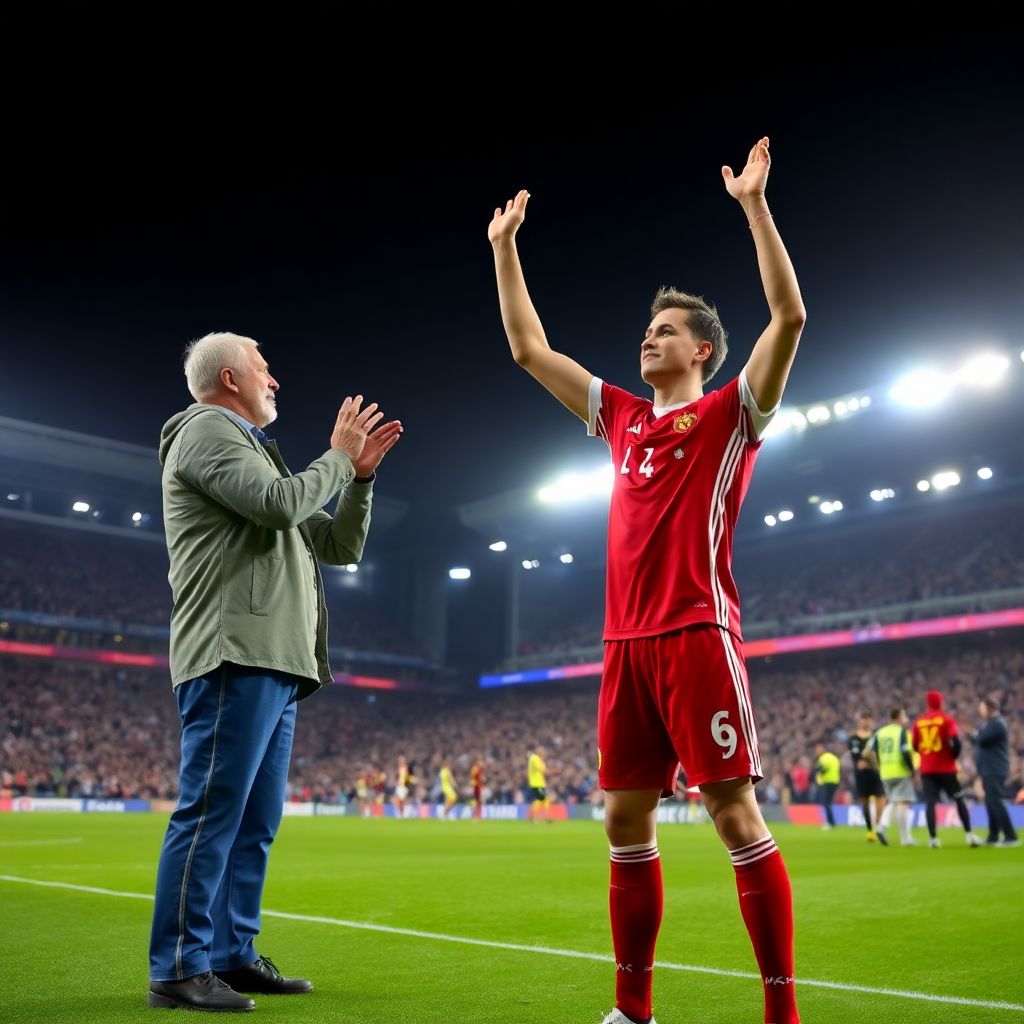
In the early hours after the intense quarter-final second leg, Haaland posted a photo of Güler’s instantly iconic goal celebration on his Instagram account. Beneath it, he wrote a simple four-word verdict:
“Born for this moment.”
Coming from a player whose own career has been defined by big stages and decisive goals, the message carried enormous weight. It read like a passing of the torch, or at least an acknowledgement that another generational talent had stepped fully onto the European stage.
The post spread rapidly across social platforms, interpreted by many as an unofficial “stamp of approval” from one of modern football’s most feared finishers. In a sport where respect between elite players is earned the hard way, Güler had clearly done more than enough.
A night of brilliance wrapped in heartbreak
On the scoreboard, it was a painful evening for Real Madrid: a 4-3 defeat on the night and a 6-5 loss on aggregate to Bayern Munich. Yet within that chaos, Güler produced one of the most memorable individual Champions League displays of recent years.
Nicknamed the “Turkish Messi” for his low center of gravity, technical control and creativity, Güler stole the spotlight with two extraordinary goals:
– The long-range thunderbolt:
Barely 35 seconds into the match, Güler unleashed a sensational strike from around 40 meters. The ball rocketed past Manuel Neuer, a veteran of countless high-pressure nights, leaving the Bayern goalkeeper rooted to the spot and the stadium in stunned silence.
– The record-breaking free-kick:
In the 29th minute, he stepped up over a set-piece and delivered a curling, inch-perfect shot into the top corner. That goal not only reignited Real Madrid’s hopes in the tie but also etched his name into Champions League history as the youngest player to score from a free-kick in a knockout round.
These moments combined technical mastery with fearlessness, the hallmark of top-level attacking players. Even as Bayern pressed, Güler looked like he belonged at this level – not as a promising youngster, but as one of the best players on the pitch.
The red card that soured the spectacle
The night, however, did not end in storybook fashion. After the final whistle, emotions spilled over. Frustrated by late refereeing decisions and the manner of Madrid’s elimination, Güler confronted referee Slavko Vincic in a heated protest.
As he walked toward the tunnel, his remonstrations crossed the line in the referee’s eyes. The result was a straight red card, an abrupt and bitter conclusion to what had otherwise been a breakthrough performance.
For a player driven by passion and ambition, the reaction was perhaps understandable, though costly. It served as a harsh reminder that maturity at the elite level is about more than brilliant touches and big goals – control in the most emotional moments is part of the package.
A message to Madrid fans: “We will be back”
Speaking after the match, Güler refused to bask in personal glory. Instead, his focus remained firmly on the collective disappointment and the supporters who had believed in another deep European run.
“It shouldn’t have been like this. We apologize. We will be back. Hala Madrid,” he said.
The words were simple, but they reflected a mentality already aligned with Real Madrid’s identity: responsibility, resilience and an almost automatic promise to return stronger. For many fans, this interview did as much to confirm his long-term importance to the team as his goals did.
Five records in one unforgettable evening
Beyond the eye test and social media buzz, the numbers from Munich underlined the scale of Güler’s impact. In one game, he set or matched five separate club and Champions League records, further elevating his status within Real Madrid’s history books.
He did all this at just 21, in a knockout tie against one of Europe’s most experienced sides, away from home, under enormous pressure. Performances like that are not accidents; they signal the arrival of a player built for the biggest occasions.
Why Haaland’s praise matters so much
In modern football, recognition from peers often carries more weight than any headline. Haaland is not just another admirer – he is a reference point for what it means to dominate at the top level: ruthless in front of goal, unflinching in pressure situations, and accustomed to deciding titles.
For someone of that stature to publicly declare that Güler was “born for this moment” sends a strong message: this isn’t hype built by marketing, but respect earned on the pitch. For young players, these endorsements can shape perception in dressing rooms, influence how opponents prepare, and accelerate a career narrative from “talented prospect” to “established star.”
A defining step in Güler’s Real Madrid story
Since arriving in Madrid, Güler has been surrounded by lofty expectations. Tagged early as a prodigy in Turkey, he entered a dressing room filled with Champions League winners and international captains. Breaking into such a squad is notoriously difficult, particularly for young creative midfielders who must balance flair with tactical discipline.
The Bayern performance felt like the moment those expectations crystallized into reality. No longer is Güler just “one for the future.” His display in Munich showed he can be the player who changes a knockout tie, bends the rhythm of a match, and forces defenses to adapt around him.
Even in defeat, this kind of performance can redefine a player’s internal status at a club like Real Madrid. It suggests that future tactical plans, transfer strategies and squad rotations will be built with him in mind, not as a luxury option but as a central figure.
The “Turkish Messi” label – curse or compliment?
The comparison to Lionel Messi has followed Güler for years. While such a nickname can be flattering, it is also a heavy burden. Every touch is scrutinized; every dip in form is questioned. Yet on nights like the one in Munich, the parallels become easier to understand.
His ability to receive the ball in tight spaces, change direction in an instant, disguise passes and threaten from distance all evoke shades of the Argentinian legend’s style. Importantly, Güler showed that he is not merely a talented dribbler – he is a decision-maker who can convert possession into direct, decisive actions.
The challenge now will be consistency. True greats are defined not by one or two magical games, but by seasons of dominance. Munich may be the reference point, the night the football world truly took notice, but it must become a standard to chase rather than a peak that is never matched.
What this means for Turkish football
Güler’s rise is more than a personal story; it is a new chapter for Turkish football. For years, the country has produced passionate fans, historic clubs and notable players, but rarely has a Turkish youngster become such a central figure at one of the world’s most powerful teams so quickly.
His success at Real Madrid gives new hope and visibility to young talents developing in Turkey. It shows that the path from local promise to global spotlight is real and achievable. Every appearance, every goal, every standout performance in the Champions League feeds into a broader narrative: Turkish players can shape the very top of the European game, not just participate in it.
A turning point at the Santiago Bernabéu
Even though Real Madrid’s campaign ended at the Allianz Arena, the implications of Güler’s display reach far beyond this season. With several senior players approaching the later stages of their careers, the club is in the process of assembling a new core for the next decade.
Güler’s ability to change games from midfield – through goals, set pieces and creative spark – positions him as one of the cornerstones of that future. Alongside other emerging stars in the squad, he represents a generational shift that will define what the next era at the Bernabéu looks like.
Champions League heartbreak in Munich might be the final chapter of this particular campaign, but for Arda Güler, it felt more like a prologue. Five records broken in one night, a performance that dominated global discussion, and open admiration from a player of Erling Haaland’s stature – all of it points to one conclusion:
The world did not just witness a brilliant game. It witnessed a career lifting off. And if Haaland is right, Arda Güler truly was born for nights like this – and for many more to come.