Historic Turkish sports wins matter because they triggered lasting changes: funding priorities, youth academies, media deals, fan culture, and even legislation. Focusing on Naim Süleymanoğlu, Galatasaray 2000, the 2002 World Cup, basketball’s boom, Fenerbahçe’s EuroLeague rise, and women pioneers shows how single events can reshape how Turkey trains, governs, and commercialises sport.
Defining Turning Points in Turkish Sport
- Turning points are single events that permanently alter structures: academies, leagues, or governance, not just emotions.
- They create new standards: what counts as success, how talent is scouted, and how clubs invest.
- They shift public attention and media value, redirecting sponsorship and broadcast money.
- They inspire policy responses: facility programs, federation reforms, or education links.
- They reframe identity: what it means to play, support, or coach in Turkish sport.
Naim Süleymanoğlu in Seoul 1988: Olympic Gold and a Weightlifting Revolution
Naim Süleymanoğlu’s Olympic gold in Seoul 1988 defines the moment when Turkish weightlifting turned from a marginal sport into a national performance model. The boundary of this turning point is clear: pre‑1988, limited international impact; post‑1988, Turkey treated strength sports as medal platforms.
Practically, his success pushed federations and the state to formalise talent pipelines. Regional weightlifting centres, systematic scouting in schools, and more professional coaching pathways were justified by a visible, proven champion. The event created a template later copied by other sports: find one breakthrough athlete, then build an ecosystem around that success.
Seoul also reframed how Turkish sport balanced risk and investment. Weightlifting became a test case: targeted resources, high-performance science, and stricter anti‑doping controls to protect international credibility. For current decision‑makers, the “Naim model” is still used when arguing for specialised facilities or long‑term support to a narrow yet high‑potential discipline.
Galatasaray’s 2000 UEFA Cup Victory and the Professionalization of Club Football
Galatasaray’s UEFA Cup 2000 run, often relived through Galatasaray UEFA Cup 2000 highlights, marked a structural shift in how Turkish clubs operated and how Turkish football history greatest matches are remembered. The win defined a new professional baseline for club management, football science, and European ambition.
- Strategic squad building: Clubs started to prioritise balanced rosters, contract planning, and foreign-local mix based on roles, not only star power. Recruitment departments and data‑assisted scouting followed.
- High-performance infrastructure: Training grounds, gyms, and medical facilities were upgraded to meet European standards. Sports science, nutrition, and recovery protocols turned from “extras” into essentials.
- European-first planning: Season planning began with European calendars and seeding in mind. Fixture congestion, rotation, and load management were treated as technical, not just emotional, decisions.
- Revenue and branding logic: The trophy showed how European success multiplies sponsorship and broadcast value. Branding, merchandising, and international fan outreach received more systematic attention.
- Benchmark for rivals: Fenerbahce historic Champions League wins later were understood within the bar Galatasaray set in 2000. Big clubs calibrated their own strategies by asking whether they were building squads good enough for deep European runs.
- Governance conversations: The win made transparent accounting, stable leadership, and medium‑term planning part of mainstream fan debate, not just boardroom jargon.
2002 FIFA World Cup: How a Third-Place Finish Transformed National Football Identity
Turkey’s third-place finish in the 2002 FIFA World Cup is the reference point whenever analysts discuss Turkey World Cup 2002 best moments. But its real power lies in the contexts where it is applied as a model for identity and system design.
- National-team culture building: Coaches and federation leaders use 2002 as a case study for squad harmony, leadership groups, and role clarity. Workshops and coaching courses often dissect that tournament to teach how to align egos with a shared goal.
- Youth academy philosophy: Many clubs adjusted academy curricula to focus on tactical discipline and adaptability, traits showcased in 2002. Training plans reference how players must be able to switch systems and positions during tournaments.
- Fan engagement strategies: Marketing teams and broadcasters recycle Turkey World Cup 2002 best moments to design campaigns that unify generations. This informs how they schedule reruns, documentaries, and content drops around qualifiers and major finals.
- Merchandising and identity products: The demand to buy Turkish national team retro jerseys from that era shows how nostalgia can drive revenue. Federations and retailers use 2002‑inspired designs as controlled experiments in limited-edition merchandising.
- Policy narratives: Politicians and sports administrators cite 2002 when justifying investment in grassroots football, regional academies, or coach education, using the tournament as proof that structured long‑term planning can pay off globally.
- Media framing of expectations: Pundits use 2002 as the baseline for what is considered underperformance or success at major tournaments, affecting how pressure is applied to current squads and coaches.
2010 FIBA World Championship in Turkey: A Catalyst for Basketball’s Mass Growth
Hosting the 2010 FIBA World Championship, and reaching the final as the home team, turned basketball from a growing niche into a mainstream sport in Turkey. It offered a live demonstration of sell‑out arenas, high‑level organisation, and a national team capable of competing with traditional powers.
Positive structural outcomes of 2010
- Accelerated indoor arena construction and renovation, giving clubs and schools better facilities for year‑round training and events.
- More systematic youth programs as federations linked schools, clubs, and regional teams under clearer development pathways.
- Increased media coverage, including regular prime‑time broadcasts for domestic leagues and EuroLeague games.
- Improved event-management know‑how: security, ticketing, fan experience, and sponsor integration practices were upgraded.
- Raised profile for Turkish players, easing their moves to stronger European clubs and creating role models for youngsters.
Constraints and challenges after the boom
- Uneven distribution of facilities, with major cities benefiting more than smaller regions and rural areas.
- Dependence on a limited number of big‑budget clubs to keep the league’s international status high.
- Pressure on federations to maintain interest without the spotlight of a home World Championship.
- Risk of focusing on elite competitions at the expense of sustainable grassroots participation.
- Financial vulnerabilities when sponsorship or broadcast conditions change.
Fenerbahçe’s EuroLeague Breakthrough and the Rise of Turkish Club Basketball
Fenerbahçe’s EuroLeague breakthroughs, building on the same ambition that once drove Fenerbahce historic Champions League wins in football, reshaped expectations for Turkish club basketball. Yet several misconceptions can mislead executives, coaches, and fans when trying to copy that model.
- Myth: “It is only about budget.” Large budgets help, but the turning point came from coherent long‑term planning: coaching stability, clear roster profiles, and integrated youth structures.
- Myth: “Star imports guarantee EuroLeague success.” The real differentiator was fitting imports into a system, not just signing big names. Role definition and continuity mattered more than headline transfers.
- Mistake: Ignoring domestic player development. Some clubs tried to buy success instead of developing locals. Fenerbahçe’s model showed that competitive Turkish players are essential for depth, identity, and financial balance.
- Mistake: Underestimating culture and daily standards. Copying game tactics without copying training intensity, medical standards, and performance analysis leads to fragile success.
- Myth: “Basketball success doesn’t affect other sports.” In reality, EuroLeague wins changed how multi‑sport clubs plan across departments, adopting shared high‑performance practices for volleyball, athletics, and youth programs.
Women in Turkish Sport: Pioneering Wins That Shifted Participation and Policy
Pioneering wins by Turkish sportswomen – across athletics, weightlifting, combat sports, and team games – acted as catalysts to rethink who sport is for and how systems should support female participation. These victories turned individual heroism into pressure for structural change.
Consider a simplified “policy reaction” mini‑case:
// Trigger: Major international title by a Turkish sportswoman
if (public_attention && media_coverage) {
    federation.launches(new_women_league);
    ministry.invests(in_school_programs_for_girls);
    sponsors.shift_budget(towards_women_teams);
    universities.expand(scholarships_for_female_athletes);
}
This pattern has repeated across decades. Iconic wins justify dedicated women’s leagues, stricter equality rules in federations, and more funding for girls’ facilities and coaching education. Each new title strengthens the argument that inclusive investment is not symbolic but performance‑relevant for Turkey’s overall sports results.
Applying Historic Wins: A Short Self-Check for Practitioners
- Have you turned your club’s or city’s “iconic moments” into concrete academy, coaching, or facility projects?
- When you analyse Turkish football history greatest matches or basketball finals, do you extract repeatable structures instead of only emotions?
- Do your marketing and merchandising plans, including retro products like when fans buy Turkish national team retro jerseys, connect past wins to current revenue?
- Are women’s achievements built into your long‑term strategy, not treated as one‑off campaigns?
- Do you benchmark against local models such as Galatasaray’s 2000 run or Fenerbahçe’s EuroLeague era with realistic resources and timelines?
Clarifications on Milestones and Their Long-Term Effects
Why are these specific events treated as structural turning points?
Each event produced visible, lasting changes beyond emotional celebration: new facilities, development systems, or governance practices. They influenced how federations plan, how clubs invest, and how young athletes imagine their own careers, which is the core criterion for calling them turning points.
How can smaller clubs use these historic examples in a practical way?
Smaller clubs can translate big-club or national-team lessons into scale‑appropriate steps: clear playing philosophy, basic performance support, and local partnerships with schools and municipalities. The key is to copy the logic – not the budget – behind those iconic wins.
Do iconic wins always lead to better grassroots participation?
Not automatically. Grassroots growth requires follow‑up: accessible facilities, competent coaches, and affordable programs. Historic wins mainly provide attention and motivation; administrators must convert that into long‑term opportunities for children and amateurs.
What is the risk of over‑relying on nostalgia like 2002 or 2000?
Over‑reliance on nostalgia can freeze strategy in the past. If federations or clubs only aim to “repeat 2002”, they may ignore changes in tactics, sports science, and economics. The past should guide principles, not dictate exact formulas.
How should federations balance elite investment with community sport?
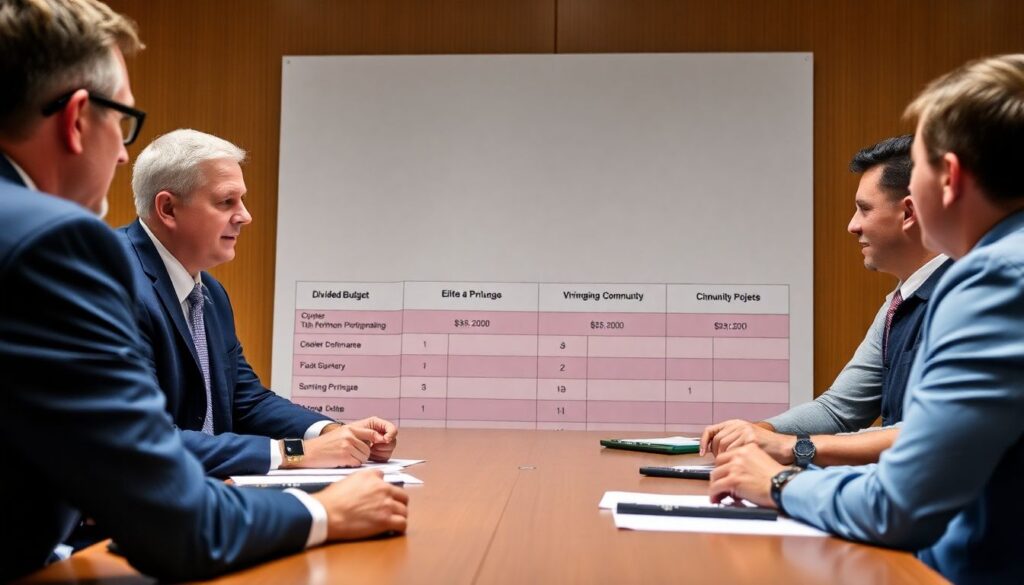
Federations can ring‑fence budgets: a portion for high‑performance programs inspired by historic wins, and a protected share for community participation. Clear criteria and transparent reporting help prevent elite projects from draining all resources.
Why emphasise women’s achievements in a discussion about national turning points?
Women’s achievements expand the talent pool, diversify fan bases, and justify broader public investment. Ignoring them would leave out some of the most powerful recent drivers of policy change, league creation, and facility upgrades in Turkey.
Can commercial goals like merchandising distort the legacy of historic events?
They can, if storytelling becomes purely transactional. However, well-designed products and content can also preserve memory, fund youth projects, and keep lessons from historic wins visible for new generations of players and fans.
Комментарии