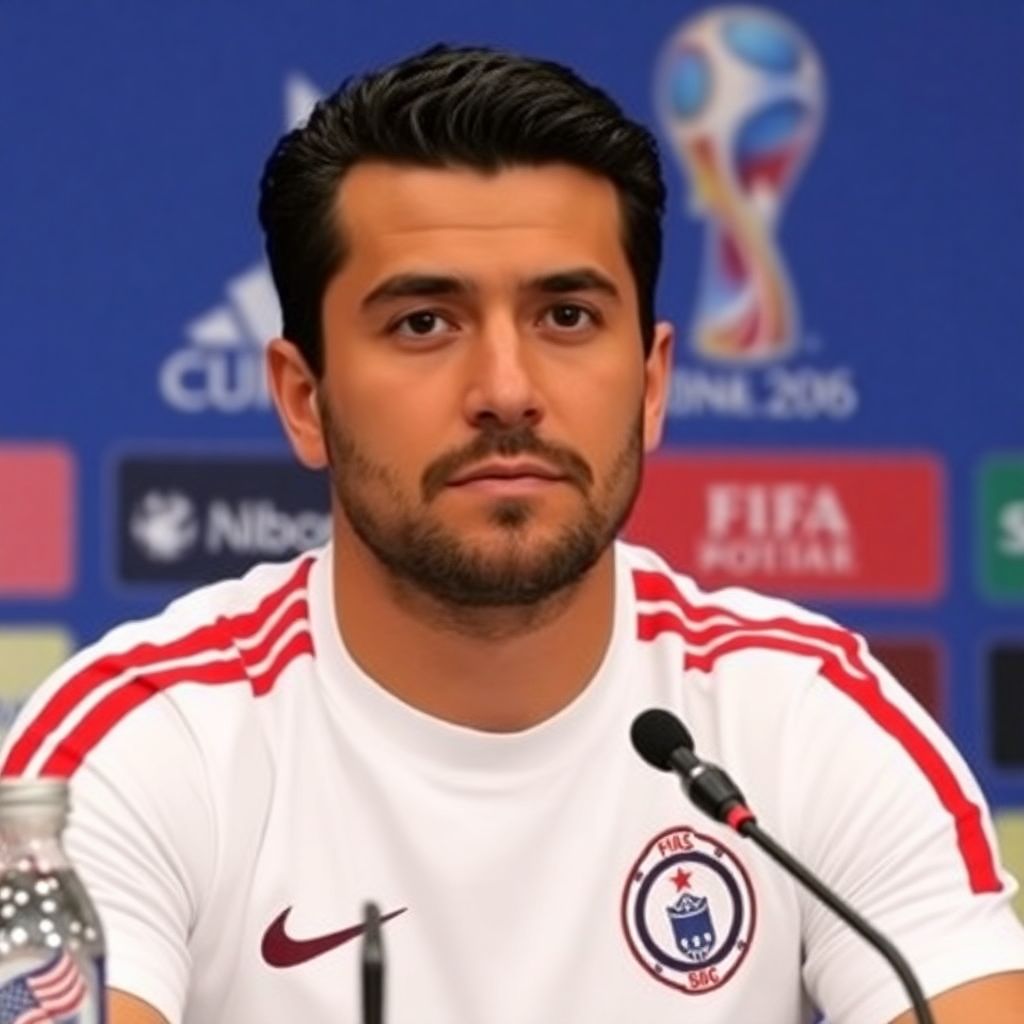
Kenan Yıldız unfazed by US cauldron: Galatasaray nights shaped his mentality
Turkey winger Kenan Yıldız has made it clear that neither he nor his teammates will be overawed by a hostile American crowd when they face the United States in their final World Cup Group D match at Los Angeles Stadium. Drawing on his experiences in some of the most intimidating football arenas, the 21-year-old stressed that he is accustomed to performing under extreme pressure.
Sharing the stage with head coach Vincenzo Montella at the pre‑match press conference, the Juventus forward calmly brushed aside concerns about the passionate, partisan home support expected to push the USMNT. For him, such an atmosphere is not a threat, but something familiar.
“You talked about how big and intense the crowd will be tomorrow,” Yıldız said. “But I remember playing against Galatasaray. Those nights teach you a lot. We are fully ready for these kinds of high-pressure atmospheres.”
By referencing a clash with Galatasaray, Yıldız evoked a benchmark for hostility and noise. Derbies and major fixtures in Istanbul are notorious for their deafening crowds, relentless chants and emotional tension. For a young player to have already navigated that environment gives him a sense of calm heading into a stadium packed with American fans desperate for a home victory.
Responding to early elimination: apology and reflection
Turkey’s World Cup campaign has already ended in disappointment after back-to-back defeats to Australia and Paraguay sealed their early exit. Yıldız did not attempt to sugarcoat the situation. Instead, he addressed the Turkish public directly with a mixture of regret and responsibility.
“Expectations were incredibly high, and this result is a major disappointment,” he admitted. “I want to sincerely apologize to all the supporters and to everyone back home. They believed in us, and we were not able to deliver the results they deserved.”
At the same time, he insisted that the performances were not as poor as the final scorelines might suggest. According to Yıldız, Turkey held the upper hand in several statistical areas, particularly in terms of attempts on goal, yet still came away empty-handed.
“We did not actually play badly,” he explained. “In many key metrics, including total shots, we were ahead. But football is not decided on statistics. Our opponents took their chances; we failed to convert ours. That is the brutal reality.”
This distinction matters to the players: while results decide their fate, the underlying performances give them something to analyze and build on, rather than simply writing the tournament off as a total failure.
Playing through pain: the hidden struggle
Yıldız also revealed that his World Cup preparation was far from ideal. A pre‑tournament injury, kept quiet at the time, disrupted his rhythm and limited his ability to reach full match sharpness. For a player whose game depends heavily on acceleration, agility and confidence in one‑on‑one situations, any physical setback can be decisive.
“Before the tournament I picked up an injury that affected my preparation,” he noted. “I couldn’t get to the physical level I wanted. At this level, those small percentages make a huge difference. I always want to be at 100 percent for my country, but it wasn’t possible this time.”
By sharing that information only after elimination, Yıldız avoided using it as a pre-emptive excuse. Instead, it comes across as context: a reminder that the public often sees only the ninety minutes, not the weeks of recovery, limited training and adapted workloads behind the scenes.
Between club and country: two systems, one player
Another factor Yıldız highlighted was the tactical shift required when moving from his club role at Juventus to his responsibilities with the national team under Montella. For a young player still molding his identity on the pitch, switching between systems is more than just a theoretical exercise.
“At Juventus, my role is different from what the coach asks of me here,” he explained. “The movements, the pressing triggers, where I receive the ball – all of that changes. With the national team I sometimes need to drop deeper, sometimes stay wider, sometimes attack the half-spaces more. It takes time to adapt.”
Such tactical adjustments can directly influence a forward’s output. A player used to receiving the ball close to goal might have to start attacks from wider or deeper zones in a different system, making goals harder to come by. Yıldız clearly understands that the modern game demands this flexibility, yet the adaptation curve can feel steep, especially in the condensed, unforgiving environment of a World Cup.
Goals missing, frustration mounting
As an attacking player, Yıldız measures himself by end product. The lack of goals has weighed heavily on him and the entire offensive unit. Reflecting on Turkey’s two defeats, he acknowledged the emotional burden of leaving the pitch without finding the net.
“Forwards live for goals,” he said. “Not scoring is painful, not only for me but for the whole team. We created situations, but we were missing the final touch, the final decision. You feel that pressure growing with every minute.”
Turkey’s opponents, aware of their technical strengths, opted for compact, disciplined defensive structures. Australia and Paraguay often retreated into deep blocks, closing spaces between the lines and forcing Turkey to play in front of them rather than breaking through.
“Our previous rivals defended very deep and very well,” Yıldız observed. “They stayed organized, closed all the gaps, and we could not open them up. When a team sits that low and stays concentrated, the slightest mistake from us kills the attack.”
A final chance to salvage pride
Despite the disappointment and the weight of the missed opportunities, Yıldız views the final group match against the United States as far more than a dead rubber. For him and his teammates, it is a last chance to show character and leave with at least some sense of redemption.
“I am convinced we will score tomorrow,” he declared with confidence. “We want a strong performance and a positive result against the USMNT. Even if we are already out, we can still walk away with our heads held high if we give everything and execute properly.”
In tournament football, final group matches after elimination often reveal a squad’s true mentality. Some teams drift through them; others treat them as a point of pride. Turkey’s players, stung by criticism and their own high standards, appear determined to fall into the latter category.
Mental resilience built in hostile arenas
Yıldız’s comments about facing Galatasaray were not simply about noise levels. They point to a deeper theme: mental resilience built in extreme environments. Playing in Istanbul’s most intense fixtures means handling not just volume, but expectation, pressure and emotional swings.
Such experiences are invaluable when stepping onto the pitch in front of a roaring American crowd that will support every US attack and react fiercely to every decision. Instead of being intimidated, players like Yıldız can draw energy from the occasion, treating it as another big night rather than something unfamiliar.
For a young international, this is part of a broader learning curve: turning potentially overwhelming situations into fuel, rather than fear. It is this mindset that Yıldız believes will help Turkey approach the USA match with focus rather than apprehension.
Lessons for the future of the national team
Beyond individual stories, Turkey’s early exit and Yıldız’s reflections highlight several broader lessons for the national team. Conversion in front of goal, adaptability against deep defenses, and managing expectations at major tournaments will all be focal points for the staff moving forward.
The fact that Turkey often led in statistical categories, yet lost crucial matches, underlines the importance of efficiency and decision-making in the final third. Dominating possession or shot counts means little without clinical finishing. For attacking talents like Yıldız, this experience can serve as a painful but valuable education in the ruthless demands of elite football.
Meanwhile, the squad has had to confront the pressure of representing a football-obsessed nation on a global stage. The way players have publicly apologized and taken responsibility suggests a group aware of their duties and eager to grow from the setback rather than hide behind excuses.
Montella’s role in shaping Yıldız
Within this context, the relationship between Yıldız and Montella is crucial. The coach’s system asks different things of the forward, but also offers him a platform to evolve into a more complete player. Learning to interpret spaces, press intelligently and contribute in multiple phases of play can elevate Yıldız beyond being just a talented dribbler or finisher.
Adapting to the national team’s tactical demands may not produce instant results in a short tournament, but it could accelerate his long-term development. The USA match, even without knockout implications, becomes another opportunity for Montella to test combinations, for Yıldız to internalize instructions, and for both to strengthen their understanding.
Looking ahead with renewed determination
As the World Cup draws to a close for Turkey, the narrative around Kenan Yıldız is not one of failure, but of unfinished work. A young attacker carrying the scars of a disappointing campaign, an injury-affected build-up and missed chances still speaks with conviction about scoring, performing and honoring the shirt.
The confrontation with a charged American atmosphere will be another step in his growth. He has already faced the fire of Istanbul’s fiercest nights; now he aims to transform the noise in Los Angeles into motivation rather than pressure.
For Yıldız, this tournament will likely be remembered as a hard lesson rather than a highlight. Yet it is in precisely these difficult moments that many top-level careers are forged. If he and Turkey can channel the frustration into progress, the painful experience of this World Cup may ultimately become the foundation for a stronger, more resilient future-for both the player and the national team he represents.