Why data suddenly matters so much in Turkish and European basketball
Ten years ago most Turkish coaches still relied on gut feeling, box score stats and VHS‑style clips. Today, in the Turkish BSL and EuroLeague, staffs open laptops before they touch a ball. GPS chips track every sprint in practice, cameras follow each cut and pick‑and‑roll, and analysts send the head coach a six‑page PDF before breakfast. This isn’t “Moneyball” copy‑paste: the European calendar, promotion‑relegation pressure and FIBA rules create very different constraints, so analytics had to adapt. The result is a quieter revolution: rosters are built differently, late‑game decisions are more calculated and even youth development in Turkey is starting to look more like a data‑driven lab than a traditional basketball school.
From box score to tracking data: how the toolbox has changed
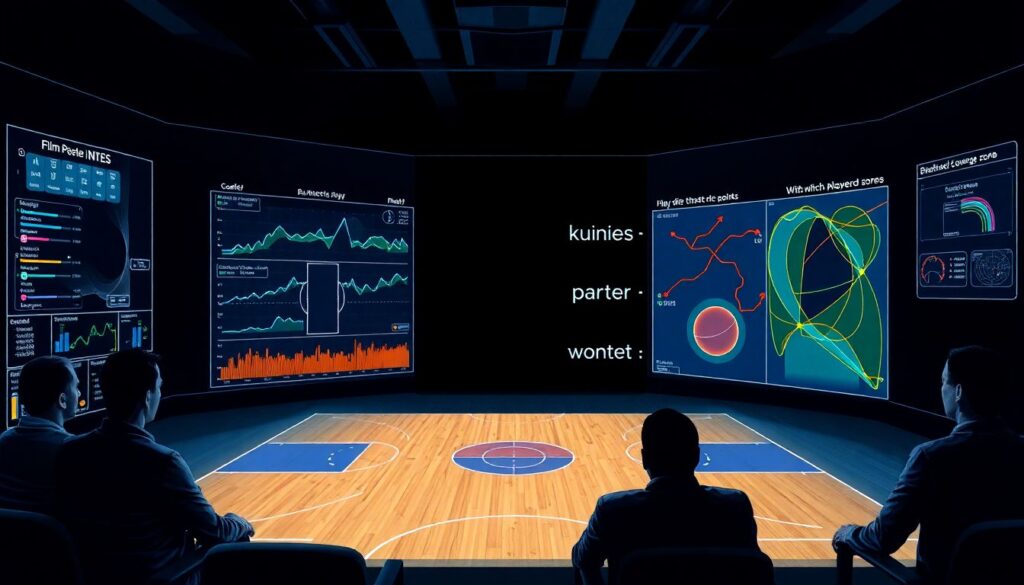
The basic shift is simple: instead of asking “How many points did we score?”, teams ask “How did we create those points, against which coverage, from which spots and with which players on the floor?”. Modern european basketball performance analytics tools combine play‑by‑play, shot charts, tracking coordinates and biometric data into one stream. Systems like Second Spectrum or Synergy track every screen angle, help defense rotation and closeout length. Turkish clubs that once shared a single video coordinator now employ two or three full‑time analysts who tag actions in real time, label every set (Spain PnR, Horns Flare, Chicago action) and feed this to coaches in the locker room at halftime, not a week later on a USB stick.
Case study: Anadolu Efes and the three‑point revolution
When Anadolu Efes won back‑to‑back EuroLeague titles in 2021–22, many fans saw only Shane Larkin and Vasilije Micić hitting tough shots. Underneath was a very deliberate analytics story. Around 2017, Efes analytics staff compared their shot profile with NBA benchmarks and leading EuroLeague offenses. They found an overreliance on long twos: nearly 30% of half‑court attempts came from inefficient mid‑range zones, with an effective field goal percentage almost 10 percentage points lower than from corner threes. Over two seasons they redesigned spacing, emphasizing five‑out sets, early drag screens in transition and pick‑and‑pop bigs. By 2020–21, more than 45% of their shots were threes, while mid‑range fell below 15%. Offense rating jumped into top‑3 in EuroLeague, without a massive payroll jump.
Technical corner: modeling shot value and spacing
Efes used a simple but powerful model. Every play type (e.g. horns side PnR to Spain action) was broken into: starting alignment, ball screen angle, number of passes, touch time and shot location. Using historical data, analysts estimated expected points per possession (PPP) for each combination, adjusted for opponent defense quality. Actions generating below 0.85 PPP were flagged; those consistently above 1.1 PPP were prioritized in playbook tweaks. With tracking data, they added a spacing metric: average distance between weak‑side players and paint at shot moment. They noticed that when spacing exceeded 7 meters, three‑point PPP increased by 0.12. This numeric threshold became a clear coaching cue for where to park non‑ball handlers.
Fenerbahçe: re‑engineering defense with match‑up data
If Efes became the face of offensive analytics in Turkish basketball, Fenerbahçe quietly turned into a defensive lab. Under Zeljko Obradović and later coaches, the club started tracking not just on‑ball events but “ghost possessions” – situations where a pick‑and‑roll was denied, a post‑up was forced out or a shooter gave up a decent look because of closeout pressure. Analysts tagged each sequence: coverage type (ICE, switch, drop, hedge), defender speed, contest distance. Across two seasons they learned that for their roster, aggressive hedges produced more steals but also more corner threes allowed; conservative drop with heavy nail help reduced fouls and stabilized defensive rating. The result: Fenerbahçe became far more selective, using hedge only versus specific non‑passing guards, with lineup‑based rules defined by data, not habit.
Technical corner: lineup‑level defensive impact
Instead of rating defenders only individually, Fenerbahçe analysts built adjusted defensive impact metrics for five‑man units. Every lineup was evaluated by points allowed per 100 possessions, adjusted for opponent quality and game situation (garbage time removed, end‑of‑quarter plays tagged separately). Using ridge regression, they isolated the contribution of each player, similar to RAPM‑style metrics. This exposed subtle interactions: a rim protector’s numbers improved dramatically next to a disciplined low‑foul guard, while pairing two gambling wings tanked the group’s stability. These insights fed directly into rotation decisions: some duos were capped at short bursts, others became default closing pairs despite traditional box score stats looking modest.
Scouting reinvention: how data shrank the continent
The old European recruiting model relied heavily on word of mouth, junior tournaments and agent highlight reels. Now, basketball data scouting and analytics solutions compress years of play into a searchable database. Turkish clubs can filter by play type efficiency: “guards under 25, 35%+ on pull‑up threes, 1.0+ PPP as pick‑and‑roll ball handler against switch defenses”. That query would instantly surface players from ABA, ACB or lower‑tier French leagues who’d otherwise be invisible. When Bahçeşehir Koleji built a roster for FIBA Europe Cup, staff used synergy‑style platforms to identify undervalued “connector” wings who graded out well on off‑ball movement, cut frequency and defensive versatility. Instead of chasing a single expensive scorer, they assembled three mid‑priced role players whose combined on‑off impact exceeded that of a typical star import at similar cost.
Technical corner: projecting EuroLeague translation
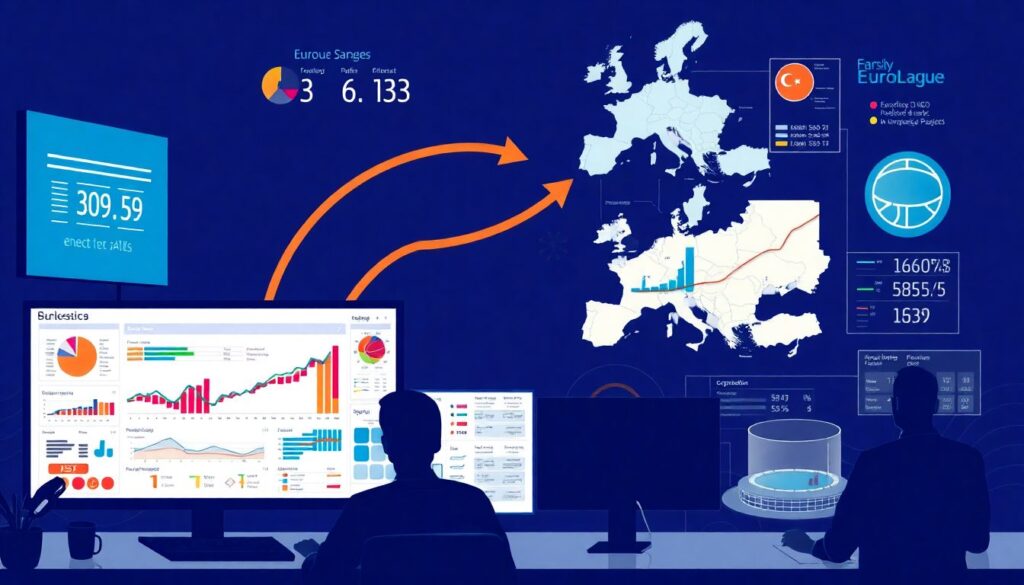
An ongoing problem in european scouting is “league translation”: how will a player’s efficiency move when he jumps from, say, Poland or Turkey’s second division to EuroLeague? Some front offices now apply translation factors similar to baseball’s major/minor league models. Using historical cohorts (e.g., 50 guards who moved from BSL to EuroLeague in last decade), analysts estimate average changes in usage rate, three‑point accuracy and turnover percentage. For example, they might find that high‑usage guards see a 20–25% drop in usage and a 2–3 percentage point fall in three‑point percentage in year one. When Turkish clubs model import guards, they adjust stats by these factors to avoid overpaying for unsustainable efficiency built against weaker defenses and less complex schemes.
wearables, injuries and the crowded European calendar
Analytics in Europe can’t ignore the brutal schedule: domestic league, cup, EuroLeague or BCL, plus national team windows. Turkish teams sometimes play three games in six days with travel across two time zones. Wearable sensors and practice‑load monitoring, once a luxury, are now routine at the top level. Fenerbahçe and Efes track PlayerLoad, jump counts, high‑speed running distance and heart‑rate variability. When indicators cross individualized thresholds, practice is modified: fewer full‑court scrimmages, more half‑court tactical work, or even complete rest. Clubs report quietly that soft‑tissue injury rates in A‑rotation players dropped by around 20–30% over several seasons after fully implementing load management based on analytics, even as minutes stayed high in key EuroLeague clashes.
Technical corner: building individual fatigue models
Instead of using a single red‑yellow‑green dashboard, top Turkish clubs cooperate with sports science labs to build per‑player models. Inputs include age, position, injury history, minutes played, sprint distance and RPE (rate of perceived exertion). From there, analysts use simple logistic regression or more sophisticated Bayesian models to estimate probability of injury in the next 7–10 days for a given workload. For example, a model may show that if a 31‑year‑old guard exceeds 85% of his weekly high‑intensity sprint load for more than three consecutive weeks, his injury risk doubles. This turns “coach’s intuition” into quantified trade‑offs: is the 10% higher win probability in a November road game worth a significantly elevated injury risk to your starting point guard?
Mid‑tier clubs: leveling the field with software and services
Analytical tools used to be a big‑club privilege. That gap is shrinking fast. Affordable basketball analytics software for european leagues now bundles video breakdown, shot analytics and scouting databases in a subscription model reachable even for mid‑budget BSL clubs. Instead of hiring a staff of three, a club like Türk Telekom can combine one in‑house analyst with external sports data analytics services for basketball teams that provide automated breakdowns of upcoming opponents. These services deliver pre‑tagged clips of every after‑timeout play, sideline out‑of‑bounds variation and special offensive set. Coaches no longer spend nights clicking through full games; they can jump straight into decision‑making: which match‑ups to attack, which ATO sets to copy or counter, and how to script the first ten possessions.
Technical corner: automated opponent playbooks
Modern services use computer vision to classify actions without human tagging. The system detects screen locations, ball path and player clustering, then classifies possessions into known patterns (Horns, Floppy, Stack, Spain PnR, etc.). Over 10–15 games, software reconstructs a fairly accurate “playbook” of an opponent: which sets they favor after timeouts, in end‑of‑quarter situations or versus zone. Turkish coaches receive a compact report: frequency charts, efficiency numbers and linked clips. While classification accuracy isn’t perfect, the volume and speed beat manual work by a huge margin, freeing staff time for creative game‑planning rather than low‑level video mining.
Domestic innovation: building Turkish‑specific platforms
One interesting trend is the rise of local solutions. A turkish basketball advanced stats platform knows that coaches care deeply about details like foreign‑player minute limits, U‑23 domestic quotas and the tactical peculiarities of BSL (more zone, more physical hedge, smaller gyms). Instead of generic net ratings, they offer indicators like “efficiency per allowed foreigner on court” or “lineup performance under strict homegrown rules”. That might sound esoteric, but it strongly affects rotation building. A lineup that dominates when two high‑usage Americans share the floor may not be sustainable under league regulations. Local platforms help coaches discover domestic players who quietly drive success in those constrained minutes, often becoming the difference between mid‑table and a playoff run.
EuroLeague and beyond: a shared learning ecosystem
One reason analytics in Turkey advanced quickly is contact with the wider European scene. EuroLeague clubs routinely exchange staff, share best practices at coaching clinics and even cooperate informally on data standards. Vendors providing european basketball performance analytics tools adjust their products to both continental competitions and domestic leagues, so insights gained versus Real Madrid can immediately feed into a BSL clash with Karşıyaka. There’s also a feedback loop with the NBA: when European coaches saw how effectively tracking data exposed weak defenders, they pushed for similar resolution; today, leading arenas in Istanbul are fully equipped with optical tracking systems, narrowing the tech gap further and making cross‑league comparison more realistic.
The business side: sponsorship, media and fan engagement
Analytics are also reshaping how clubs talk to sponsors and fans. Instead of vague claims about “brand exposure”, marketing departments show heat maps of TV visibility for courtside logos, or social media engagement spikes linked to specific highlight‑friendly playstyles (fast pace, three‑point volume). Broadcasters integrate win‑probability graphs into live games, while club content teams produce mini‑breakdowns explaining why a certain defensive scheme works. Interestingly, these numbers‑driven stories make many supporters feel closer to the game, not further. Fans debate switch rules and shot quality on Twitter using the same language as analysts. Teams that open up at least part of their data archive see stronger loyalty and a more educated audience demanding better decision‑making from the front office.
What’s next: towards truly integrated decision‑making
Despite all progress, data is still siloed in many Turkish and European organizations: medical, scouting, coaching and business units run their own systems. The next big step is integration: a single data backbone where a player’s workload, contract status, lineup impact and social reach live together. That’s where full‑service basketball data scouting and analytics solutions will move from “nice to have” to being the central nervous system of a club. Imagine a GM in Istanbul weighing a mid‑season signing: one dashboard shows injury risk, tactical fit, expected EuroLeague translation and projected merchandise sales in the player’s home country. That kind of holistic view isn’t sci‑fi anymore; the building blocks already exist, the challenge is cultural. Once Turkish basketball fully embraces this mindset, analytics won’t just be changing the game – they’ll quietly define who wins it.
Комментарии