Why the Süper Lig suddenly looks a lot more “European”
If you’ve been watching the Turkish Süper Lig for more than five years, you’ve probably noticed something: the chaos is still there, but the way teams create and control that chaos is getting a lot more sophisticated. Instead of just relying on moments of individual brilliance and noisy home crowds, the best Turkish Super Lig teams are now integrating pressing triggers, positional play, data-driven recruitment and much more structured training methods. This isn’t a cosmetic change; it’s a genuine tactical evolution driven by a mix of ambitious club boards, foreign coaches, better analytics and the constant pressure of European competition.
Where you once saw open games ending 4:3 with forty crosses from the wings, you now see well-organized high presses, short build-up patterns from the goalkeeper and clear game models tailored to the squad’s strengths. This shift is happening not only at the “Big Three” (Galatasaray, Fenerbahçe, Beşiktaş), but also at clubs like Başakşehir, Trabzonspor and Adana Demirspor, who are forcing the league as a whole to raise its tactical ceiling.
—
From “run more” to “run smarter”: pressing and counterpressing
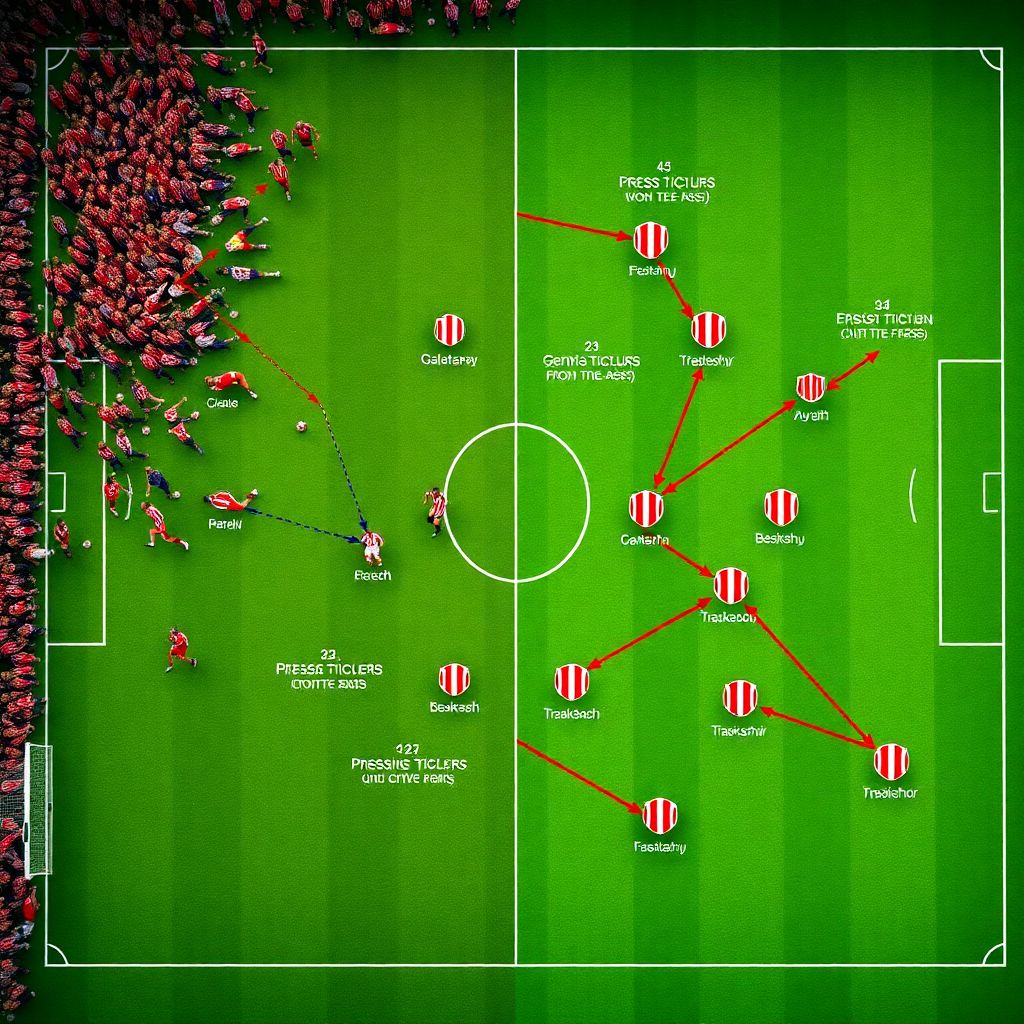
A decade ago, “intensity” in Turkey often meant players simply running harder and longer, without a clear collective idea. Now, coaches are teaching very specific pressing schemes. Galatasaray under Okan Buruk is a prime example: in the 2022–23 title season, they consistently ranked near the top of the league for PPDA (Passes Per Defensive Action), hovering around 8–9, which indicates an aggressive high press comparable to mid-tier Champions League sides.
Fenerbahçe’s recent coaches have taken similar steps. Under Jorge Jesus, for instance, the team used a 4‑4‑2 or 4‑2‑3‑1 pressing shape with clear ball-oriented shifts and man-oriented coverage on opposition pivots. The idea was simple: force play wide, trap against the touchline, then counter within three passes. Even if structures have changed since then, the expectation that Fener will press and counterpress aggressively hasn’t gone away, and this mindset has influenced the rest of the league.
Technical detail – typical Süper Lig high-press pattern
– Base shape: 4‑2‑3‑1 morphing into 4‑4‑2 in the press
– Trigger: back-pass from CB to GK or lateral pass between centre-backs
– Roles:
– ST splits the distance between CBs, curves run to block pass to opposite CB
– AM jumps onto the near pivot, screening central lane
– Wingers step up to full-backs, using cover shadow to block inside passes
– Double pivot pushes to mark second line, back four holds high, ready to win long balls
This is a far cry from earlier years, when the first line of pressure was often uncoordinated and left huge gaps between midfield and attack. Now, Turkish teams are deliberately compressing space, which not only wins the ball higher but also makes transitions more dangerous because the opponent is already disorganized.
—
Building from the back without inviting disaster
One of the most visible changes when you watch Turkish Super Lig streaming on a Sunday evening is how often goalkeepers now receive the ball short and act as an extra outfield player. In the past, many Turkish teams routinely went long from the back to avoid risk; today, even mid-table sides rehearse structured buildups with clear positional roles.
Galatasaray again offer a useful case: the centre-backs often split wide, the pivot drops between or next to them, and the full-backs step high to pin the last line. The “rest defense” (usually two centre-backs plus the opposite full-back and a holding midfielder) is carefully positioned to handle counters. Coaches like Abdullah Avcı at Trabzonspor have introduced similarly methodical patterns, with rehearsed third-man combinations to break the first pressing line.
Technical detail – common Süper Lig build-up structure
– GK positioned centrally, comfortable under pressure
– CBs wide, almost on the width of the penalty box
– Single pivot: drops into the half-space, not directly between CBs, to avoid being pressed from behind
– Full-backs: one goes high and wide, the other stays lower to form a back three in possession
– No.10: occupies pocket between opposition lines, ready for bounce passes
This controlled build-up has two main objectives. First, it draws opponents forward to create space behind them. Second, it gives technically gifted Turkish and foreign midfielders more touches in central areas, instead of bypassing them with hopeful long balls. For coaches, the message to players is no longer “just clear your lines”, but “take the extra touch if the structure around you is right”.
—
Positional play and overloads: why the wings look different now
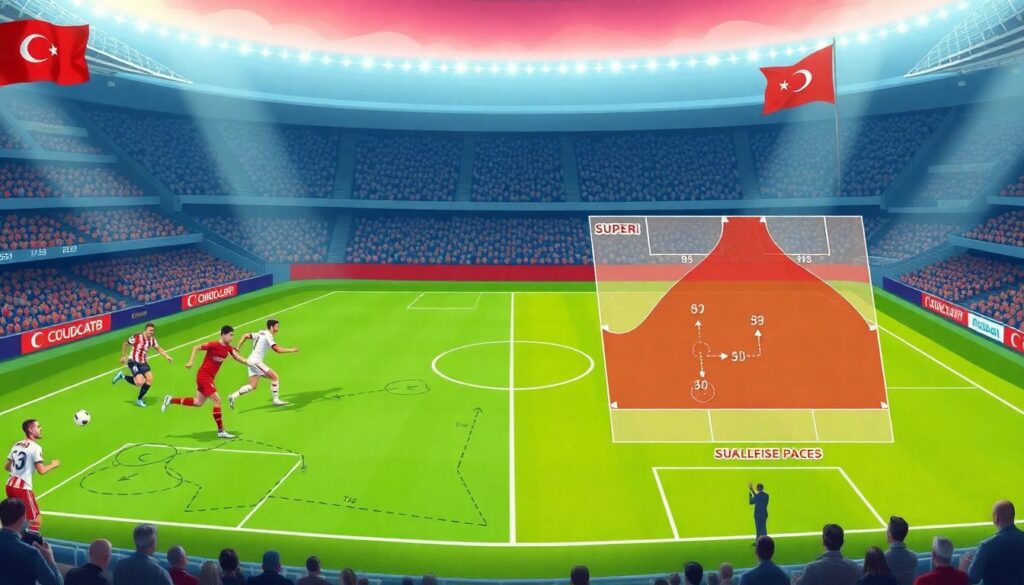
Wing play has always been part of Turkish football culture, but the method has changed. In earlier eras, you would frequently see full-backs overlapping blindly and wingers instructed to “get to the byline and cross”. Now, modern Süper Lig coaches are talking about zones, half-spaces, and overloads in those wide channels.
Teams like Başakşehir, even when not at their peak, helped normalize a more Guardiola-inspired positional game: full-backs inverting into midfield, wingers staying high and wide to stretch the back line, and interiors attacking the half-spaces between full-back and centre-back. This structure has filtered into the rest of the league, with many sides now using a 3‑2‑5 shape in settled possession: three at the back, two in front, five occupying different lanes in the final third.
Technical detail – 3‑2‑5 attacking shape commonly seen in Turkey
– Back three: CB–CB–FB or CB–CB–DM depending on personnel
– Double pivot: maintains central stability, one steps up for circulation
– Front five:
– LW and RW hug the touchline
– Two attacking midfielders in half-spaces, between lines
– Striker pins both centre-backs, ready to attack crosses or cut-backs
This structure makes it easier to create 2‑v‑1 and 3‑v‑2 situations on the wings. Instead of crossing from deep into a crowded box, teams combine to reach the half-space and deliver low cut-backs, a much higher percentage chance. If you’re buying Turkish Super Lig tickets and watching from behind the goal, you’ll see these patterns over and over: triangle combinations on the flank, quick wall passes inside, and then a low ball cut back to the penalty spot.
—
Data, analytics and smarter recruitment

Another reason tactics have modernized is the increased use of data and scouting analytics, especially at ambitious boards like Galatasaray, Fenerbahçe, Trabzonspor and Adana Demirspor. Clubs aren’t just relying on an agent’s word; they’re looking at metrics like expected goals (xG), progressive passes, defensive duels and pressing efficiency before signing players who must fit the coach’s game model.
For example, Turkish clubs now specifically target wingers who can both press and carry the ball in transition, not just dribblers who look good in highlight reels. Similarly, many teams recruit centre-backs with passing range and comfort under pressure, because a high line and short build-up demand that skill set. The days of pairing two purely physical stoppers and asking them just to clear crosses are fading.
Technical detail – key metrics Süper Lig analysts track
1. xG and xGA (expected goals for and against) for measuring process, not just results
2. PPDA and high turnovers to assess pressing intensity and success
3. Progressive passes and carries per 90 for ball progression analysis
4. Field tilt (share of final-third passes) to measure territorial dominance
5. Set-piece xG, an underrated but crucial source of goals in a tight league
While the exact numbers vary by season, the overall trend is clear: Turkish teams that reach European competitions tend to rank higher in these underlying metrics, not just in raw points. Clubs are recognizing that consistent performance indicators matter more than occasional big wins.
—
Tactical evolution of the “Big Three”
The modernization of the league is most visible at the big Istanbul clubs, because their every move is dissected by media and fans. Yet each has taken a slightly different tactical path. Galatasaray lean into aggressive pressing, positional play and high full-backs. Fenerbahçe have flirted with various structures but often maintain a bold, risk-tolerant style involving a high line and lots of bodies in the box. Beşiktaş, especially when led by coaches with a more European background, have tried to stabilize with compact mid-blocks and rapid vertical attacks.
Over the last few seasons, you can see a steady rise in the average defensive line height for these sides, as tracked by analytics firms. Instead of defending deep and relying solely on counterattacks, they hunt the ball earlier and try to pin opponents in their own third. That’s one reason the atmosphere in big games feels different: the tactical aggression matches the emotional intensity of the crowd.
Even kit design reflects a more globalized, modern image. When you see new Turkish Super Lig jerseys for sale, they often highlight performance fabrics and sleek, minimal graphics styled for international markets, underlining that these clubs see themselves as part of a wider football ecosystem, not just domestic giants.
—
How smaller clubs are catching up tactically
It’s not only the big names driving change. Clubs like Alanyaspor, Konyaspor and Adana Demirspor have frequently hired coaches with progressive ideas, sometimes from abroad, who are willing to trust young players and experiment with structures like 3‑4‑2‑1 or 4‑3‑1‑2. Because they don’t always have the budget to outspend giants, they try to out-think them instead.
You’ll often see these smaller sides using hybrid systems: defending in a compact 4‑4‑2 block but attacking in a 3‑2‑4‑1, or switching wing-backs roles mid-game to target a specific opposition weakness. In training, these coaches now rely on video sessions, drone footage and GPS tracking to adjust tactics based on real data: sprint distances, pressing intensity, recovery times.
This has an important knock‑on effect. When a relegation candidate uses a well-rehearsed press to frustrate a title challenger, it forces the favorite to develop new solutions, not just rely on talent. Over time, this tactical arms race raises the overall level of the Süper Lig and makes it more entertaining for neutral fans watching from abroad.
—
In-game management: substitutions with a tactical purpose
One of the clearest signs of modernization is how coaches use the bench. Substitutions used to be largely about “fresh legs” or simple like-for-like swaps. Now, you regularly see changes that transform the structure: a coach shifts from 4‑2‑3‑1 to 3‑4‑3 by dropping a midfielder into the back line and pushing both full-backs higher, or introduces a second striker to pin centre-backs and create space for an attacking midfielder.
Many Süper Lig coaches now prepare “pre-planned phases” for games. For example, the plan might be: first 60 minutes in a balanced structure, then last 30 minutes with an extra attacker and more direct play if chasing a goal. They don’t always stick to the script, but the concept of having defined tactical phases based on match state (winning, drawing, losing) is increasingly common.
Technical detail – typical match-state adjustments
– When leading:
– Full-backs slightly lower, double pivot stays more compact
– Wingers instructed to hold the ball and draw fouls rather than force crosses
– When drawing:
– One pivot steps higher to create a 2‑3‑5 shape in possession
– Centre-backs hold a higher line to compress the pitch
– When losing:
– Second striker added, often 4‑2‑4 in final 15 minutes
– More crosses from half-spaces, heavy focus on set pieces
This kind of deliberate in‑game management is crucial in a league where momentum swings quickly and stadium pressure is immense.
—
What this means for fans, bettors and casual viewers
For supporters, the tactical evolution changes how you experience the league. You’re not just watching 22 players chasing the ball; you’re seeing carefully coached patterns that repeat from game to game. If you follow a team closely, you begin to recognize your coach’s principles: where he wants the press to start, how the team defends the box, what the plan is with the ball in the first build-up phase.
If you like to bet on Turkish Super Lig matches, understanding these tactical trends is an edge. A side that consistently presses high and creates lots of shots may be a better long‑term pick than one that scrapes wins with unsustainable finishing. Likewise, teams with strong set-piece routines and good rest defense are less likely to collapse late in games, which matters for live betting and handicap markets.
For international viewers accessing games via Turkish Super Lig streaming services, the more structured tactics also make matches easier to analyze. You can pause, rewind and watch how a team moves as a unit, not just enjoy the chaos. Over time, this deeper understanding tends to increase emotional investment: once you recognize why a coach made a particular substitution or changed formation, the story of the match becomes more engaging.
—
Expert recommendations for coaches and analysts
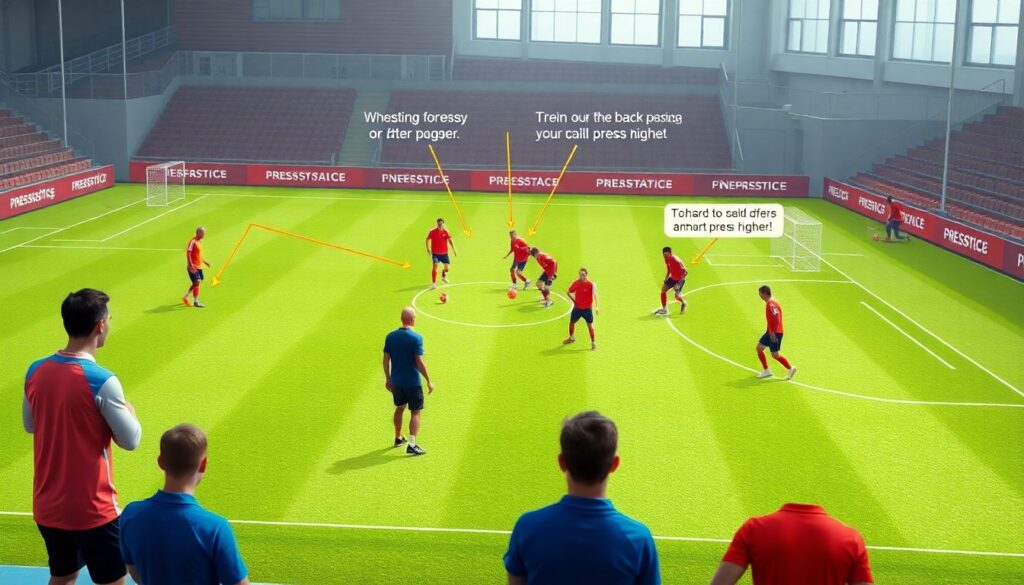
To wrap things up in a practical way, here are some concrete recommendations from analysts and coaches who’ve worked in or closely tracked the league:
1. Train pressing as a collective habit, not an instruction.
Don’t simply tell players “press higher”; build repeated drills with clear triggers (back-pass, bad body orientation, bouncing ball). In the Süper Lig environment, where crowd energy is huge, players can be too eager and press alone. Structure your training so that the first player’s run always generates a chain reaction from at least two teammates.
2. Integrate rest defense into every attacking drill.
Modern Turkish teams are at their most vulnerable just after losing the ball, especially when full-backs are high. When designing finishing or crossing exercises, always position two or three players to simulate the rest defense and rehearse their reactions to losing possession. This dramatically cuts the number of dangerous counters conceded.
3. Use video to connect players with data.
Statistics like xG, PPDA or progressive passes only become meaningful for players when they see them in context. After games, show short clips that match specific numbers: for instance, sequences where a high press led to a shot within 10 seconds of winning the ball. That way, players understand exactly which behaviors the staff wants to repeat.
4. Design game plans in phases.
Instead of one static idea, prepare at least three versions of your structure: starting plan, plan for when you’re leading, and plan for when you’re chasing the game. Make sure substitutes understand not only their role, but also which phase they’re entering. This approach, already visible at some of the more progressive Süper Lig clubs, improves in‑game adaptability.
5. Recruit for game model fit, not just reputation.
Before signing anyone, clarify your ideal style: high pressing, deep block, positional build-up, or transition-heavy. Then evaluate targets through that lens. For instance, a big-name forward who doesn’t press will damage a high-pressing system, no matter how many goals he scored elsewhere. Modern Turkish clubs that stick to a clear profile tend to overperform their budgets.
—
The Süper Lig’s tactical future
As the league continues to globalize, with more foreign coaches, analysts and investors involved, the tactical curve is likely to keep rising. Youth academies are already copying some of these modern principles, teaching teenagers how to occupy zones, trigger the press and read space rather than just relying on instinct. Over the next five to ten years, that should feed a new generation of Turkish players who are tactically literate as well as technically gifted.
For fans, that means more matches where the tension is not only emotional but also strategic. Whether you’re picking up Turkish Super Lig tickets for a derby, checking Turkish Super Lig streaming options from abroad, searching for Turkish Super Lig jerseys for sale to back your club, or simply curious about which sides currently count as the best Turkish Super Lig teams, understanding these tactical shifts will deepen your appreciation of what you’re watching. The league hasn’t lost its passion or volatility—but it has gained a brain, and that combination is exactly what makes it so compelling right now.
Комментарии