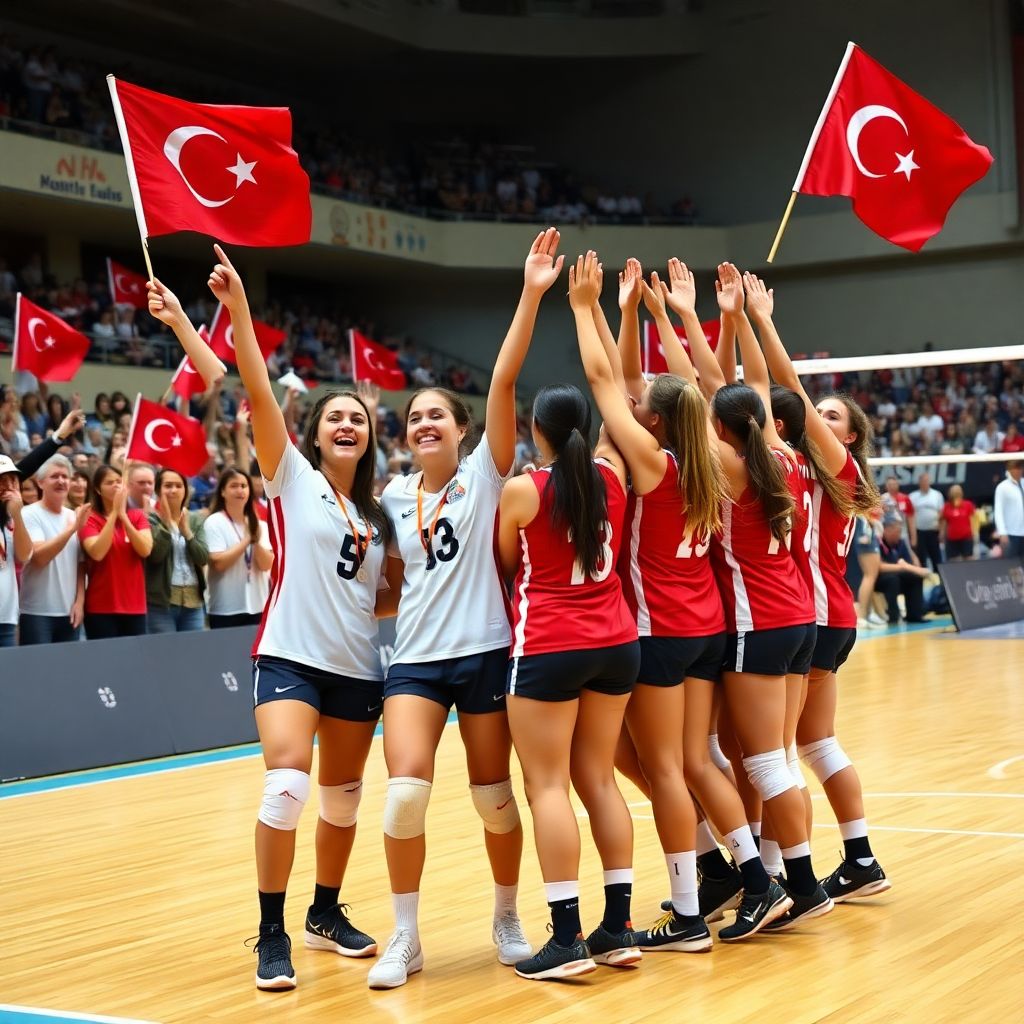
Volleyball became one of Turkey’s most successful team sports through a long interplay of early institutional support, school and military programs, professional clubs, and especially the rapid rise of women’s volleyball. Consistent investment, international exposure, and a clear talent pathway turned a once minor sport into a global reference point for Turkish success.
Pivotal Drivers Behind Volleyball’s Rise in Turkey
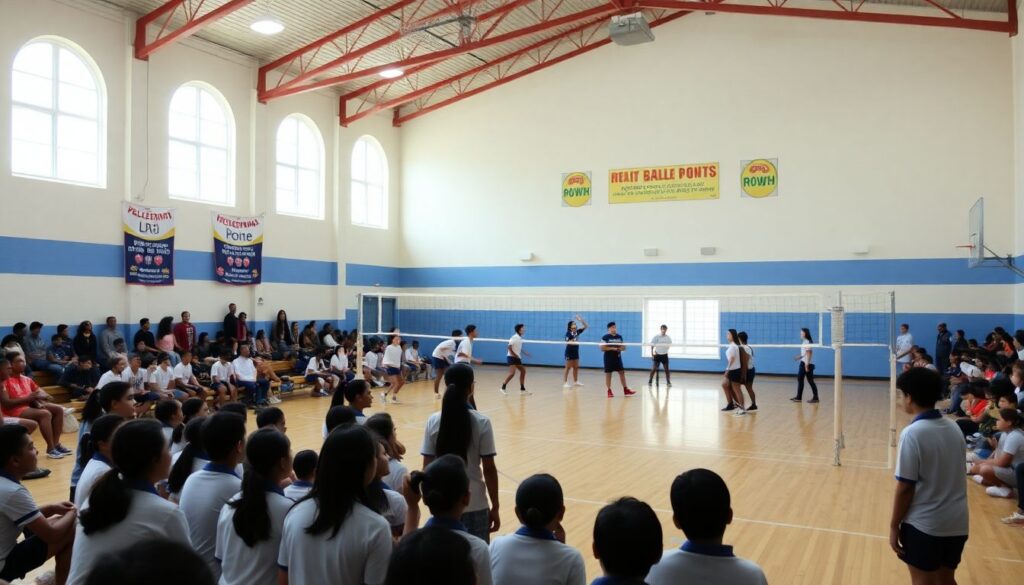
- Early adoption by schools, universities and the military created a disciplined base for the sport.
- State-backed education policies turned volleyball into a standard part of physical education.
- Professionalization of club structures generated stable careers and media interest.
- Women’s volleyball delivered international trophies and mass visibility.
- Foreign coaches and player transfers raised tactical and physical standards.
- Urbanization and municipal investments multiplied grassroots courts and clubs.
- Modern broadcasting and digital platforms made it easy to follow leagues and national teams.
Early Roots and Institutional Foundations (1920s-1970s)
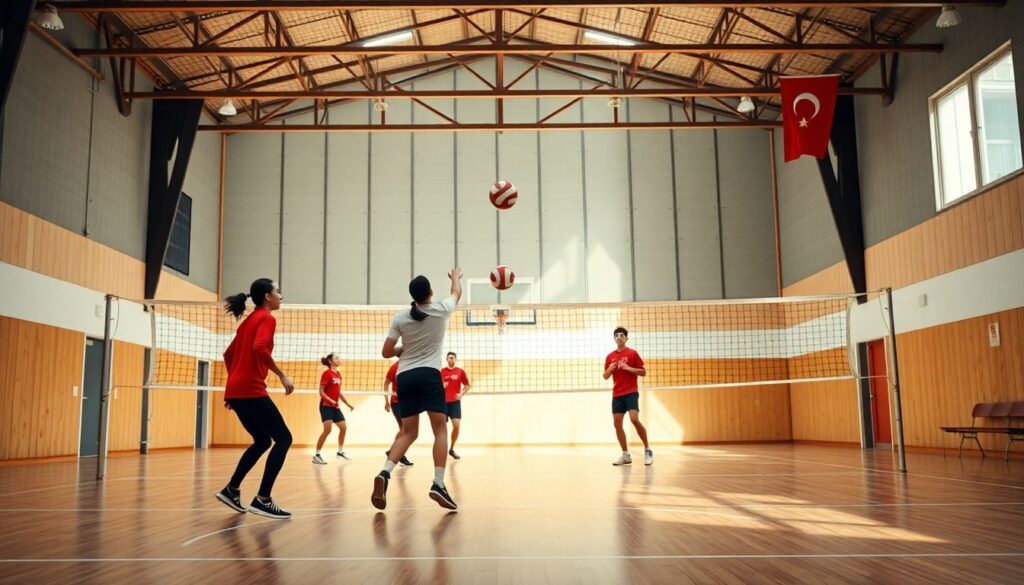
In Turkey, volleyball’s rise started as an urban, school-based sport in the early republican era. Gymnasiums, teacher-training institutes and universities in Istanbul, Ankara and Izmir quickly adopted the game because it was inexpensive, indoor-friendly and compatible with the new state’s focus on modern physical education.
By the mid‑20th century, volleyball had a clear institutional home: education authorities, the armed forces and newly forming sports federations. These actors defined basic rules, coaching practices and competition formats. Early interschool and interservice tournaments created a shared competitive culture long before fully professional leagues existed.
This foundation matters because it framed volleyball as a “serious” sport with clear standards, not mere recreation. When mass urbanization accelerated and club budgets grew, they could plug into an existing system of trained coaches, referees and athletes rather than building everything from scratch.
Quick Practical Guidance From This Period
- Anchor your program in schools and universities first; replicate the early Turkish model of education-led growth.
- Create standard rules, coaching curricula and tournaments before chasing big sponsorships.
- Use institutional events (e.g. interschool cups) to build tradition and emotional attachment to the sport.
State Policy, Schools and Military: Building a Talent Pipeline
Once volleyball was embedded in schools and the military, it became a systematic talent pipeline rather than a random hobby. The mechanisms looked roughly like this:
- Curriculum integration: Volleyball entered physical education programs as a required or strongly recommended unit. Every cohort of students was at least exposed to the sport.
- School competitions: District, provincial and national school tournaments identified standout players and motivated PE teachers to take coaching seriously.
- Military teams and discipline: Young men who had played at school continued in regiment and garrison teams, sharpening physical conditioning and tactical discipline.
- Teacher-coach training: PE departments at universities began producing teachers who were also volleyball coaches, multiplying expertise across the country.
- Federation alignment: The national federation used these institutional channels to standardize rules, age categories and referee education.
- Transition to clubs: Talented players were recommended by teachers and officers to city clubs, creating a semi-formal scouting system.
Mini Application Scenarios for Today
To adapt these mechanisms now, consider a few simple but concrete scenarios:
- A provincial education director partners with local clubs so that the winners of school tournaments automatically receive club try-out invitations.
- A university PE department runs annual coaching clinics for school and municipal coaches, aligning drills, terminology and talent ID criteria.
- A regional military base hosts a preseason friendly tournament with nearby professional clubs, helping late-blooming conscripts get seen by scouts.
For modern Turkish stakeholders, the lesson is to treat schools, universities and public institutions as the backbone of the system. Invest in coach education for teachers, maintain regular competitions, and formalize player referral channels into clubs instead of relying on chance discovery.
Club Professionalization and the Birth of Competitive Leagues
As Turkey’s economy and media landscape developed, major multi-sport clubs-especially in Istanbul and Ankara-moved volleyball from a side activity to a core department. Professional contracts, specialized coaching staffs and better training facilities turned leagues into serious workplaces rather than extended school tournaments.
Several typical scenarios show how this professionalization operates in practice:
- Big-club commitment: A football-dominated club decides that volleyball is its best chance for European trophies. It upgrades budgets, hires a top coach and starts attracting elite Turkish and foreign players.
- Regional challenger: A city without a huge football brand uses volleyball as its signature sport, focusing local sponsorship on one flagship team to compete nationally.
- Corporate-supported club: A company sponsors a volleyball club as part of its branding, offering job opportunities for players and stable long-term funding.
- Media-league synergy: Broadcasters commit to showing Turkish volleyball league fixtures and results every week. In response, clubs invest more in performance and storytelling to capture audience attention.
- Youth-to-pro pathway: Clubs create U14-U20 teams linked to senior squads, allowing school talents to move into semi-professional environments smoothly.
For administrators, the essential move is to treat volleyball as a standalone product: manage it with clear KPIs, robust youth systems and media relationships, not as a hobby within a larger club. Align sporting ambitions with financial and broadcasting strategies so that strong performance and fan engagement reinforce one another.
Women’s Volleyball: A Catalyst for National Visibility and Investment
Women’s volleyball became the single strongest engine of public interest and international prestige for Turkey. Successful clubs and the national team regularly reached European finals, making women players central sports figures. This visibility changed investment priorities and positioned volleyball as a progressive, high-achievement sport.
Benefits of the Women’s Volleyball Boom
- Global trophies and rankings: International wins created a credible narrative that Turkey can lead the world in a major team sport.
- Role models for girls: The best Turkish women’s volleyball players 2024 are widely known, inspiring youth participation and parental support.
- Strong home league: High-level foreign stars join Turkish clubs, raising the standard and making domestic matches attractive to audiences and sponsors.
- Media and digital reach: Fans actively search how to watch Turkey women’s volleyball live stream, follow players on social media and discuss matches daily.
- Ticketing and merchandise revenue: Demand for Turkey women’s volleyball team tickets and Turkey volleyball merchandise and jerseys provides new income streams for clubs and the federation.
Constraints and Structural Challenges
- Resource imbalance: Heavy focus on elite women’s teams can leave men’s leagues and lower divisions less funded.
- Urban concentration: Top-level opportunities are clustered in big cities, making it harder for rural talents to access elite pathways.
- Scheduling pressure: Dense calendars of domestic and European competitions can push players toward overuse injuries.
- Dependence on a few brands: A small number of powerful clubs dominate talent and narrative, complicating competitive balance.
- Late structural reforms: Governance, youth development and facility investment sometimes lag behind the performance level of top teams.
To harness the advantages while reducing risks, stakeholders should use women’s volleyball revenues to fund broader youth programs, expand regional academies beyond Istanbul and Ankara, and professionalize medical and load-management practices across the league.
International Exposure: Coaches, Transfers and European Competitions
International exposure transformed Turkish volleyball from solid to elite. Foreign coaches introduced new training methods and game models, while Turkish players gained experience abroad. Regular participation in European competitions forced clubs to match the tactical speed, physicality and professionalism of leading nations.
Common Misconceptions and Strategic Mistakes
- Myth: Foreign equals automatically better. Importing players or coaches without a clear role can block local development and strain finances. What matters is knowledge transfer and role clarity, not nationality.
- Mistake: Copying systems without context. Blindly imitating a foreign club’s training plan ignores local school schedules, travel demands and cultural differences. Adapt, do not clone.
- Myth: European success will fix domestic problems. Winning a continental trophy does not automatically solve governance, grassroots or financial issues. Without structural follow-up, success can be temporary.
- Mistake: Overloading stars with every competition. Top players are often overplayed in both club and national team matches, leading to fatigue and injuries at key moments.
- Myth: TV exposure alone guarantees growth. Even if fans can watch Turkey women’s volleyball live stream or men’s matches easily, the sport will not grow sustainably without coaching education and participation programs.
- Mistake: Neglecting language and integration. Failing to integrate foreign staff into the local environment reduces learning on both sides and creates locker-room divides.
Administrators and coaches should treat international exposure as a structured learning project: define what knowledge you want to import, ensure translators and shared video platforms are in place, and protect players with thoughtful load management across domestic and European calendars.
Grassroots Programs, Urbanization and Regional Talent Hubs
Urbanization gave volleyball a large, concentrated player base, while municipal investments and school-gym construction created more indoor courts. Over time, some cities evolved into talent hubs, where strong clubs, universities and school programs interacted to produce a continuous flow of elite players.
Mini Case: Building a Regional Hub From Scratch
Imagine a mid-sized Anatolian city that decides to become a volleyball reference point within ten years:
- The municipality upgrades three school gyms to competition standards and offers evening training slots to local clubs.
- A university PE faculty starts a volleyball coaching minor and partners with the city to run annual clinics for school coaches.
- A local business consortium funds a women’s and a men’s club, with scholarships for talented teenagers from nearby towns.
- Regional tournaments are scheduled using publicized Turkish volleyball league fixtures and results to avoid clashes and ride national interest.
- Clubs launch a small fan shop and online store for Turkey volleyball merchandise and jerseys, using match days to promote youth sign-ups.
Actionable Recommendations for Local Stakeholders
- Prioritize multi-use school and municipal gyms over single-purpose elite arenas; accessibility beats prestige at the grassroots level.
- Create clear pathways from primary school teams to city clubs and then to professional academies in major centers.
- Leverage national-team match days and demand for Turkey women’s volleyball team tickets to promote local youth events and festivals.
Practical Questions for Coaches, Administrators and Stakeholders
How can a small city club benefit from Turkey’s overall volleyball success?
Use national visibility as a marketing tool: organize viewing events for big matches, then invite attendees to open training sessions. Align your season calendar with major Turkish volleyball league fixtures and results to ride peaks of public interest.
What is the most realistic first step to improve our local talent pipeline?
Start with PE teachers: run a basic coaching clinic, agree on a shared training curriculum and set up a simple interschool league. Once that is stable, connect winners to your club’s youth teams through structured trials, not ad-hoc invitations.
How should we approach hiring foreign players or coaches?
Define the competencies you are missing-technical, physical, or tactical-before recruiting. Require knowledge transfer plans such as joint training sessions, shared video libraries and mentoring of local staff, so international expertise stays after contracts end.
What is a practical way to use women’s volleyball popularity for long-term development?
Bundle initiatives: when promoting Turkey women’s volleyball team tickets or live broadcasts, include junior clinic registrations and school visits in the same campaign. Ensure a portion of women’s team revenue funds mixed-gender grassroots programs and regional academies.
How can fans follow domestic competitions and support structured growth?
Track official publications of Turkish volleyball league fixtures and results, attend local matches, and subscribe to club digital channels. When you watch Turkey women’s volleyball live stream or men’s games, share educational content and player stories, not only highlights, to deepen community understanding.
What merchandising strategy makes sense for a developing club?
Begin with low-cost Turkey volleyball merchandise and jerseys-scarves, T‑shirts, simple replica tops-and sell them on match days and online. Connect each purchase to a clear goal, such as funding a youth team’s travel or equipment, to build emotional buy-in.
How do we avoid overloading our best young players?
Map all competitions-school, club, regional, national-and limit total matches and training hours per week. Coordinate between school coaches and club coaches so players peak for key events instead of carrying full load in every competition.