Boxing Training Belongs in Modern Elite Football
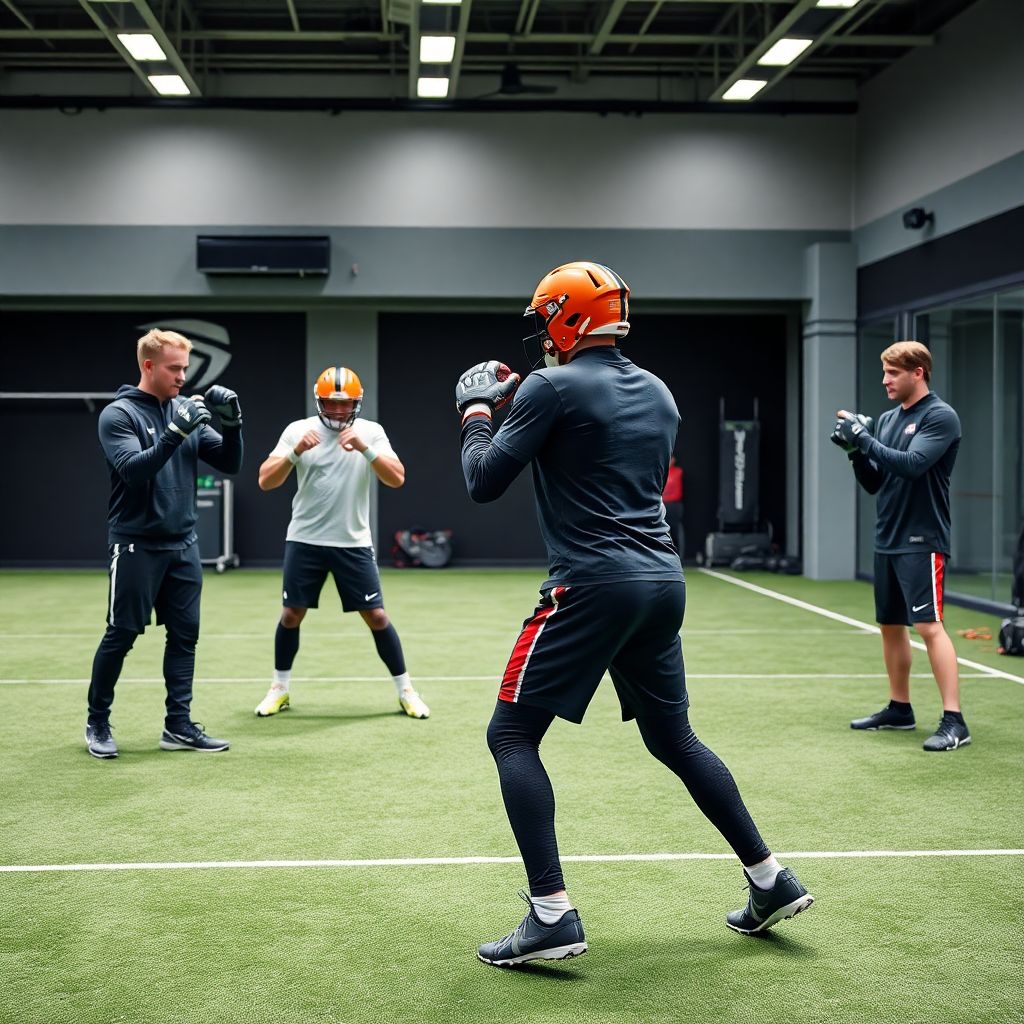
Step inside a contemporary elite football training centre and the soundtrack has changed. Alongside the familiar smack of ball on boot, you now hear the sharp pop of gloves on pads, the shuffle of fast feet, the hiss of controlled breathing. What once looked like a quirky crossover – footballers boxing for a novelty fitness session – has evolved into a planned, data-backed part of high‑performance preparation.
Coaching staff have learned that the similarities between the two sports run much deeper than “getting in shape”. Boxing and football both demand that athletes think clearly, make accurate decisions, and execute precise movements when they are already exhausted. That shared requirement – clarity under pressure – is what has turned boxing work from a passing trend into a permanent fixture in many clubs’ periodisation plans.
The Shared Mental Engine: Thinking While Tired
On paper, boxing and football seem worlds apart: one is a invasion team sport played with the feet, the other a one‑on‑one combat discipline fought with the hands. But once you strip them down to performance demands, a striking overlap appears.
Both sports require athletes to:
– Process rapidly changing visual information
– Anticipate what happens next, not just react to what is happening now
– Keep tactical discipline and composure when fatigue is peaking
– Make split‑second decisions that can decide a result
This is why high‑level coaches increasingly treat “mental sharpness under fatigue” as a trainable skill, not a fixed trait. Boxing drills are perfect for this. Pad sessions, footwork ladders and reaction exercises are designed to overload the nervous system as much as the muscles. The athlete must stay switched on, coordinating eyes, brain, and body under constant strain.
For a footballer, that’s directly relevant. The ability to play the right pass in the 90th minute, to track a late runner, or to time a press when lungs are burning is what separates good professionals from genuine elites. Boxing training simulates that environment in a controlled, measurable way.
Why Boxing Sessions Make Football Sense
The enduring appeal of boxing within football setups comes from its structure. It divides work into rounds, builds intensity gradually, and demands short bursts of maximal output followed by very limited recovery – a profile that closely mirrors match play.
Instead of viewing a boxing session as “extra fitness”, progressive coaches now use it as:
– A tool for building competitive resilience
– A way to teach players to stay technically clean while under stress
– A mental frame for dealing with direct duels and physical confrontation
– A low‑impact alternative to endless small‑sided games for conditioning
For players, there’s also a psychological edge. Boxing training feels different. It breaks routine, feeds competitive instincts, and often brings shy or quieter squad members out of their shell. That engagement matters over a long season.
Key Boxing Methods Football Clubs Have Embraced
Within this broader crossover, three boxing‑inspired methods have become staples in high‑performance football conditioning.
1. Shadowboxing: Movement Without Impact
Shadowboxing looks simple: an athlete moves through punching patterns without equipment or contact. In reality, it’s a complex coordination drill. The player has to shift weight, adjust stance, keep balance, and control breathing, all while visualising an opponent and maintaining rhythm.
For a footballer, this is gold:
– The constant micro‑adjustments mirror jockeying an attacker or finding space off the ball
– Balance and posture work help with quick direction changes and injury prevention
– The non‑contact nature means it can be built into warm‑ups, recovery days, or pre‑match routines without heavy physical cost
Shadowboxing also encourages athletes to become more aware of their own body position – head, shoulders, hips, and feet – which directly influences their ability to protect the ball, ride tackles, or slip away from tight marking.
2. Pad Work: Fast Brains, Fast Hands
Focus‑mitt drills turn the training partner into a moving, unpredictable target. The holder changes angles, flashes cues, calls combinations, or pulls pads away at the last moment, forcing the puncher to stay alert.
The crossover to football is clear:
– The athlete must interpret visual cues in fractions of a second
– Misreading a signal or reacting too slowly produces an immediate, obvious mistake
– Rhythm constantly changes, mimicking the broken, chaotic nature of real match play
This type of work trains vision, anticipation, and reaction speed. Those same qualities are what allow a midfielder to step in front of a pass, a striker to time a near‑post run, or a full‑back to adjust to a sudden overlap.
Pad work also enhances hand‑eye coordination and overall coordination between upper and lower body. While football is played with the feet, the ability to sync the entire kinetic chain under time pressure is universally useful in sport.
3. Lateral Footwork: Owning the Angles
Boxing footwork is about controlling space: closing distance without getting hit, escaping tight positions, and creating angles to attack. Drills focus on side steps, pivots, and sharp resets, always with the feet under the body and the centre of gravity stable.
Footballers use very similar patterns when they:
– Lose a marker with a feint and sidestep
– Hold their ground in a shoulder‑to‑shoulder duel
– Create half a yard to deliver a cross or get a shot away
– Track inside runs while still covering the touchline
Because these footwork movements are specific and repeatable, they lend themselves to technical coaching. A defender, for example, can learn to mirror an attacker’s hips more precisely. An attacking midfielder can improve their first step away from pressure.
How the Body Changes Through Boxing Work
The physical argument for integrating boxing into football training is multi‑layered.
Fast‑Twitch Fibre Activation
Boxing rounds are built around explosive, short‑duration efforts. Combinations, defensive slips, and resets all demand bursts of power rather than steady output. That directly recruits fast‑twitch muscle fibres – the same fibres involved when a striker sprints onto a through ball or a winger suddenly changes gear.
By drilling these fibres repeatedly within a structured interval format, players can improve:
– First‑step acceleration
– Short‑distance sprint speed
– Ability to repeat high‑intensity actions throughout a match
This sits perfectly alongside sprint and plyometric work in a modern conditioning programme.
Reaction Time as a Trainable Skill
There’s still a misconception in some circles that reaction speed is something you either have or you don’t. Boxing contradicts that every day in the gym. Pad work, slip‑bag drills, and defensive sparring relentlessly train the nervous system to recognise patterns faster and send cleaner signals to the muscles.
In football terms, that can mean:
– Goalkeepers picking up deflections earlier
– Centre‑backs reading through‑balls sooner
– Holding midfielders jumping passing lanes before the ball is played
– Forwards reacting more sharply to rebounds and second balls
Over time, those tiny improvements add up to an extra interception, a crucial save, or a decisive follow‑up finish.
Rotational Power and Core Stability
Punching isn’t about the arm; it’s about the hips and torso. Hooks, crosses, and uppercuts all generate power through rotational force, transferring energy from the legs through the core and into the shoulder.
That same chain is responsible for:
– Striking a ball cleanly from distance
– Driving through a challenge without losing balance
– Holding off an opponent while turning
– Generating whip and spin on crosses or diagonal passes
Players who have internalised efficient rotational mechanics through boxing drills often find that their shooting feels more natural and their duels more stable. They’re not just stronger; they’re better organised biomechanically.
The Turkish Context: Combat Heritage Meets Modern Football
In Turkey, where football passion runs deep and combat sports have a long-standing presence, this fusion feels especially natural. Traditions of wrestling, boxing, and other fighting disciplines have created a culture that respects toughness, discipline, and controlled aggression – all qualities valued in elite football.
Clubs tapping into this heritage can:
– Use boxing sessions to reinforce mental resilience in high‑pressure environments
– Connect with players who grew up around combat sports, making training feel culturally familiar
– Shape a squad identity built on courage in duels and comfort with physical contact
In a league known for intense atmospheres and emotionally charged fixtures, the ability to maintain focus when challenges fly in and crowds roar is invaluable. Boxing’s emphasis on staying composed in the face of an opponent has a direct psychological echo on the pitch.
Managing Risk: Benefits Without Needless Contact
One of the first questions sceptics ask is about injury risk. Full‑contact sparring is clearly not compatible with protecting high‑value football players. But in reality, most clubs do not go anywhere near hard sparring with their squads.
Instead, smart programmes focus on:
– Non‑contact drills (shadowboxing, technical footwork)
– Controlled pad and bag work with strict technique standards
– Limited, light‑contact scenarios only when appropriate and fully supervised
Coaches are careful to position boxing as a performance tool, not an ego contest. The aim is to extract mental and physical benefits without adding uncontrolled collisions or unnecessary head impacts to an already demanding schedule.
Periodisation: Where Boxing Fits in the Training Week
To be effective, boxing training must be integrated thoughtfully into the overall football calendar.
Typical uses include:
– Pre‑season: higher volume, building conditioning and mental toughness
– Early week: short, intense rounds on high‑load days to complement strength or speed work
– Mid‑week: technical footwork and light pad work to maintain sharpness between matches
– Off‑season: selected drills to keep players engaged and fit without overloading football‑specific patterns
Done well, boxing sessions help break monotony while still serving clear performance goals. Done poorly – thrown in randomly as a novelty – they can cause fatigue at the wrong time or conflict with tactical priorities.
Psychological Gains: Confidence, Presence, and Discipline
Beyond the physiology and tactics, boxing also shapes how players feel about themselves in competition.
Regular boxing work can:
– Build self‑confidence in physical confrontations
– Instil respect for discipline, timing, and control rather than wild aggression
– Teach athletes to manage fear and adrenaline in one‑on‑one situations
– Encourage humility; there is nowhere to hide in a boxing drill when energy drops
For younger players, especially, learning to stand their ground calmly in a demanding combat-based session can translate into greater assurance when stepping into high‑stakes matches.
Where Boxing Training in Football Might Go Next
As sports science keeps evolving, the boxing‑football connection is likely to become even more targeted. We can reasonably expect:
– More use of wearable technology during boxing drills to track heart rate variability, reaction times, and fatigue
– Position‑specific boxing programmes (e.g., extra reaction work for goalkeepers, more lateral movement focus for full‑backs)
– Integrated tactical scenarios, where boxing‑style reaction tasks are linked to football decisions immediately afterward
– Mental‑skills coaching built around the boxing mindset: staying disciplined, reading opponents, and controlling tempo
The essential point remains: boxing has moved from the margins of football preparation to a respected part of the performance toolkit. It offers a unique blend of physical conditioning, mental sharpening, and movement quality that aligns closely with what the modern game demands.
For elite clubs – and for national teams operating under intense competitive and cultural pressure – that combination is too valuable to ignore. Boxing training has earned its place not as a fashionable side note, but as a serious, structured component in the making of today’s complete footballer.