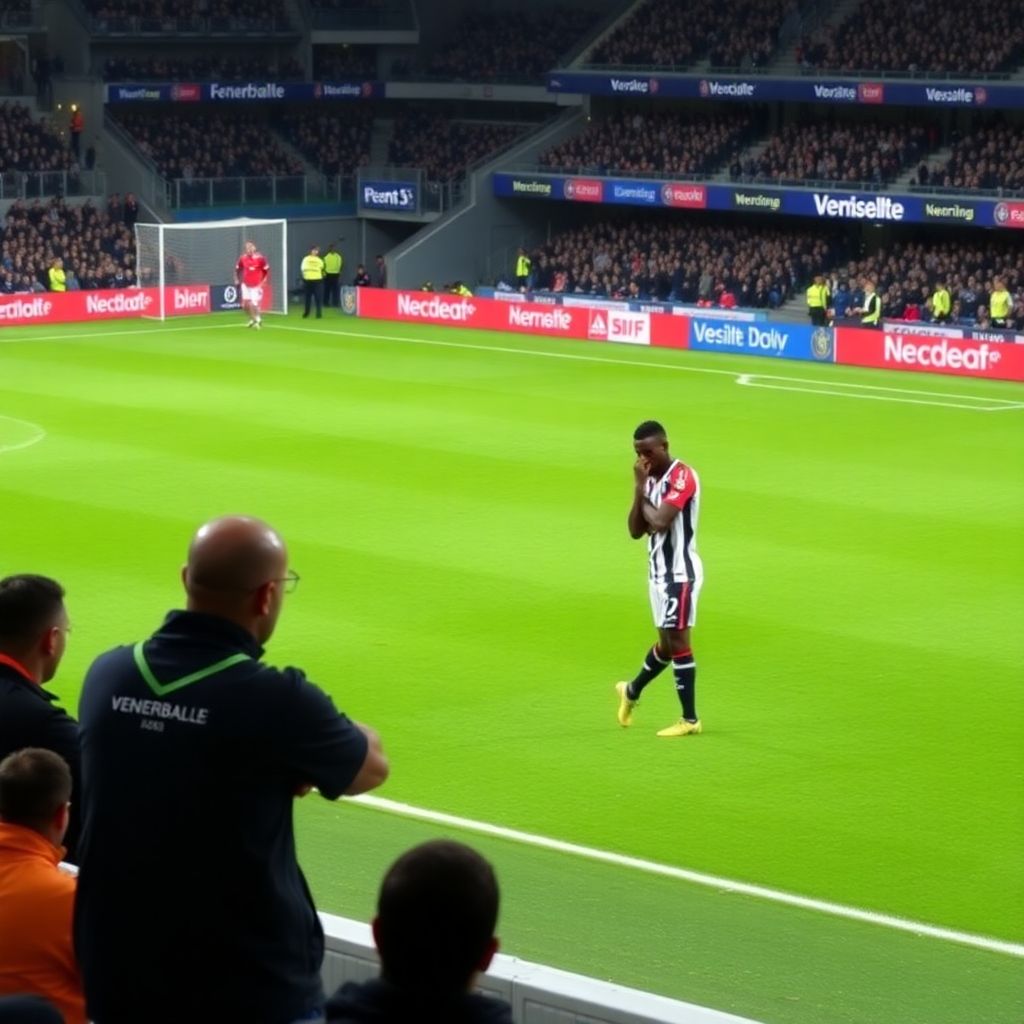
Fenerbahce keeping tabs on Newcastle’s Yoane Wissa after turbulent first season on Tyneside
Fenerbahce are closely tracking Yoane Wissa’s situation at Newcastle United as the DR Congo forward battles through a frustrating first campaign in the Premier League’s North East. The Istanbul club have identified the 29-year-old as a potential attacking target for the upcoming summer window and are exploring whether they could tempt him into a move away from St James’ Park.
The Turkish side’s interest comes at a time when Wissa’s debut season has fallen well short of expectations following his big-money switch from Brentford. Brought in to be one of the centrepieces of Newcastle’s attack, he has instead endured a year blighted by injury, inconsistency and limited minutes, leaving his future open to speculation ahead of the next transfer period.
A record move that never really got started
Newcastle secured Wissa’s signature last summer in a deal that could rise to around £55 million, a fee that underlined how highly he was rated after an outstanding campaign with Brentford. Handed the club’s iconic number 9 shirt in the wake of Alexander Isak’s sale to Liverpool, he arrived on Tyneside carrying the weight of huge expectations and the responsibility of leading the line in a team aiming for European qualification.
However, his momentum was halted almost immediately. Just days after completing his move, Wissa suffered a serious knee injury while on international duty with DR Congo. The setback ruled him out for roughly five months, postponing his Newcastle debut and depriving him of a vital pre-season bedding-in period with new teammates, a new system and a new tactical environment.
By the time he was cleared to return to action in December, Eddie Howe’s side had already found a rhythm without him, and Wissa was forced to rebuild both his fitness and his confidence in the middle of a demanding campaign.
Struggling to rediscover Brentford form
At Brentford, Wissa had earned a reputation as a relentless, hard-working forward with an eye for goal and the versatility to operate across the front line. He finished last season with 19 non-penalty goals in all competitions, making him one of the most efficient forwards in the division and justifying Newcastle’s decision to invest heavily.
That cutting edge has yet to reappear in a black-and-white shirt. Since his return from injury, Wissa has managed only a single Premier League goal for Newcastle, with most of his appearances coming as short cameos off the bench rather than as a regular starter. The lack of rhythm, combined with the mental and physical impact of a long lay-off, has made it difficult for him to hit the same explosive levels he showed in West London.
This dip has inevitably affected his perceived value on the market. Specialist valuation models now estimate that his worth has dropped from around £36 million to closer to £26 million, a reflection of both his reduced output and the risk attached to a player coming off a major injury.
Why Fenerbahce are interested
From Fenerbahce’s perspective, Wissa represents both a calculated gamble and a potential bargain. The Turkish giants are actively looking for a forward capable of operating as a central striker but also drifting wide to stretch defences – exactly the hybrid role Wissa excelled in at Brentford.
His profile ticks several strategic boxes for the Istanbul club:
– He is experienced at the highest level, having proven himself in the Premier League.
– He can play across the front three, offering tactical flexibility.
– His work rate and pressing ability fit the modern, high-intensity style many top Turkish sides now favour.
Club decision-makers are understood to be assessing whether his current situation at Newcastle creates a window of opportunity: a player with top-tier pedigree who might be available at a reduced cost or on a structured deal due to circumstances rather than lack of talent.
Howe’s stance versus Newcastle’s reality
Eddie Howe has consistently defended Wissa in public, urging patience and emphasising that supporters have not yet seen the forward at his best. The Newcastle manager has pointed to the disrupted nature of Wissa’s first year and argued that judging him on a handful of appearances after a long-term injury would be unfair.
Behind the scenes, however, Newcastle’s hierarchy must balance footballing considerations with the financial framework imposed by Profit and Sustainability Rules. With the club keen to strengthen in attack again this summer, every large contract and major investment is under scrutiny. Reports have already linked the Magpies with other strikers, including Folarin Balogun, suggesting that further reshaping of the forward line is being actively considered.
If new attacking recruits arrive, Wissa’s path to regular first-team football on Tyneside could narrow even further, potentially making a departure more appealing to both player and club.
The financial challenge of any transfer
Any attempt from Fenerbahce to prise Wissa away will have to navigate a complex financial landscape. Because Newcastle paid a substantial fee less than a year ago, the remaining amortisation of that transfer is still significant on their books. To avoid posting a sizeable loss on the deal, the club would reportedly be looking for a figure in the region of £40 million.
That valuation presents a major obstacle. Fenerbahce are ambitious but operate in a league where broadcast and commercial revenues are far below those in England. Committing that kind of sum to a player who has recently suffered a serious knee injury and struggled for form would be a considerable risk, even for a club used to making bold moves in the market.
For that reason, a straight cash purchase at Newcastle’s ideal asking price appears unlikely at this stage, pushing both parties to explore more creative solutions.
Loan move as a compromise solution
One option being quietly discussed is a season-long loan with an option – or even an obligation – to buy, depending on performance targets. Such an arrangement could give Wissa the chance to play regular football in a less physically demanding league, rebuild his confidence and showcase that his Brentford form was no fluke.
For Newcastle, a loan could reduce the wage bill, create space for new arrivals and potentially protect the asset’s value. If Wissa were to excel in Turkey, the Magpies might either recoup a larger transfer fee later or welcome back a revitalised attacker ready to contribute in the Premier League.
From Fenerbahce’s point of view, a loan would drastically lower the immediate financial outlay and allow them to carefully assess his physical condition after the knee injury. It would also spread the risk of the deal and give them leverage in future negotiations if the partnership proves successful.
How Wissa would fit into Fenerbahce’s system
On the pitch, Wissa appears tailor-made for the type of forward line Fenerbahce are aiming to construct. His ability to start centrally, then drift into the half-spaces or wide channels, would complement a more traditional penalty-box striker or allow him to operate as a false nine in certain systems.
In Turkey’s top flight, he would likely find more time and space in attacking areas than he enjoys in the Premier League, particularly against teams that sit deep and concede possession. His direct running, willingness to take on defenders and instinct for attacking the back post could make him a constant threat in a league where wide players and overlapping full-backs are heavily involved in chance creation.
Moreover, Fenerbahce’s passionate home support and attacking approach might prove the ideal backdrop for a player eager to feel like a central figure again after a stop-start year in England.
The player’s perspective: reset or fight for place?
A key factor in any potential move will be Wissa’s own priorities. At 29, he is entering what should be the prime years of his career. Staying at Newcastle offers the lure of Premier League football and the chance to prove he can succeed at an ambitious English club, but it also carries the risk of being stuck in a rotational role if reinforcements arrive and his form does not quickly improve.
A switch to Fenerbahce, by contrast, would likely guarantee a more prominent role and a central place in the project. He would be expected to deliver immediately in a team chasing domestic titles and regular European competition. For a player who has already faced adversity this season, the promise of being trusted and regularly involved could be extremely attractive.
At the same time, returning to full sharpness after a knee injury can take more than just medical clearance. A change of environment, a different style of play and a new coaching staff might be exactly what he needs to rediscover his best version – but it also requires leaving the world’s most-watched league after just one year.
What this means for Newcastle’s broader strategy
How Newcastle handle Wissa’s situation will say a lot about their evolving recruitment model. Selling or loaning a high-profile, expensive signing after a single season is rarely part of the original plan, yet it is sometimes necessary if circumstances change. Balancing on-pitch ambitions with PSR constraints forces clubs to be pragmatic, even when it involves players they still believe in.
If the club decide to cash in or sanction a loan, it could clear the way for a different type of forward – perhaps younger, with higher resale value, or with a more complementary profile to the rest of the squad. It may also serve as a reminder that even well-researched transfers can be heavily influenced by injuries and timing, rather than purely by talent.
Fenerbahce’s growing appetite for high-profile moves
For Fenerbahce, pursuing a player like Wissa underlines a broader ambition to close the gap, in profile if not in revenue, with clubs from the top European leagues. In recent seasons, big Turkish teams have increasingly targeted players with Premier League experience, believing that the combination of reputation, quality and leadership can raise the overall level of their squads.
Landing Wissa, even initially on loan, would fit this pattern: a proven top-flight performer, still at a good age, whose name recognition and playing style could energise both the dressing room and the fanbase. It would also send a clear message to domestic rivals that Fenerbahce are prepared to act opportunistically when players of this calibre become unsettled elsewhere.
What happens next
For now, the situation remains fluid. Fenerbahce are understood to be monitoring Wissa’s minutes and performances closely as the season draws to a close, while Newcastle evaluate both his long-term role and their summer transfer priorities. A formal approach is likely to depend on how negotiations over other attacking targets unfold for both clubs.
If Newcastle push ahead with plans to refresh their forward line and receive a proposal that helps their financial planning, they may be more open to letting Wissa leave earlier than originally intended. Should that happen, the coming window could offer the DR Congo international a crucial turning point: either to reset his Premier League story on Tyneside, or to revive his career on the shores of the Bosphorus in a new, high-pressure environment.