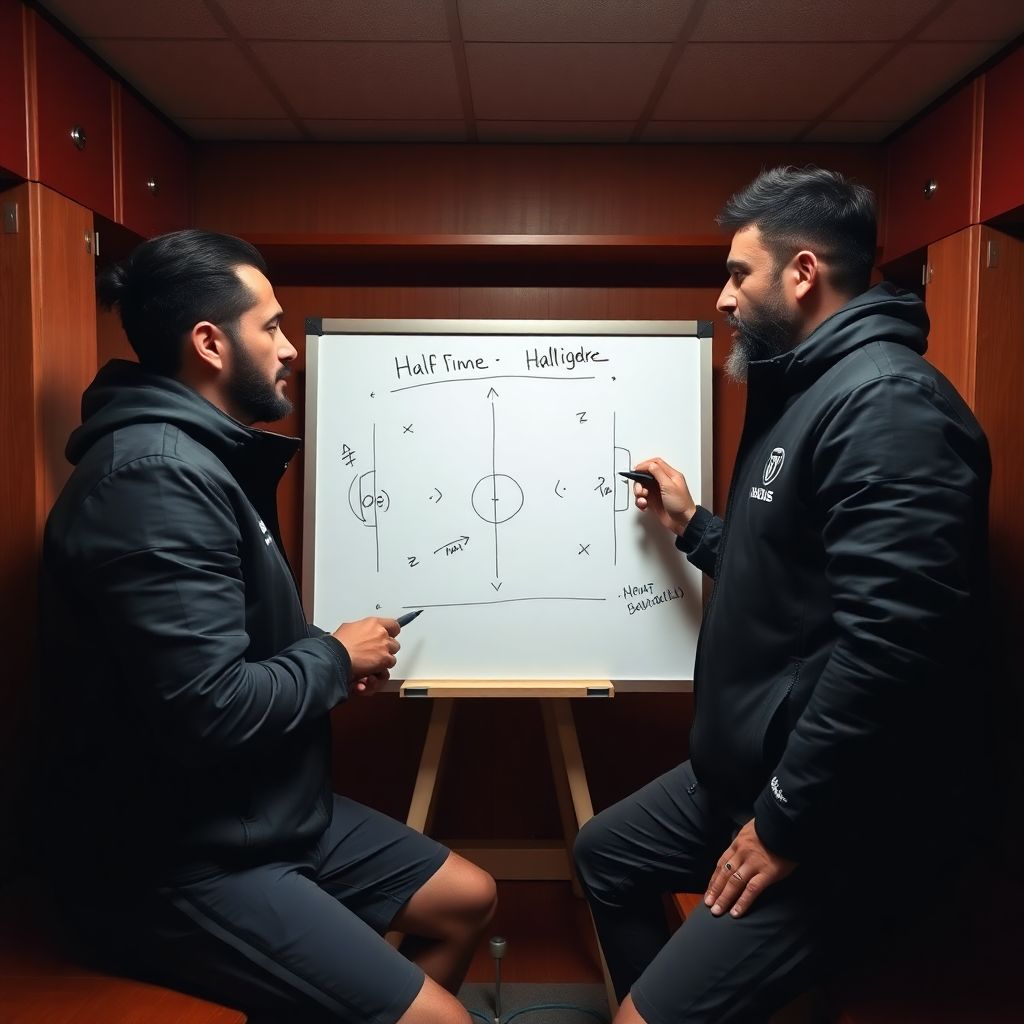
Halftime Masterplan: How Arda Güler and Ferdi Kadıoğlu Engineered Türkiye’s World Cup Revival
In the suffocating tension of the 2026 World Cup play-off semi-final, Türkiye’s 1-0 win over Romania looked, on the surface, like a tight, hard-fought result decided by a single moment of brilliance. In reality, that decisive moment was the product of a deliberate, carefully discussed plan drawn up not on the training ground, but in the dressing room during halftime.
This was not a lucky punch; it was a premeditated strike. As the “Crescent-Stars” moved to within one game of their first World Cup appearance in 24 years, Arda Güler and Ferdi Kadıoğlu revealed that the winning goal had been designed, rehearsed verbally, and agreed upon during the interval.
The Halftime Blueprint
At the break, with the score locked at 0-0 and Romania frustrating Türkiye with a compact, organised block, tension could easily have suffocated creativity. Instead, the dressing room turned into a tactical lab.
Real Madrid playmaker Arda Güler explained afterward that the two players literally mapped out the move that would later decide the tie. They didn’t speak in vague generalities about “playing our game”; they plotted a specific pattern.
“We sat down at halftime and talked about exactly this situation,” Güler told reporters. “Ferdi ağabey said to me, ‘Arda, as soon as you receive the ball and look to your left side, I’ll attack that space behind their full-back.’ I kept that in mind. When the moment appeared, I saw his run and played the pass. The rest was execution.”
The plan hinged on timing, understanding, and trust: Güler promised to look for the angle; Kadıoğlu promised to attack the gap without hesitation.
The Goal: Execution of a Promise
In the 53rd minute, the script unfolded almost frame by frame.
Güler drifted into his preferred left half-space, on his stronger left foot, drawing Romanian midfielders towards him. As he lifted his head, Kadıoğlu triggered the agreed movement from a deeper position on the flank, surging into the blind spot between centre-back and full-back. The pass cut through the defensive line with surgical precision, and the Brighton full-back, showing the calm of a seasoned forward, finished with authority.
The stadium erupted, but for the two architects of the move, it felt less like a miracle and more like a contract fulfilled. Kadıoğlu’s finish turned a whiteboard idea into a World Cup lifeline.
Shared Vision and Mutual Trust
Kadıoğlu, enjoying a standout season in the Premier League, underlined that the move was born from a clear reading of Romania’s defensive habits. Türkiye’s staff and players had noticed that Romania’s back line, although disciplined, tended to leave pockets of space wide when shifting across to compress the central zones.
“We went over this situation in the dressing room,” Kadıoğlu explained. “We knew Romania were very structured. But every organised defence leaves something somewhere if you’re patient enough. With Arda, when the ball is on his left, you have to believe that any pass is possible. I told him I’d be making the run. And it all unfolded exactly as we had imagined.”
This is where the story moves beyond individual talent. What separated this goal from a typical counterattack was the level of premeditation and the mental alignment between the two players. It was a shared blueprint, not just an instinctive combination.
Montella’s Quiet Influence
While Güler and Kadıoğlu rightly attract the spotlight, the environment that allowed such initiative to flourish is also significant. Head coach Vincenzo Montella has been credited with creating a culture where players are encouraged to communicate, adjust, and co-create solutions rather than passively waiting for instructions.
Montella’s approach has leaned heavily on empowering technically gifted players like Güler to assume responsibility for breaking games open. That halftime, he didn’t tear into his team or overload them with tactical jargon. Instead, he gave space for leaders on the pitch to propose specific ideas.
By trusting his key players to adapt and by balancing structure with freedom, Montella has helped turn Türkiye from a reactive side into a proactive one, capable of altering the course of matches in real time.
The Weight of 24 Years
Beyond tactics and clever passing lanes, the psychological burden carried into this play-off cannot be overstated. Türkiye has been living with the echo of 2002 for over two decades. That World Cup, where the national team famously finished third, has become both a source of pride and a shadow of expectation.
Kadıoğlu admitted the emotional pressure was tangible: “You feel the history. You know it’s been too long. The country has been waiting. We all understood what was at stake – it wasn’t just another qualifier. I’m just thankful I could help on this path.”
For many players in the current squad, 2002 is a childhood memory, not a personal experience. Yet, they are constantly compared to that golden generation. This semi-final, and the cold, narrow margin of a 1-0 scoreline, reflected that weight: no mistakes allowed, no second leg to fix things, every decision amplified.
Why This Goal Matters Beyond the Scoreline
On paper, Güler assisting Kadıoğlu is a simple line in a match report. In practice, that one play represents a shift in how Türkiye approaches high-stakes football.
First, it showcased adaptability. Romania’s block had neutralised early attacks, and the game risked drifting toward extra time or a set-piece lottery. Instead of forcing low-percentage crosses or long shots, Türkiye patiently waited for a pre-identified weakness to appear.
Second, it underlined the power of player-led tactics. The move was not a random improvisation; it was a micro-plan embedded within Montella’s general framework. That combination of top-down strategy and bottom-up creativity is increasingly vital at international level, where training time is limited.
Third, it marked the emergence of Güler and Kadıoğlu as not just star performers, but as decision-makers capable of shaping the narrative of a match.
Tactical Layers: Exploiting the Left Side
From a tactical perspective, the decision to focus on the left channel was no accident. Güler naturally gravitates toward that corridor, where he can open his body and see both central and wide options. Romania, wary of his passing range, squeezed centrally to block direct through-balls into the striker.
By luring defenders inward, Güler created the very space Kadıoğlu needed. The full-back’s delayed, deeper starting position also made his run harder to track. Instead of starting high and wide like a traditional winger, he arrived from behind the midfield line, forcing Romania’s right-back into a split-second decision: step up, or drop off. He did neither decisively, and that hesitation was fatal.
The combination of positional intelligence, timing, and pre-agreed coordination turned a small structural flaw in Romania’s defence into a match-winning opportunity.
The Human Side of a “Masterplan”
It is easy to romanticise such stories and label them “masterplans,” but the human side is just as important. Güler, still in the early stages of his Real Madrid chapter, is a young star learning to carry the hopes of a nation. Kadıoğlu, a versatile defender-turned-attacker, has built his reputation on consistency and work rate rather than spotlight headlines.
At halftime, there were no grand speeches, just a conversation between two teammates who trusted each other’s instincts. One promised to look; the other promised to run. Under immense pressure, they kept their word. That mix of simplicity and courage is what often defines the finest margins at international level.
One Match From History
The win set up a decisive, winner-takes-all clash with Kosovo on March 31. Ninety minutes now stand between Türkiye and a return to the World Cup stage after nearly a quarter of a century. The narrative has shifted from distant dream to immediate possibility.
Arda Güler summed up the mood succinctly: “There is only one match between us and our place in history. We will leave everything on the pitch to be there.”
For a nation still haunted by the memory of missing out, and still inspired by 2002, this is more than a football fixture. It is a chance to close a 24-year circle – and the blueprint drawn in that Romanian dressing room at halftime might just be remembered as the moment the new era truly began.