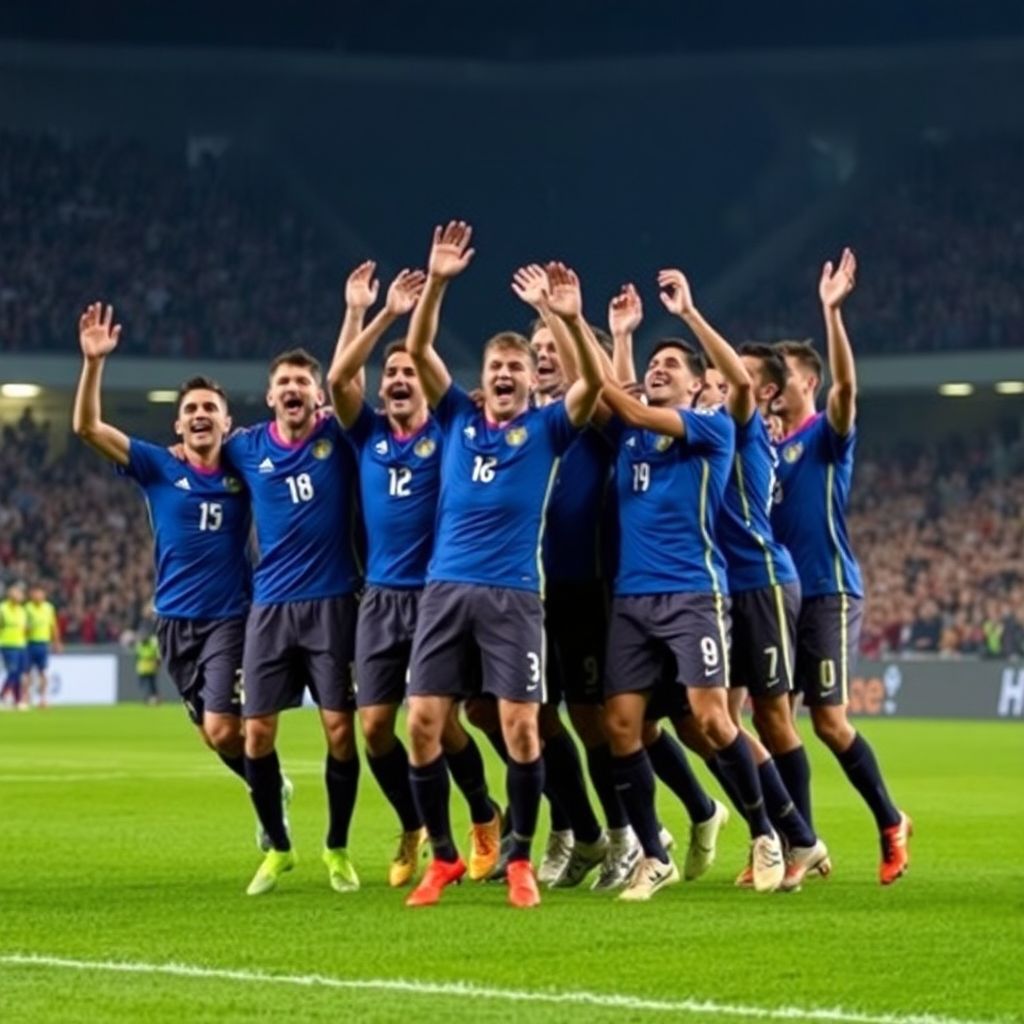
Kosovo Stuns Slovakia 4-3 to Book Historic World Cup Play-off Final with Türkiye
In one of the wildest nights European football has seen in recent years, Kosovo produced a sensational 4-3 comeback away to Slovakia to secure a historic World Cup play-off final against Türkiye. The dramatic victory means Vincenzo Montella’s side will now travel to Pristina on Tuesday, March 31, for a winner-takes-all showdown with a ticket to the 2026 FIFA World Cup at stake.
A Chaotic Night in Bratislava
While Türkiye handled their own business with a controlled, professional 1-0 win over Romania in the other semi-final, the parallel fixture in Bratislava descended into total drama.
Slovakia, veterans of multiple major tournaments and participants at the 2010 World Cup, were expected to impose their experience on a Kosovo team that only entered the international stage in 2014. Early on, that script seemed to be holding.
Just six minutes in, Martin Valjent rose highest in the box and powered a header into the net, giving Slovakia a 1-0 lead and sending the home crowd into early celebration. Kosovo looked rattled, but only for a moment.
Kosovo’s Relentless Response
What followed was a performance that underlined Kosovo’s resilience and attacking courage-qualities Türkiye’s back line will need to respect in Pristina.
Kosovo hit back quickly. Veldin Hodža, one of the standout figures of this emerging side, pounced to level the score after sustained pressure from the visitors. The equalizer didn’t silence Slovakia, but it clearly unsettled them.
Just before the interval, the hosts restored their advantage in bizarre fashion. Lukas Haraslin’s free-kick deceived everyone, including the goalkeeper, to sneak into the net and send Slovakia into half-time 2-1 up. On balance of play, they deserved to be ahead, but Kosovo had shown enough to suggest the game was far from over.
Second-Half Turnaround: Kosovo Erupts
Kosovo came out for the second half transformed. Whatever was said in the dressing room had an instant effect.
Within the first minute after the restart, Fisnik Asllani struck to make it 2-2, seizing on a defensive lapse and finishing with composure. That goal flipped the momentum entirely. From that point, it was Slovakia who looked overwhelmed.
By the hour mark, Kosovo completed the turnaround. Florent Muslija stepped up over a free-kick near the Slovakian penalty area and cunningly drove the ball inside the near post, catching the goalkeeper off guard and putting Kosovo 3-2 in front.
The hosts were shaken, and Kosovo sensed blood. In the 72nd minute, their persistence paid off again. A scrambled ball in the box fell to Kreshnik Hajrizi, who reacted quickest, smashing it in from close range to make it 4-2 and spark wild celebrations on the Kosovo bench.
Late Drama, Historic Outcome
Slovakia refused to go quietly. Deep into stoppage time, David Strelec pulled one back to narrow the scoreline to 4-3, briefly raising the specter of an improbable late collapse.
But Kosovo held on. When the final whistle sounded, it confirmed not only one of the biggest wins in the young footballing history of Kosovo, but also a place in a one-off play-off final for the right to reach their first-ever major tournament. They now stand just 90 minutes from qualifying for a World Cup.
Goals from Everywhere: The Kosovo Threat
One of the most striking features of Kosovo’s performance was the variety of their attacking weapons. Four different players-Hodža, Asllani, Muslija and Hajrizi-hit the net. This is not a side reliant on a single star forward.
For Türkiye, that poses a serious tactical challenge. It means the danger can come from midfield runners, set-piece specialists, and opportunistic defenders crashing the box. Kosovo’s ability to generate goals from multiple areas of the pitch makes them unpredictable and difficult to contain over 90 minutes.
The “Balkan Brazilians” label often attached to Kosovo might sound like a headline writer’s exaggeration, but the fluidity and fearlessness they showed against Slovakia gave the nickname substance. Even when behind twice, they refused to retreat into damage control. They attacked the game-and were rewarded.
Türkiye: The Final Boss in Pristina
Now, the focus shifts to Pristina, where Türkiye awaits as the final obstacle between Kosovo and World Cup history. On paper, Türkiye is the favorite. Their pedigree, squad depth, and recent performances under Vincenzo Montella put them a tier above many teams in Europe’s middle class.
Yet this is not a neutral-site encounter. Türkiye will walk into a charged, compact stadium, facing a Kosovo side boosted by a once-in-a-generation opportunity in front of its own supporters. Emotional energy will be on Kosovo’s side; experience and individual quality will be on Türkiye’s.
What’s at Stake for the Crescent-Stars
For Türkiye, the significance of this match cannot be overstated:
– The Prize:
The winner goes straight into World Cup Group D, where Australia, Paraguay and the United States are waiting. For Türkiye, that represents not just qualification, but a realistic chance to compete strongly in the group stage.
– The History:
The last time Türkiye reached the World Cup finals was the legendary 2002 campaign, where they reached the semi-finals and captured global attention. Since then, there have been many talented Turkish squads, but no return to the grandest stage. This play-off final offers a chance to close that long, painful gap.
– The Challenge:
Türkiye must control a Kosovo attack that just put four goals past a Slovakian side known for discipline and structure. Any defensive lapses in Pristina could quickly turn a controlled evening into another chaotic shootout.
Montella’s Tactical Puzzle
Vincenzo Montella and his coaching staff will likely spend much of the journey to Pristina dissecting the footage from Bratislava. The focus will be on:
– How Slovakia lost their defensive shape after halftime
– How Kosovo exploited set-pieces and second balls
– Where the space opened between Slovakia’s midfield and defensive lines
Montella’s Türkiye has been more compact and mature in recent months, especially in knockout-type matches. Their narrow win over Romania showed a side comfortable managing a one-goal margin rather than chasing a spectacle. Against Kosovo, that game management may be just as important as creativity in attack.
Arda Güler and Ferdi Kadıoğlu: Türkiye’s Creative Edge
If Kosovo’s strength lies in goals from multiple sources, Türkiye’s edge may come from individual brilliance. Arda Güler, operating between the lines, has emerged as the team’s main creative axis, capable of unlocking tight defenses with a single pass or long-range strike.
Ferdi Kadıoğlu offers a different but complementary threat: energy, dribbling, and versatility down the flank, often stretching defenses and creating overloads. When both are in top form, Türkiye can generate chances against even the most disciplined back lines.
Montella will likely look to these two to break Kosovo’s resistance early. An opening goal for Türkiye could quiet the home crowd and force Kosovo to chase the game, potentially exposing spaces in transition.
Key Battles to Watch in Pristina
Several on-pitch duels are likely to shape the outcome of the final:
– Kosovo’s set-piece takers vs Türkiye’s defensive organization:
After Muslija’s smart free-kick against Slovakia, Türkiye must stay sharp on dead balls and avoid cheap fouls near the box.
– Arda Güler in the half-spaces vs Kosovo’s holding midfielders:
If Arda is given time to turn and pick passes, Kosovo could find themselves constantly scrambling. Restricting his influence will be a priority.
– Kosovo’s second-half intensity vs Türkiye’s composure:
Kosovo’s ability to raise the tempo after the break was decisive in Bratislava. Whether Türkiye can absorb that surge without panicking may define the evening.
Psychological Edge: Underdog vs Favorite
Kosovo goes into the final with nothing to lose and everything to gain. Few expected them to get this far, and their win in Slovakia will be framed as a statement that they belong at this level. That underdog mentality can free players to take risks and play without fear.
Türkiye, conversely, carries the weight of expectation. Another missed World Cup would be viewed as a deep failure for a football-obsessed nation. Managing that pressure-especially if the game remains tight into the final stages-will be as important as any tactical decision.
Montella’s blend of experienced campaigners and younger stars needs to strike the right emotional balance: urgent but not frantic, confident but not complacent.
Ninety Minutes to Decide World Cup Destiny
All roads now lead to Pristina. On one side stands a rising Kosovo team that has already shattered one established European name and believes it can shock another. On the other, a Türkiye side desperate to return to the global stage and determined not to let this golden opportunity slip away.
The 4-3 rollercoaster in Bratislava ensured that this final is not a routine formality, but a genuine, high-stakes clash between two nations with contrasting histories and the same dream.
For Kosovo, it is a chance to write the first great chapter in their football story. For Türkiye, it is an opportunity to reconnect with a glorious past and reintroduce themselves to the world.
Only one can step into World Cup Group D. In Pristina, over 90-and possibly 120-intense minutes, Europe will discover who is ready.