The Opening Match Jinx: Turkiye’s Tournament Hoodoo Returns at the 2026 World Cup
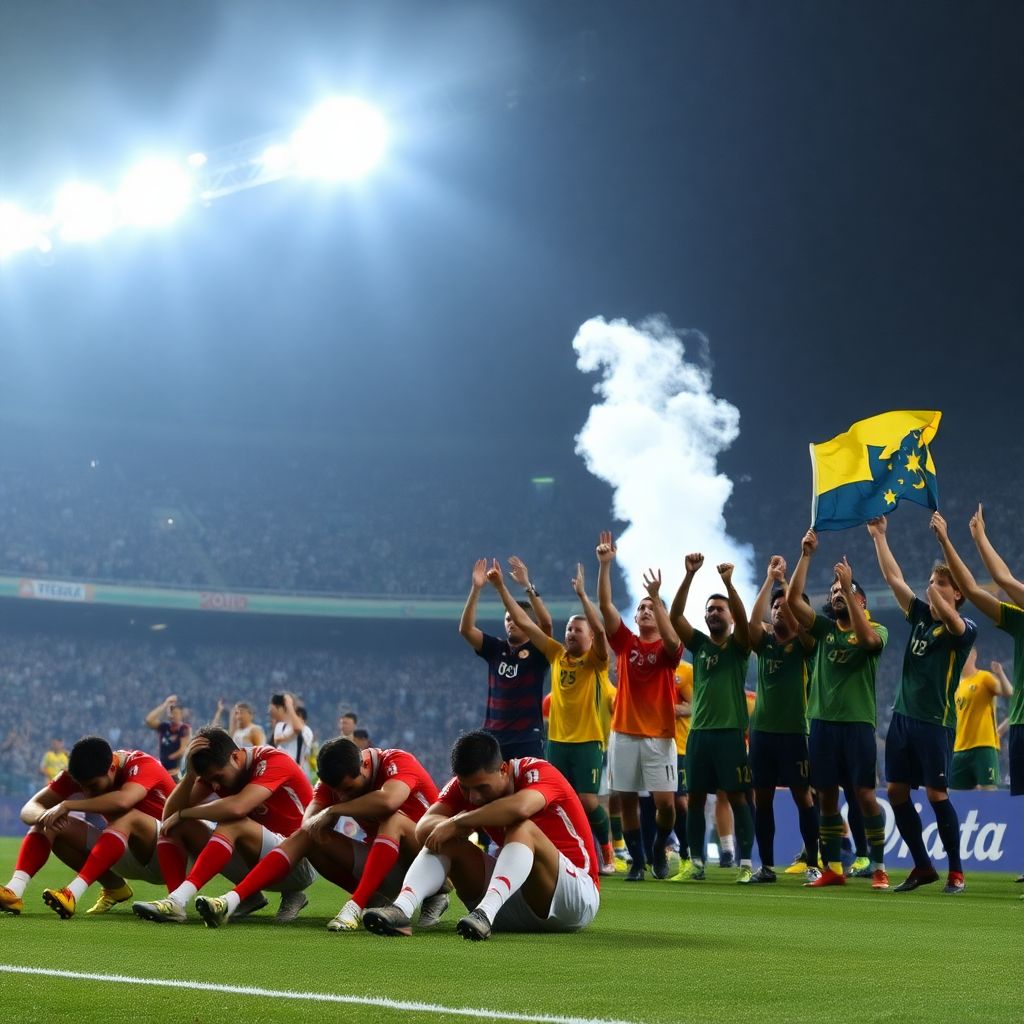
Turkey’s 2-0 loss to Australia in their 2026 FIFA World Cup debut did more than complicate the mathematics of Group D. It dragged an old ghost back into the spotlight – a deep‑rooted mental barrier that has haunted the national team for generations: the opening match curse.
What happened in Vancouver was not just a bad day at the office. It felt like a continuation of a long, uncomfortable pattern in Turkish football history, where the first game of a major tournament repeatedly becomes a mental trap rather than a springboard.
—
A Chronic Habit of Stumbling Out of the Blocks
Across the nine major tournaments Turkiye has reached – combining FIFA World Cups and UEFA European Championships – one statistic stands out starkly: in eight of those nine campaigns, the Crescent‑Stars failed to win their opening match.
That track record has turned almost every tournament into a chase from behind. Instead of using the first fixture to settle nerves and build confidence, Turkiye has regularly been forced into survival mode by Matchday 2, juggling pressure, expectation, and fatigue much earlier than their rivals.
From their first World Cup appearance in 1954 all the way to the modern era, the same narrative keeps resurfacing: promising squads, passionate support, but a first game that slips away, setting a difficult tone for what follows.
—
Euro 2024: The Night the Hex Seemed Broken
For a short time, many believed that narrative had been rewritten for good. At Euro 2024 in Dortmund, Turkey delivered a vibrant, fearless performance, beating Georgia 3-1 in one of the tournament’s most entertaining openers.
That match was more than three points. It was the first time Turkiye had ever won their first game at a major finals. The team played with freedom, attacking intent, and confidence that suggested a psychological corner had finally been turned. Pundits and fans alike began to talk about a “new Turkiye” – one that no longer crumbled under the unique tension of opening day.
Yet two years later, in Vancouver, the old story resurfaced.
—
Vancouver 2026: Dominance Without Reward
Against Australia, Vincenzo Montella’s side actually controlled large stretches of the game. Turkiye outshot their opponents and spent long spells in the Socceroos’ half, yet left the pitch empty‑handed.
The familiar problems were all there:
– Wasteful finishing in key moments
– Vulnerability to quick counter‑attacks
– An almost visible tension whenever Australia broke forward
– A drop in composure once the first goal was conceded
Statistically, Turkiye looked competitive. Psychologically, they looked fragile. The result was another opening game that slipped through their fingers, even though the performance was not entirely disastrous.
—
The Burden of History: When Numbers Become a Mental Weight
This recurring failure in first matches has become more than a coincidence. It is now part of the national team’s narrative, something every new generation of players grows up hearing about.
For athletes, history is a double‑edged sword. It can be a source of pride, but it can also become a burden. When players step onto the pitch believing that “we never start tournaments well,” the first goal against or the first missed chance can feel heavier than it should. Mistakes stop being just mistakes and start becoming “proof” that the curse is still alive.
This is why opening‑day defeats for Turkiye rarely feel like just one bad result. They feel like reruns of an old film everyone knows too well.
—
The Paradox: Bad Starts, Big Finishes
Yet within this frustrating pattern lies an intriguing contradiction. Turkiye’s greatest successes on the international stage have come in tournaments where they began badly.
– World Cup 2002:
Turkiye began with a painful 2-1 defeat to Brazil, surrounded by controversy and late drama. Instead of collapsing, that loss triggered a remarkable reaction. The team regrouped, found resilience and tactical balance, and eventually reached the semi‑finals, securing a historic third‑place finish.
– Euro 2008:
The campaign opened with a flat 2-0 defeat to Portugal. From there, however, Fatih Terim’s side became the ultimate comeback specialists, producing three consecutive dramatic turnarounds. Last‑minute goals, emotional swings, and sheer mental strength carried them all the way to the semi‑finals, where they fell just short of the final.
The lesson is clear: for Turkiye, a poor opening result has never automatically spelled disaster. In fact, on their best days, the team has used early setbacks as fuel.
—
Lessons from 2002 and 2008 for Montella’s Turkiye
For the current squad, the past should not be a chain around their ankles but a library of solutions.
From 2002 and 2008, several key themes emerge:
1. Emotional Recovery
Both historic teams bounced back quickly from disappointment. They didn’t allow opening‑game frustration to drag into training or into subsequent matches. Leadership within the dressing room will be crucial now for Montella’s side: experienced players must help younger teammates park the result and focus on what comes next.
2. Tactical Flexibility
Those successful campaigns featured decisive tactical adjustments after the first match. Defensive structures were tightened, and the balance between attack and protection improved. Against Australia, Turkiye again looked exposed on transitions; fixing that before facing Paraguay and the United States is essential.
3. Collective Identity
The 2002 and 2008 teams developed a clear identity: aggressive, emotionally charged, and unafraid of chaos. This current generation shows flashes of that spirit, but it needs to be expressed consistently, especially when under pressure.
—
The Road Ahead: Paraguay and the United States
Mathematically, nothing is lost. The format and structure of the 2026 World Cup mean that a Round of 32 place is still well within reach.
To progress, Turkiye must:
– Treat the Australia loss as an isolated setback, not a prophecy.
– Turn their offensive dominance into efficiency in front of goal.
– Stabilize defensive transitions, cutting down space behind the back line.
– Embrace, rather than fear, the pressure of “must‑win” situations – something Turkish teams have historically done well once the opening drama is behind them.
Paraguay will likely test Turkiye’s patience with compact defending and physical duels, while the United States will bring energy, athleticism, and home‑continent momentum. These are very different challenges, but both can be overcome if the psychological reset happens quickly.
—
Is It Really a Curse – or Just a Structural Weakness?
Labeling the issue a “curse” makes for compelling headlines, but it also risks hiding more concrete footballing problems.
Several recurring factors may be at play:
– Over‑cautious or over‑emotional starts: Turkiye sometimes oscillates between being too reserved and overly hyped in openers, struggling to find a calm middle ground.
– High external pressure: Pre‑tournament hype, constant discussion of past failures, and heavy expectations can turn the first 90 minutes into a mental minefield.
– Insufficient game management: Even when playing well, the team has often struggled to control tempo, manage leads, or stay organized after setbacks in opening matches.
Solving these issues requires not superstition, but a deliberate blend of sports psychology work, tactical clarity, and leadership on and off the field.
—
Turning the Narrative: From Victims of a Jinx to Masters of Recovery
If there is one advantage Turkiye holds over many other nations, it is familiarity with adversity. Playing under pressure, responding to drama, and thriving in chaotic, emotional moments have long been part of the national team’s identity.
Instead of allowing the opening‑match storyline to define them, this squad has the opportunity to reshape it into a different narrative: Turkiye as the team that may start with a stumble but finishes with a sprint.
To do that, they must:
– Accept the historical pattern without being paralyzed by it.
– Use the anger and frustration from Vancouver as competitive energy.
– Lean on the positive examples from 2002 and 2008 as proof that early setbacks can be catalysts, not conclusions.
—
The Silver Lining: The Spirit That Never Dies
Even in defeat, there are reasons for cautious optimism. The team created chances against Australia; they were not outclassed, only out‑finished and out‑managed in critical moments. The talent level within the squad is high, and the margin between disaster and revival at tournament level is often thin.
The silver lining in this so‑called curse is that it has, on more than one occasion, awakened Turkiye’s strongest qualities: resilience, unity, and a refusal to accept the script written for them.
The message to the current generation is simple: a bad beginning is not a final verdict. If Montella’s men can shed the psychological weight of history and respond with clarity and courage, the path to the Round of 32 – and perhaps beyond – is still open.
The opening match jinx has struck again. What comes next will decide whether it remains a chain on Turkish football, or becomes the spark for another unforgettable resurgence.