Turkey’s role in international basketball is defined by a steady pipeline of skilled players, tactically flexible coaches, and ambitious clubs that compete and trade across borders. From EuroLeague contenders to Turkish basketball players in NBA rotations, the system blends strong domestic competition with export-oriented development, even for programs with limited resources.
Snapshot: Turkey’s Impact on Global Basketball
- Turkish clubs rank among Europe’s most competitive, regularly reaching advanced stages of continental tournaments.
- Multiple generations of Turkish basketball players in NBA and EuroLeague rosters show a stable development pipeline.
- The best Turkish basketball coaches abroad export a mix of discipline, spacing, and tactical flexibility.
- Professional basketball scouting in Turkey links domestic leagues, academies, and international markets.
- Turkey’s national teams blend physical defense with structured half‑court offense in FIBA competitions.
- Cultural passion for basketball sustains fan interest, club revenues, and demand for Turkish Basketball Super League tickets.
- Even low-budget programs adapt Turkish methods through regional leagues, shared staff, and targeted player development.
Historical Rise of Turkish Basketball on the World Stage
Turkey’s modern international basketball profile took shape through sustained investment in clubs, youth systems, and arenas, which turned a once secondary sport into a core part of the country’s sporting identity. The landmark moment was hosting the 2010 FIBA World Championship and reaching the final, firmly placing Turkey among global contenders.
Before that, Turkish clubs gradually climbed European rankings. Istanbul teams in particular used smart foreign signings and well-developed local talent to challenge established powers from Spain, Italy, Greece, and the former Yugoslav countries. Deep EuroLeague playoff runs signaled that Turkish basketball was no longer an outsider, but a permanent member of the elite.
Domestically, the Turkish Basketball Super League became one of Europe’s strongest competitions, helping local players adjust to high-pressure environments and advanced tactics. This strong home base laid the groundwork for more Turkish basketball players in NBA rotations and made Turkey an attractive stop for international prospects searching for a high-visibility league.
Today, Turkey’s role in international basketball can be defined along three axes: club success in European competitions, consistent qualification and competitiveness at FIBA events, and an export model in which players, coaches, and even referees work abroad, transferring know-how between Turkey and other basketball ecosystems.
Turkish Players Shaping European and NBA Rosters
Turkish players influence international basketball through a combination of technical skill, tactical discipline, and early exposure to high-level competition. Their path from local youth tournaments to major European clubs and the NBA follows repeatable steps that other federations can study, even when operating with fewer resources.
-
Early technical schooling in club systems.
Major clubs and regional teams emphasize shooting form, pick‑and‑roll reads, and team defense from a young age. This allows guards and wings to adapt quickly when they move to EuroCup, EuroLeague, or NBA rosters. -
Exposure to senior competition as teenagers.
Talented prospects often play meaningful minutes in the Turkish Basketball Super League before age 20. Competing against strong imports toughens them up and showcases them to scouts from Spain, Germany, France, and the United States. -
Stepwise movement through European clubs.
Many players first transfer to mid-level European teams, then climb toward EuroLeague or the NBA. This creates a visible ladder for Turkish basketball players in NBA discussions: first succeed in Europe, then test NBA Summer League or two‑way contract opportunities. -
National team visibility on global stages.
Strong performances at EuroBasket, Olympic qualifiers, and youth FIBA tournaments attract attention from international coaches and general managers. These events are especially vital for players from smaller Turkish clubs with limited media exposure. -
Role specialization.
Turkish bigs often develop as mobile screeners and rim protectors, while guards tend to be strong pick‑and‑roll decision‑makers. This specialization makes it easier for foreign teams to project how a player will fit into an existing roster without massive tactical changes. -
Alternative routes for low-budget talents.
Players from less resourced regions increasingly use online highlight platforms, regional tournaments, and joint practices with stronger clubs to gain attention. For them, joining a Turkey basketball academy for international players or signing abroad in second divisions can be a realistic first step instead of aiming directly at top EuroLeague teams.
Coaching Philosophies and Turkish Coaches Abroad
Turkish coaching has become an export in its own right. The best Turkish basketball coaches abroad are valued for a pragmatic balance between structure and adaptation, especially in leagues where clubs change rosters frequently and need systems that can absorb new players quickly.
-
Defensive organization with clear rules.
Turkish coaches typically install defined pick‑and‑roll coverages, help‑side responsibilities, and transition rules. This clarity helps teams in domestic leagues and FIBA competitions maintain intensity, even when depth is limited or import players arrive late in the season. -
Half‑court offense built around spacing and reads.
Many Turkish systems prioritize four‑out spacing, short roll reads, and strong‑side/weak‑side balance. Abroad, this translates well to European and Asian leagues that rely on structured half‑court sets rather than pure isolation play. -
Integration of local and foreign talent.
Coaches from Turkey are accustomed to rosters with a mix of domestic players and imports. When they work in other countries, this experience helps them manage locker room cultures, language barriers, and differing expectations about playing time and roles. -
Player development inside senior practices.
Instead of running long separate sessions for youth players, Turkish coaches often integrate development into first‑team practices through small‑sided games and situational drills. This method appeals to foreign clubs with tight budgets that cannot afford large development staffs. -
Adaptations for resource‑constrained clubs abroad.
When working in leagues with limited budgets, Turkish coaches simplify playbooks, focus on conditioning and fundamental skills, and use video analysis creatively (shared platforms, remote breakdowns) to compensate for the lack of support staff and advanced technology.
Club-Level Dynamics: Transfers, Academies, and Scouting
Clubs in Turkey sit at the heart of the international connection. Through transfers, academies, and professional basketball scouting in Turkey, they transform local potential into marketable talent, while also importing players who raise the standard of domestic competition.
These mechanisms bring clear advantages but also create structural limits. Understanding both sides is essential for anyone trying to replicate the Turkish model in another country or adapt it to a smaller budget environment.
Advantages of the Turkish Club Ecosystem
- High-level competition attracts talent. The reputation of the domestic league and regular EuroLeague/EuroCup participation make Turkey attractive for established foreign players and ambitious prospects.
- Strong academy structures. A Turkey basketball academy for international players can combine education, language support, and high‑level coaching, creating a bridge for prospects from the Balkans, Africa, and the Middle East.
- Scouting networks spanning multiple regions. Professional basketball scouting in Turkey routinely covers Europe, the Americas, and Africa, helping clubs sign undervalued players who later command larger transfer fees.
- Fan interest and ticket demand. Sales of Turkish Basketball Super League tickets, especially for big derbies, support club revenues and justify continued investment in rosters and facilities.
- Visibility for players and coaches. Frequent televised games and digital coverage mean solid performances in Turkey can quickly lead to offers from Spain, Italy, Germany, or Asian leagues.
Constraints and Risks for Clubs and Academies
- Budget volatility. Sponsorship changes or currency fluctuations can force rapid roster turnover, harming continuity and player development.
- Dependence on imports. Some clubs overuse foreign players, limiting minutes for domestic prospects and weakening the national talent pool.
- Uneven regional access. Big cities host elite academies, while smaller towns may lack facilities and full‑time coaches, making it harder to identify late‑blooming talent.
- Short‑term pressure to win. Owners and fans often demand immediate success, which can discourage long-term investments in youth or data‑driven scouting.
- Limited options for low-resource programs. Smaller clubs may struggle to match the infrastructure of top teams; they must rely on partnerships, shared facilities, and targeted player development rather than full-scale academies.
National Team Tactics, Development Pathways, and Results
Turkey’s national teams are known for disciplined half‑court play, physical defense, and strong guard‑big combinations. Results at EuroBasket, World Cups, and Olympic qualifiers reflect both the strengths of this approach and some recurring challenges that other federations can learn from.
Frequent Misconceptions and Strategic Pitfalls
- Myth: Success comes only from big budgets. While funding helps, many key national team contributors emerged from modest clubs that invested in good coaching, not expensive facilities. For resource-limited countries, targeted coaching education can be more impactful than building new arenas.
- Error: Overreliance on a single golden generation. After a strong tournament run, there is a risk of assuming the same core will carry the team for a decade. Sustainable success requires continuous youth development, not nostalgia for one standout roster.
- Myth: Import-heavy leagues automatically damage the national team. The real issue is not the number of imports but the lack of clear minutes and responsibilities for domestic players. Structured rotation policies and development plans can turn a foreign‑rich league into a learning environment.
- Error: Copying NBA tactics directly into FIBA play. FIBA rules, spacing, and officiating differ from the NBA. Turkish teams that succeed internationally adapt concepts like pace and space to shorter games, different defensive three‑second rules, and tighter traveling calls.
- Myth: Only large countries can build deep national programs. Smaller federations can mirror Turkish pathways by focusing on U16-U20 national teams, partnering with strong clubs, and using regional tournaments as low-cost development platforms.
Socioeconomic and Cultural Factors Behind Cross-Border Success
Turkey’s basketball influence is not just about tactics and training; it emerges from a specific social and economic environment. Urbanization, university networks, media coverage, and cultural enthusiasm for big‑club rivalries all contribute to a system that naturally pushes players and coaches onto the international scene.
Major cities host multiple clubs within short distances, making it easier for young players to switch environments without leaving home. Universities and municipal programs often provide scholarships and facility access, while television and streaming platforms keep basketball in public view, supporting demand for Turkish Basketball Super League tickets even outside traditional football fan bases.
For countries or regions with limited resources, the Turkish case suggests that building community-based clubs, sharing facilities (for example, between schools and local teams), and using digital channels for exposure can substitute for large budgets. Collaboration across cities and institutions can create a de facto national development network without constructing many new arenas.
Illustrative Cross-Border Mini-Case
Consider a mid‑table Turkish club and a neighboring country’s low-budget team.
Scenario:
  - Turkish club: solid facilities, competitive league, limited budget.
  - Neighboring club: minimal resources, strong local athletes, weak exposure.

Collaboration steps:
  1. Annual joint training camp hosted in Turkey.
  2. Exchange of video scouts and practice plans.
  3. Loan of 1-2 young players each season.

Outcome:
  - Turkish club tests prospects cheaply.
  - Neighboring club gains higher-level experience and tactical models.
  - Both expand scouting reach without major financial risk.
This type of cooperation mirrors how Turkey interacts with surrounding basketball markets and demonstrates a scalable template for cross‑border success under financial constraints.
Quick Self-Assessment Checklist for Applying Turkish Lessons
- Have you defined a clear pathway from youth teams to senior competition, even if only at regional level?
- Do your coaches integrate development into regular team practices rather than relying on separate, expensive sessions?
- Are you using low-cost tools (video, online platforms, joint camps) to connect with stronger leagues or neighboring countries?
- Is your club or federation balancing import players with meaningful roles for domestic talent?
- Have you identified at least one realistic international competition or partner club that fits your current budget and talent level?
Targeted Clarifications on Turkey’s Role in International Basketball
How significant is Turkey in the current European basketball hierarchy?
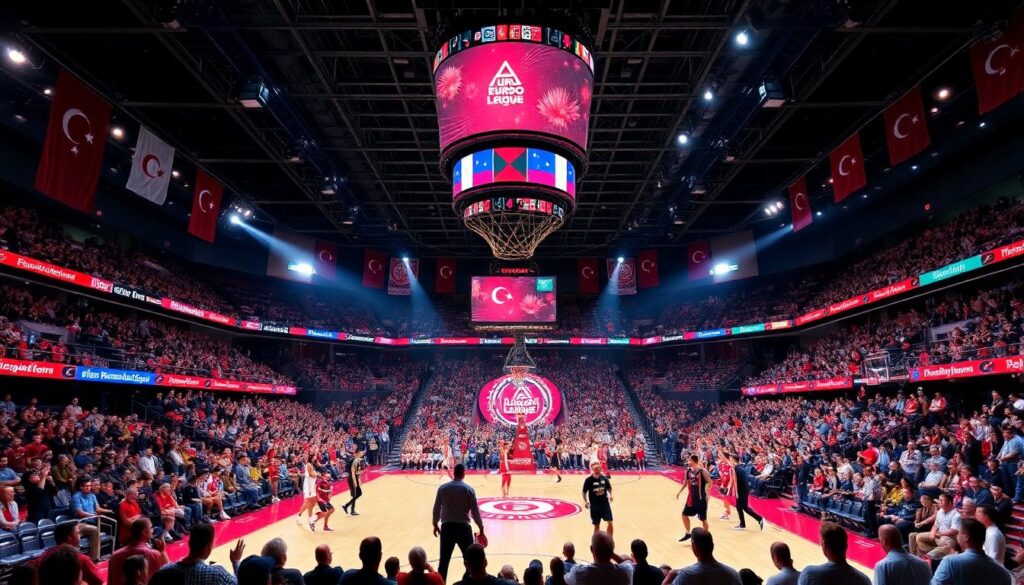
Turkey is firmly established as a top-tier European basketball country. Its clubs regularly compete deep into EuroLeague and EuroCup, and national teams are consistent participants in EuroBasket and World Cup tournaments, even if results vary by generation.
Why are there increasing numbers of Turkish basketball players in NBA teams?
The combination of strong domestic competition, early exposure to senior minutes, and successful EuroLeague showings makes Turkish players visible and reliable to NBA scouts. Many follow a path of excelling in Europe before moving to the NBA on rookie or mid-level contracts.
What defines the best Turkish basketball coaches abroad?
They are known for structured defenses, detailed game plans, and the ability to blend domestic and foreign players into cohesive units. Their experience managing pressure at big Turkish clubs translates well to ambitious European and Asian teams.
How can a low-budget club replicate parts of the Turkish model?
Focus on coach education, simple but clear tactical systems, and partnerships with better-resourced clubs. Shared training camps, video exchange, and carefully chosen foreign players can produce progress without the financial scale of top Turkish organizations.
Are Turkey basketball academy programs useful for international players?
Yes. Many academies attached to major Turkish clubs offer a mix of high-level coaching, schooling, and language support. For international players from nearby regions, they provide exposure to European scouts and a structured environment at a relatively accessible cost.
How does professional basketball scouting in Turkey operate?
Scouting departments combine live game observation, video analytics, and agent networks to identify talent domestically and abroad. Smaller clubs often share information informally or rely on regional scouts to keep costs under control while still accessing undervalued players.
Is attending Turkish Basketball Super League games important for scouts?
Yes. Live games show how players respond to pressure, crowd noise, and physical defense-factors that video alone cannot fully capture. For foreign scouts, visiting Turkish arenas also helps understand the competitive level and context behind player statistics.