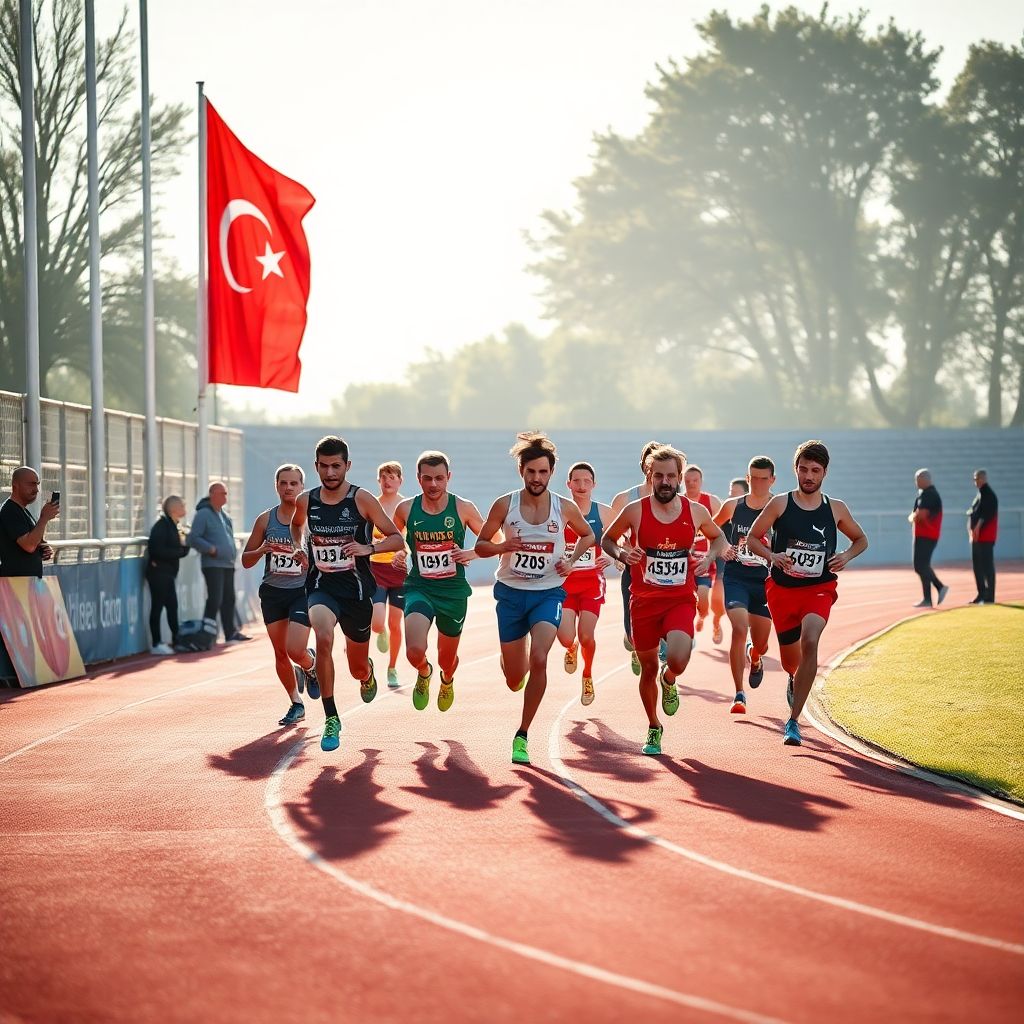
Turkish middle-distance runners are reshaping global 800-3000 m racing through aggressive tactics, efficient biomechanics, and systematic development pathways that work even with constrained budgets. Understanding how Turkey combines clubs, federation programs, coaching innovation, and smart competition planning helps coaches and analysts design repeatable models, adapt ideas to local realities, and avoid outdated assumptions.
Essential conclusions for coaches and analysts
- Turkey’s rise in middle distance is systematic rather than accidental: club structures, federation pathways, and targeted races are aligned.
- Success is built on controllable factors: aerobic development, race-specific speed, and tactical literacy, not only altitude or facilities.
- Limited-resource programs can borrow Turkey’s modular model: local clubs, regional hubs, and occasional high-quality training camps.
- Online coaching and remote monitoring now complement trackside guidance, widening access to expert Turkish middle-distance knowledge.
- Progress is uneven: depth, women’s participation, and stable funding are still fragile, so sustainability demands deliberate planning.
- Sponsors and brands are starting to follow results, but athletes and coaches must actively manage visibility and long-term partnerships.
Myths first: debunking misconceptions about Turkey’s middle-distance surge
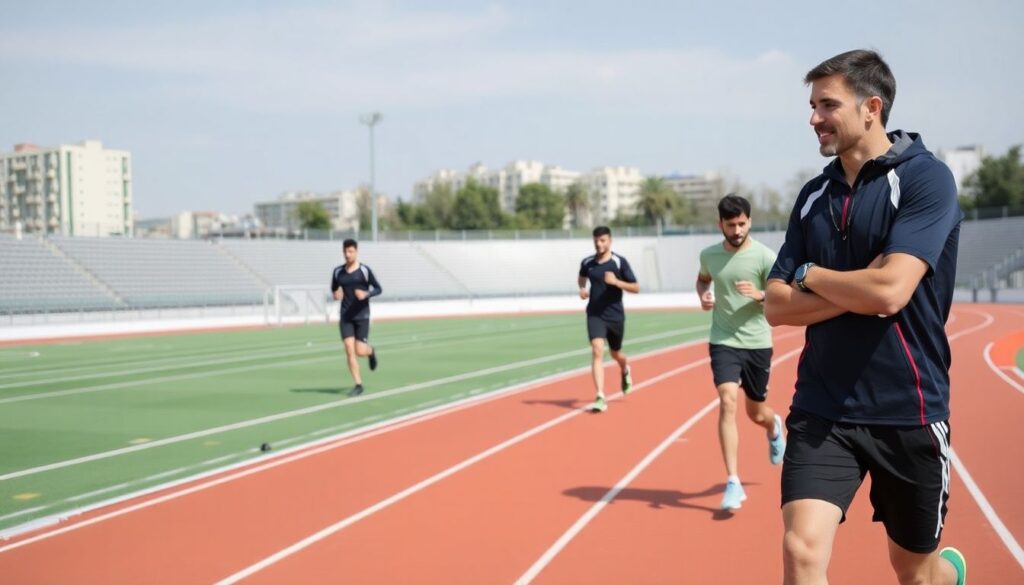
Turkey’s progress in middle-distance running is often reduced to simplistic stories: buying talent, copying East African models, or relying only on altitude. These myths hide a more instructive reality: layered club systems, federation planning, and coaches who deliberately integrate global knowledge into a local context.
A first misconception is that Turkish athletes succeed only thanks to imported runners. Naturalised athletes exist, but they slot into a pre-existing structure of clubs, university teams, and Turkey athletics federation elite athlete programs. These programs support both homegrown and naturalised runners, and the domestic system continues to produce youth and U23 finalists in its own right.
A second myth is that elite-level facilities are a prerequisite. Many Turkish middle-distance runners emerge from modest club tracks, training in mixed groups with sprinters, hurdlers, and even football teams. Access to the best turkish track and field training camps is helpful but not universal. Coaches build robust aerobic bases using parks, trails, and even city streets, then layer track-specific work only when needed.
A third misconception is that Turkey’s model cannot be replicated without big budgets. In reality, the system scales down surprisingly well. Clubs prioritise coach education, basic timing equipment, simple GPS watches, and free or low-cost cross-country races. For federations and clubs in similar economic conditions, this is the real lesson: invest first in knowledge, organisation, and consistent competition, not in perfect facilities.
From clubs to podiums: the historical development of Turkish middle-distance running
- Club-based grassroots beginnings
Urban multi-sport clubs in Istanbul, Ankara, and other cities started track sections for youth and students. Middle-distance was often a secondary event for football or basketball players, but it created a broad base of semi-prepared runners. - School competitions as a wide filter
National school games and inter-university meets provided frequent races over 800-3000 m. Coaches identified durable, technically efficient athletes who handled repeated competition and recovery well. - Federation support and structured calendars
The national calendar gradually added specialised indoor, outdoor, and cross-country events. This gave Turkish middle-distance runners clear progression: local meets, regional championships, national finals, then European-level competitions. - Integration of foreign expertise
Visiting coaches, international camps, and overseas racing trips exposed Turkish coaches to periodisation models and biomechanical diagnostics used by middle-distance powerhouses. Instead of copying them blindly, Turkish staff adapted intensity distribution and taper models to local academic and military commitments. - Emergence of performance hubs
Certain cities and universities became hotspots, concentrating the best coaches, physiotherapists, and sport scientists. Athletes from smaller clubs relocated temporarily to these hubs for pre-championship phases, then returned home with upgraded routines. - Growing engagement with sponsors
As results improved, sports brands sponsoring turkish track athletes started to link contracts to international standards and rankings. This sharpened the focus on peaking for major championships instead of chasing appearance fees in minor meetings.
Coaching and training innovations powering recent improvements
Coaching innovation in Turkey is less about revolutionary methods and more about disciplined integration of known best practices, adapted to real-world constraints like shared facilities, academic schedules, and limited medical support.
- Polarised yet flexible intensity distribution
Many elite coaches organise the season with high volumes of low-intensity work, plus carefully dosed race-pace and faster intervals. The novelty is flexibility: microcycles are adjusted based on school or military duties, not on an idealised calendar. - Race-pace modelling instead of generic intervals
Sessions like 5-7 x 300 m at slightly faster than 1500 m pace, or broken 800 m intervals, are common. Coaches use video and simple timing to refine stride length and contact time rather than chasing arbitrary split times. - Hybrid surfaces to reduce injury risk
Turkish groups often split work between grass, dirt, and track. Long tempo runs and hill sessions are done off-track, while only race-specific work goes on the tartan. This approach preserves tendons and allows higher lifetime volumes. - Low-cost performance analytics
Instead of full lab testing, coaches rely on repeatable field tests (for example, controlled 6-8 minute efforts and standardised 1000 m runs) and basic heart-rate or GPS data. Over time, this forms a robust profile of each athlete’s response to training. - Remote and online coaching models
To reach athletes in smaller cities, some programs allow clubs abroad or domestic coaches to hire professional turkish track coach online. Video analysis, shared training logs, and periodic in-person camps create a hybrid system that keeps quality coaching central even when geography is a challenge. - Alternative options for resource-limited programs
Where travel to the best turkish track and field training camps is impossible, coaches replicate key elements locally: improvised hill circuits on safe roads, park-based fartlek sessions for aerobic power, shared regional meets for race practice, and online seminars with Turkish experts to keep knowledge current.
Talent identification and the national pathway: how athletes are nurtured
The Turkish pathway is layered: school events feed clubs, clubs feed regional hubs, and top performers enter federation frameworks. This creates clear stages from raw talent to mature international athletes.
Structural advantages for athlete development
- Multiple entry points: athletes can enter through schools, football academies, or university teams, then switch to middle-distance once endurance potential is evident.
- Progressive competition ladder: age-group championships steadily stretch athletes from local dominance to facing international race dynamics.
- Federation-supported elite squads: selected runners access Turkey athletics federation elite athlete programs, gaining nutrition guidance, physiotherapy, and international race scheduling support.
- Club-federation cooperation: clubs manage daily training; the federation coordinates camps, major competition peaks, and medical referrals.
- Cross-pollination with road and cross-country: young middle-distance athletes often race cross and 10 km road events to build resilience and tactical awareness in crowded fields.
Limitations and pressure points in the pathway
- Uneven regional coverage: rural and eastern regions may have fewer certified coaches and weaker club structures, limiting early identification.
- Dropouts during education transitions: moves from school to university or into military service disrupt training continuity, especially for athletes just below elite level.
- Resource gaps in support services: not all promising runners have consistent access to physiotherapy, sports psychology, and nutrition support, leading to preventable plateaus.
- Gender disparities: cultural factors and safety concerns can reduce training hours and competition exposure for female athletes, particularly in adolescence.
- Short-term sponsor focus: some turkish middle distance runners sponsorship opportunities are tied only to immediate results, making long-term development planning harder for both athletes and coaches.
Tactical and performance footprints: how Turkish runners reshape international races
On the track, Turkish middle-distance athletes are known less for raw time-trialing and more for bold, disruptive tactics that exploit their specific strengths: strong anaerobic capacity, durable mechanics under contact, and comfort with surging rhythms.
- Myth: Turkish runners only benefit from fast pacemakers
In reality, many major Turkish performances come in uneven or tactical races. Athletes are trained to respond to mid-race surges and position battles rather than relying solely on a steady, paced tempo. - Myth: Success depends on leading from the gun
Coaches deliberately prepare multiple race plans: front-running when fields are passive, sitting and kicking when facing faster PBs, or using mid-race moves around 500-600 m to break rhythm in 800 and 1500 m races. - Myth: Turkish style equals chaotic surging
What can look chaotic is usually premeditated. Athletes practice changes of pace in training (for example, last 200 m acceleration inside longer repetitions) so they can execute controlled, economical moves in crowded packs. - Myth: Domestic races do not teach international tactics
Domestic meets sometimes include mixed races (youth with seniors or male pacers for women) to simulate higher speeds and denser traffic, giving athletes a preview of international race stressors. - Myth: The model does not scale to non-elite levels
Even local-level athletes can adopt this approach by rehearsing specific tactical scenarios in training: running wide on bends, protecting inside position, or covering moves at predetermined points, regardless of pace.
Sustainability challenges: depth, funding, and gender parity in Turkish middle-distance
Turkey’s middle-distance project faces three core sustainability questions: can it develop depth beyond a few stars, can funding match increased performance demands, and can male and female athletes benefit equally from the system?
Depth remains sensitive to economic cycles. When club budgets tighten, travel to international races and to the best turkish track and field training camps is often the first item cut. This reduces exposure to high-quality competition for emerging athletes, slowing the flow of new finalists just as older runners peak or retire.
Funding is also fragmented: national budgets, club sponsors, and sports brands sponsoring turkish track athletes do not always align their priorities. Athletes can find themselves over-racing for appearance fees or under-racing because travel is not funded. Clear long-term plans between coach, club, and sponsors are critical.
Gender parity is improving but still vulnerable. Female athletes may need extra logistical support: safe training hours, flexible academic schedules, and mentorship from former internationals. Without this, promising teenagers can exit the system before reaching their aerobic and tactical peak years.
Mini case: building an international-level 1500 m runner with limited resources
Consider a hypothetical 19-year-old Turkish runner from a smaller city who has broken through at national level but lacks access to elite centres and big sponsors.
- Year 1 – Structure without extra cost
The local coach organises the season around national meets and one regional road circuit. Long runs and tempo work are done on trails and quiet roads. Race-pace work happens on a basic 400 m track with hand timing; hill sessions replace expensive gym strength equipment. - Year 2 – Leveraging federation and online support
Results trigger selection to short federation camps within Turkey athletics federation elite athlete programs. The athlete and coach connect with a senior specialist coach and continue to hire professional turkish track coach online for periodic video reviews. Travel funds cover two international races to test tactics and psychological readiness. - Year 3 – Strategic sponsorship and targeted camps
Improved performance attracts modest turkish middle distance runners sponsorship opportunities. Instead of chasing many races, the team invests in one altitude or sea-level training block with a stronger group, plus high-level pacing in two key 1500 m races. Combining domestic stability, selective camps, and online expertise, the athlete transitions from national finalist to regular international competitor without ever relying on a fully-funded, year-round elite centre.
Concise practical clarifications for practitioners
How can a small club adapt the Turkish model with very limited facilities?
Prioritise coach education, structured competition, and mixed-surface training. Use parks and hills for aerobic and strength work, and reserve the track for race-pace sessions. Borrow or share timing equipment, and coordinate with nearby clubs to create mini-leagues that mimic the Turkish club competition ladder.
What is the smartest way for an athlete to seek sponsorship in the Turkish context?
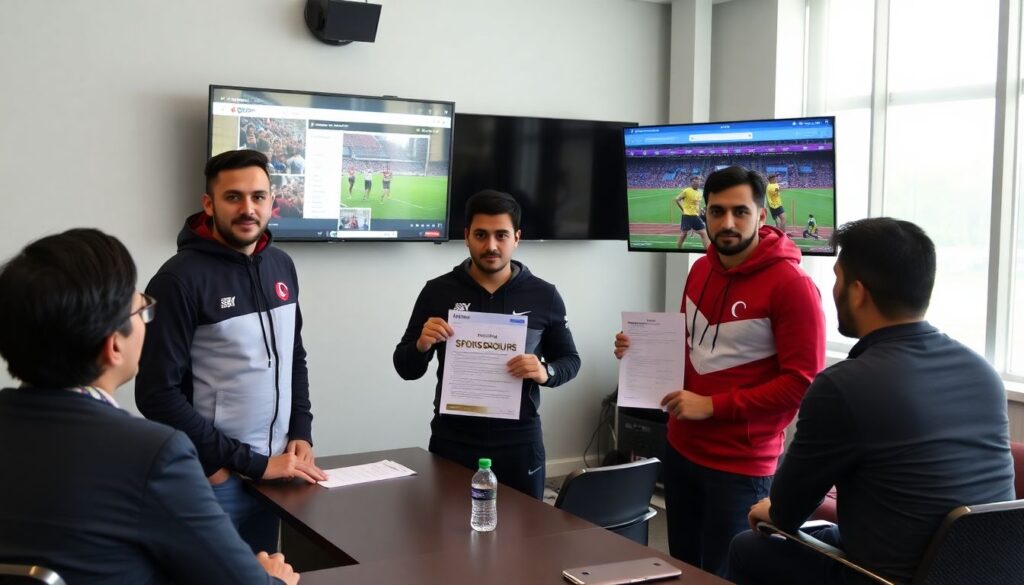
Focus on consistent national-level results, a clear competition plan, and visible communication through social media and club channels. Approach local businesses and sports brands sponsoring turkish track athletes with a one-page proposal showing how their support translates into travel, physio, or training camp exposure.
Are high-end Turkish training camps essential for performance breakthroughs?
They are useful but not mandatory. Many athletes first reach national or regional level using improvised hills, local tracks, and school facilities. When budgets are tight, replicate the structure of the best turkish track and field training camps locally: double sessions on key days, group workouts, and focused recovery.
How do Turkish coaches balance speed and endurance in 800-1500 m training?
Most use an endurance-first approach with regular injections of race-pace work. This means high weekly volumes of easy running, weekly threshold or tempo sessions, and one or two fast, controlled workouts focused on efficiency at racing speed rather than all-out sprinting.
What can non-Turkish federations learn from Turkey’s elite athlete programs?
They can adopt the idea of light, flexible frameworks instead of heavy centralisation. Turkey athletics federation elite athlete programs provide medical checks, camps, and international race access while leaving day-to-day training to clubs, a cost-effective model for countries with limited budgets.
Is online coaching a realistic option for serious middle-distance development?
Yes, provided there are periodic in-person check-ins. Many athletes successfully hire professional turkish track coach online for planning, video analysis, and progression monitoring, then attend pre-season or pre-championship camps to fine-tune tactics and mechanics.
How should a young runner choose between track, road, and cross-country?
At early stages, doing all three is beneficial. Turkish middle-distance runners often use cross-country and road racing to build robustness and tactical awareness, then specialise in 800-3000 m on the track once their strengths and preferences become clear.
Комментарии