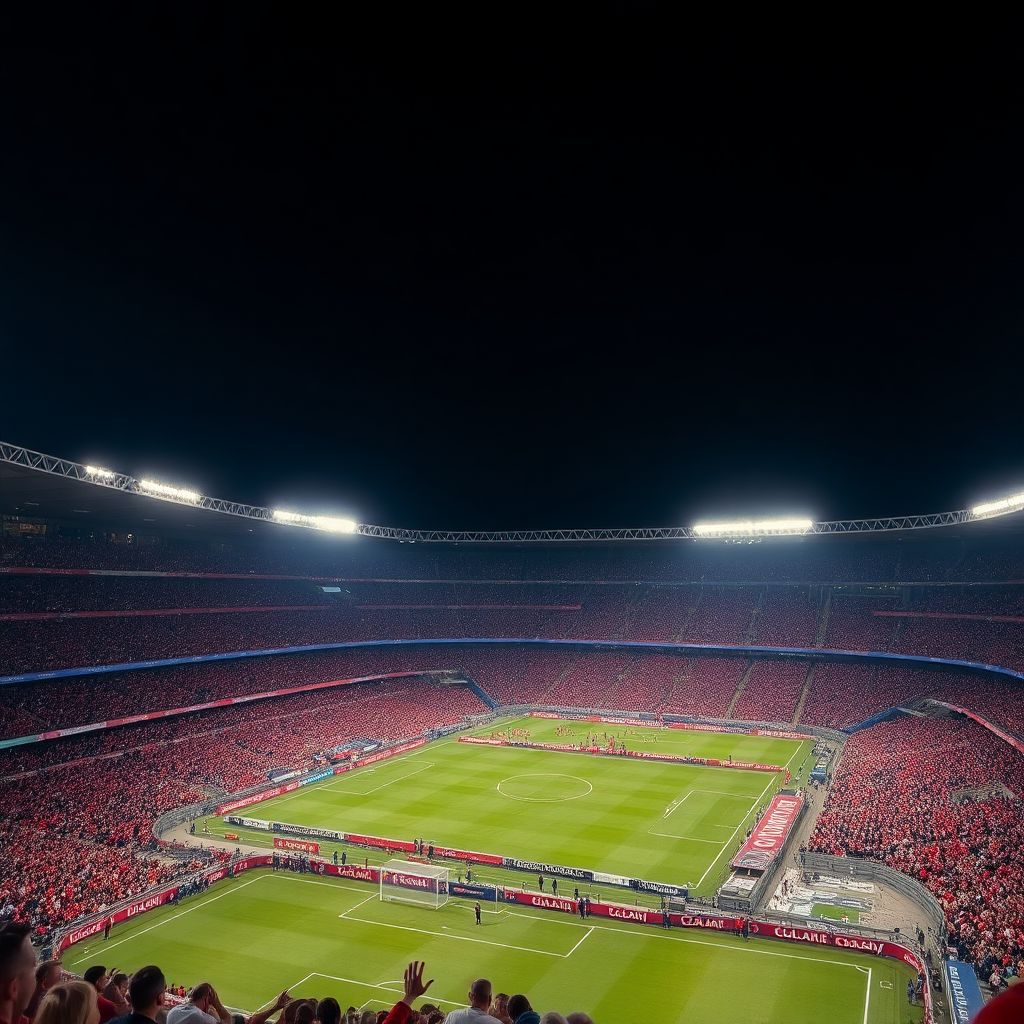
Unexpected Contenders for the Next Turkish Super Lig Season
The 2025-26 Turkish Super Lig campaign ended in a now-familiar way: Galatasaray once again lifted the trophy, claiming a fourth consecutive league title. With Victor Osimhen spearheading their attack and coming off a season of 22 goals in 33 league matches, the champions will enter 2026-27 as clear favourites to extend their domestic dominance.
Yet every new season in Turkey tends to produce at least one surprise package. Behind the headline act of Galatasaray, several ambitious clubs are building squads, changing coaches, and reshaping their identities in an effort to break the status quo. The question is not whether the champion can be challenged, but which “dark horse” could emerge from the chasing pack to mount a serious title push or, at the very least, disrupt the hierarchy.
Below we examine four potential dark horses for the upcoming Super Lig season: Fenerbahce, Besiktas, Trabzonspor and Goztepe. Each has enough quality, narrative, and momentum to make life uncomfortable for Galatasaray and anyone else with title aspirations.
—
Fenerbahce: From Frustration to Full-Scale Title Bid?
Fenerbahce finished the 2025-26 season in second place, a position that on paper looks respectable but in reality felt deeply frustrating. Across 34 league games they lost only twice, yet that impressive resilience still wasn’t enough to dislodge Galatasaray from the summit. The sense of “nearly but not quite” has hung over the club for several years, and this summer the board has responded by endorsing another major reset.
A familiar face has returned to orchestrate that reset. Ismail Kartal is back for a fourth spell at the club, this time tasked with turning close-run title races into a long-awaited championship. As a player, he helped Fenerbahce to two league crowns, and as part of the coaching setup earlier in his career, he contributed to the period when the club secured two titles in four seasons from 2010 to 2014. That institutional memory of how to win in Turkey is one of his greatest assets.
The squad has also undergone a significant refresh. Defensively, the arrival of Nathan Ake offers positional versatility and high-level experience, crucial for a side that occasionally lost concentration in key moments last season. Sidiki Cherif brings dynamism and energy, while the return of Vedat Muriqi adds a proven focal point in attack who understands the league and the expectations at a big Istanbul club.
The transfer that could truly transform Fenerbahce’s outlook, however, is still in the pipeline. The club is close to finalising a move for Marseille forward Mason Greenwood. At 24, he is entering his prime years and is coming off a season in which he scored 19 goals in all competitions in France. His ability to play across the forward line, create his own shooting angles, and unlock tight defences could be exactly what Fenerbahce lacked in several low-scoring draws last year.
If Kartal can quickly impose a clear structure, and if these new signings integrate smoothly, Fenerbahce have the squad depth to deal with the dual demands of domestic and European football. Their dark-horse tag stems less from a lack of quality and more from the question of whether they can finally convert promise into silverware under intense pressure.
—
Besiktas: A New Era Under Vincenzo Italiano
Besiktas are another side poised for a potentially transformative season. The club has turned to Vincenzo Italiano, an Italian coach whose reputation has been built on proactive football and cup success in Serie A. His stint with Bologna culminated in a historic Coppa Italia triumph in May 2025, ending a 51-year drought for the club with a victory over AC Milan in the final.
Before Bologna, Italiano had already shown his tactical acumen by guiding Fiorentina to the finals of both the Coppa Italia and the Europa Conference League. That track record of overachievement with teams outside the traditional elites is precisely what attracted Besiktas, who want a coach capable of turning a strong squad into a cohesive, fearless unit.
Last season, Besiktas finished fourth, securing a spot in the Europa League. While there were inconsistencies, the campaign laid a decent foundation. Several players impressed, but others underperformed compared to expectations. Milot Rashica, for example, managed just two goals in 33 league appearances, a return well below what his talent suggests he can deliver. Under a more attack-minded coach like Italiano, he could be one of the big winners, especially if used in roles that better exploit his movement and shooting from distance.
The club has also acted decisively in the transfer market. German goalkeeper Alexander Nübel offers a long-term solution between the posts, combining shot-stopping with comfort in possession. Turkish international Salih Özcan strengthens the midfield with his work rate and ball recovery, giving Italiano a reliable anchor to build his system around.
Perhaps the most eye-catching potential signing is Leandro Trossard. Besiktas are close to agreeing a fee with the Premier League champions for the Belgian attacker. Trossard’s versatility across the front line and his knack for scoring in big matches could add a layer of unpredictability that Besiktas often lacked in tight encounters.
If Italiano successfully implements his high-tempo, aggressive style, Besiktas could evolve into one of the most entertaining sides in Turkey-and one of the most dangerous for any team that underestimates them. Their ceiling is high: a title challenge is not out of the question if they find consistency, particularly at home, where the atmosphere can become a genuine weapon.
—
Trabzonspor: The Black Sea Storm Gathering Strength
Few teams exceeded expectations last season as much as Trabzonspor. Under Fatih Tekke, the Black Sea Storm surged to a third-place finish, winning 20 of their 34 league matches. That alone would be impressive, but the manner in which they did it is even more encouraging looking ahead to 2026-27.
Defensively, Trabzonspor were one of the most organised sides in the Super Lig, conceding only 39 goals. Their compact structure, disciplined pressing, and strong central defensive partnerships allowed them to remain competitive even when their attacking play stalled. That defensive base provided the platform for a successful cup run as well.
Their progress was underlined by victory in the Turkish Cup Final, where they defeated Konyaspor to lift the trophy for the tenth time in their history. This combination of league consistency and knockout success suggests a squad with both resilience and a growing winning mentality-two attributes essential for any team hoping to mount a credible title bid.
At the other end of the pitch, Paul Onuachu was a revelation. The towering striker finished as the league’s top scorer with 22 goals, thriving on crosses, set pieces, and direct service into the box. Keeping him fit and supplied with chances will be central to Trabzonspor’s ambitions. Opponents know what he brings, but stopping him is another matter entirely.
The fixture list appears relatively kind in the early weeks. Trabzonspor start with matches against Kasimpasa, Amed SK, and Konyaspor before facing Galatasaray in a marquee clash in late September. A strong start could build momentum and belief within the squad and fanbase, turning that early showdown into an opportunity rather than a threat.
If Tekke can add a bit more creativity in midfield and improve their away record against direct rivals, Trabzonspor could move from being a “nice surprise” to a genuine contender that no one can afford to ignore.
—
Goztepe: The Outsider No One Should Overlook
Among the less heralded sides, Goztepe stand out as perhaps the most intriguing wild card in next season’s Super Lig. Under Stanimir Stoilov, appointed in November 2023, the club has undergone a steady revival. He led them back to the top flight after a two-year absence, and in 2025-26 they consolidated their status impressively, finishing sixth.
For long stretches of the season, Goztepe looked capable of securing European football. Ultimately, a poor run of results towards the end of the campaign cost them a place in the Europa Conference League. Yet even that disappointment should not overshadow the significant strides the team made under Stoilov.
Defensively, Goztepe were one of the standout sides in the division. They conceded just 32 goals over the entire league season, the second-best defensive record in the competition. Their organisation without the ball, willingness to defend deep when needed, and ability to close out tight games made them extremely difficult to break down.
Their home form was especially impressive. Goztepe won eight of their 17 home matches and suffered only two defeats. They kept clean sheets in 52% of their games on their own ground, turning their stadium into a venue visiting sides genuinely disliked travelling to. For a team aspiring to push higher up the table, such a strong home platform is invaluable.
However, one glaring weakness demands attention if they are to take the next step: attacking output. Too many matches were decided by fine margins because Goztepe lacked consistent goal threat. To transform from a solid mid-table outfit into a dark horse for Europe-or even more-they must add more creativity in the final third and greater presence in the penalty area. Expect the club to target at least one prolific forward and a chance-creating midfielder in the current transfer window.
Stoilov’s track record suggests he can gradually layer attacking patterns onto a strong defensive base rather than abandon what already works. If he manages to find the right blend, Goztepe could become the type of team that quietly accumulates points while more glamorous rivals drop them in high-pressure fixtures.
—
What Gives a “Dark Horse” a Real Chance in Turkey?
The Super Lig is a competition where momentum swings quickly, and history shows that unexpected challengers emerge regularly. Several factors will determine which of these clubs can turn potential into a sustained assault on the top of the table:
– Depth and Rotation: With many teams involved in European competitions and domestic cups, having two players for each position is crucial. Fenerbahce and Besiktas may have an advantage here, but Trabzonspor are closing the gap, and Goztepe’s compact squad has shown it can punch above its weight.
– Coaching Stability: New coaches like Italiano at Besiktas need time to imprint their ideas. If their clubs resist the urge to panic after a few poor results, the long-term benefits could be significant. Tekke and Stoilov already enjoy a degree of continuity that could prove decisive.
– Injury Management: Key players such as Mason Greenwood (if his transfer is completed), Paul Onuachu, or any major creative figures at Besiktas and Goztepe must stay fit. Squads with fragile depth will feel the impact of injuries more acutely than Galatasaray, who are comparatively stacked in several positions.
– Performing in “Six-Point” Games: Title races are often decided in clashes among the big clubs. A dark horse must take points off the traditional giants-Galatasaray, Fenerbahce, Besiktas, Trabzonspor-rather than simply dominating mid-table opposition. Trabzonspor’s upcoming early meeting with Galatasaray is a prime example of such a test.
– Psychological Resilience: Perhaps the most underrated factor. As expectations rise and attention intensifies, some teams falter. Turning a good run into a genuine title challenge requires not only talent but also mental toughness and the ability to respond to setbacks without collapsing.
—
Who Is Best Placed to Surprise?
Each of the four candidates brings a different type of dark-horse profile. Fenerbahce and Besiktas have the resources, fanbase, and transfer pull of traditional giants, yet recent years of underachievement have shifted them into outsider territory behind Galatasaray. Trabzonspor, buoyed by their cup win and strong league finish, look like the most coherent “project” outside Istanbul. Goztepe, meanwhile, represent the classic overachiever with a solid structure and room to grow.
If forced to pick one club most likely to disrupt the title picture, Trabzonspor may currently appear best balanced: a proven goalscorer, a strong defence, recent silverware, and a relatively settled coach. However, if Fenerbahce land all of their targets and Kartal quickly finds a winning formula, they could easily transform from frustrated runner-up into a fierce challenger. Besiktas, under Italiano, are perhaps the biggest stylistic wildcard: they could either take time to adapt or explode into life and overrun opponents with high-intensity football.
Goztepe’s ceiling depends largely on their summer recruitment. If they add genuine firepower without sacrificing defensive resilience, they might not yet be ready to win the league, but they are more than capable of embarrassing bigger clubs and inserting themselves into the European conversation.
—
Final Thoughts
Galatasaray will start the new season as the clear team to beat, especially with a forward of Victor Osimhen’s calibre leading the line. Yet the strength of the Super Lig lies in its unpredictability. Beneath the established favourite, a number of ambitious clubs are preparing to challenge, armed with new coaches, fresh signings, and lessons from last season’s disappointments.
Whether it is the renewed determination of Fenerbahce, the tactical revolution promised by Vincenzo Italiano at Besiktas, the growing confidence of Trabzonspor under Fatih Tekke, or the disciplined rise of Goztepe under Stanimir Stoilov, the stage is set for at least one dark horse to step out of the shadows.
The coming season is unlikely to be a procession. If these contenders fulfil their potential, the race at the top of Turkish football could be far more open-and far more compelling-than the recent Galatasaray era might suggest.